
“SHOW ME THE SIGNED SUBPOENA!” John Kenne.d.y Challenges Ad.a.m Schiff in Explosive $9.24 Million Financial Mystery
Washington has witnessed some extraordinary political confrontations, but an argument involving millions of dollars, international banking, and allegations of hidden financial influence would immediately attract attention across Capitol Hill.
In this fictionalized political thriller, Republican Senator John Kenne.d.y finds himself facing Democratic Senator Adam Schiff over a mysterious financial trail allegedly involving $9.24 million, international accounts, and questions about financial accountability.

The confrontation begins with an insult.
It quickly becomes an argument about evidence.
And before the imagined hearing reaches its conclusion, Kenne.d.y introduces a document that changes the entire direction of the discussion.
A signed federal subpoena.
But what does the document actually establish?
Who authorized it?
And why is Schiff demanding that Kenne.d.y distinguish between a documented financial transaction and an allegation that has not been independently verified?
SCHIFF OPENS WITH A BRUTAL POLITICAL ATTACK
The atmosphere inside the fictional hearing room is already tense when Schiff challenges Kenne.d.y’s presentation.
He questions the senator’s decision to turn complicated financial allegations into a political spectacle.
SCHIFF: “Senator Kenne.d.y, this is beginning to look less like an investigation and more like a populist circus act.”
The remark immediately sharpens the confrontation.
Kenne.d.y pauses.
He looks down at the documents in front of him before responding.
KENNEDY: “Well, Senator, if asking questions about millions of dollars is a circus, perhaps Washington has forgotten what an investigation is supposed to look like.”
Schiff pushes back.
SCHIFF: “You cannot simply put a number on a piece of paper, mention Switzerland and the Cayman Islands, and expect Americans to believe that you’ve uncovered a scandal.”
It is a serious challenge.
And it forces Kenne.d.y to address the central weakness of the allegations.
A financial transfer is not automatically evidence of wrongdoing.
An offshore account does not automatically establish criminal activity.
And an unexplained transaction does not establish that a particular politician controlled the money.
Kenne.d.y understands that his argument must go beyond dramatic language.
THE $9.24 MILLION QUESTION
In the fictional reconstruction, Kenne.d.y opens a thick financial dossier.
The documents contain hypothetical transaction summaries, corporate records, and questions about defense-related financial arrangements.
He points toward an alleged $9.24 million figure.
KENNEDY: “I’m not asking anybody to accept a conclusion before examining the evidence. I’m asking why these transactions deserve so little attention.”
Schiff immediately challenges the presentation.
SCHIFF: “Where is the verified source? Who owns the accounts? Who authorized the transfers? And what evidence connects any of this to criminal conduct?”
Those are precisely the questions an authentic financial investigation would need to answer.
The existence of an international account does not establish that its owner committed a crime.
The movement of funds through Switzerland or the Cayman Islands does not, by itself, prove concealment or corruption.
Investigators would need to establish the origin of the money, the beneficial owners, the purpose of the transfers, and any relevant legal obligations.
Kenne.d.y responds that financial questions should not be dismissed merely because they involve complicated international structures.
KENNEDY: “If the records are legitimate, let them be examined. If the explanation is innocent, the evidence should demonstrate that.”
SCHIFF REFUSES TO ACCEPT THE ACCUSATION
Schiff argues that the presentation risks creating a misleading impression.
He insists that privacy protections and financial confidentiality cannot be treated as proof of misconduct.
He also challenges the suggestion that he personally controlled the alleged funds.
SCHIFF: “You have not demonstrated that I owned these accounts, directed these transactions, or exercised control over the money.”
Kenne.d.y responds that the investigation should establish the facts before anyone reaches a conclusion.
KENNEDY: “Then let’s establish the facts. That’s what investigations are for.”
The disagreement exposes an important distinction between political allegations and criminal investigations.
A senator can request scrutiny of suspicious-looking financial activity.
But only properly established evidence can demonstrate whether a transaction violated the law.
And only the appropriate authorities can determine whether a criminal investigation or prosecution is justified.
THE SIGNED FEDERAL SUBPOENA
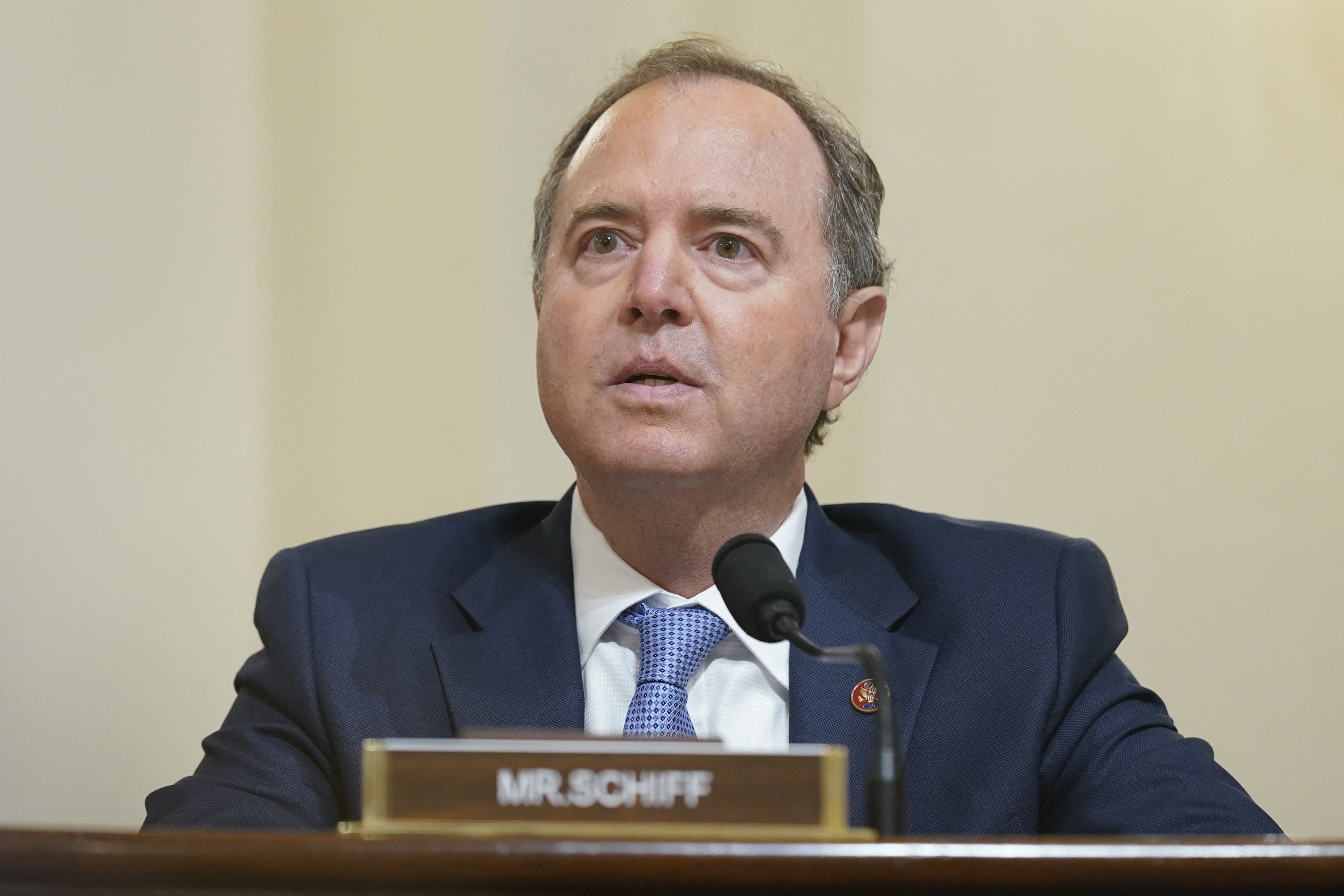
The most dramatic moment in the fictional story arrives when Kenne.d.y places a document on the table.
He describes it as a signed federal subpoena.
Schiff immediately asks who issued it and under what legal authority.
That question matters.
A congressional subpoena, a grand jury subpoena, and a subpoena issued through another federal investigative process are legally different instruments.
Their authority, scope, and procedures are not interchangeable.
Kenne.d.y cannot simply declare that a document proves criminal wrongdoing.
Even an authentic subpoena would establish only that information had been formally sought through a particular legal process.
It would not establish guilt.
In this imagined exchange, Kenne.d.y acknowledges the distinction.
KENNEDY: “A subpoena is a demand for evidence, Senator. It is not a verdict.”
Schiff responds that this is precisely why politicians should be careful about presenting legal documents as though they establish conclusions that have not been reached.
For once, the two senators are confronting an important point on which their arguments overlap.
Evidence must be examined before conclusions are announced.
THE FBI AND DOJ QUESTION
The confrontation then turns toward the possibility of federal scrutiny.
Kenne.d.y argues that credible evidence of financial misconduct should be referred to the appropriate authorities.
Schiff warns against suggesting that an agency referral is equivalent to an established criminal case.
The distinction is critical.
A referral may ask investigators to examine information.
It does not establish that investigators have opened a case.
It does not establish that a person is a suspect.
And it certainly does not establish guilt.
SCHIFF: “You cannot use the names of federal agencies to turn an unverified allegation into an established fact.”
KENNEDY: “And nobody should use political office to prevent legitimate questions from being asked.”
The exchange becomes increasingly intense because both senators are defending principles that matter to the public.
Kenne.d.y emphasizes accountability.
Schiff emphasizes evidence, due process, and the danger of political accusations.
Neither principle should be abandoned.
THE INTERNATIONAL MONEY QUESTION
The alleged Zurich and Cayman connections create another difficult question.
International financial structures can serve legitimate purposes, including investment management, corporate administration, and cross-border business operations.
They can also be misused to conceal beneficial ownership or disguise unlawful transactions.
The location of an account alone cannot distinguish between those possibilities.
A genuine investigation would need to examine the underlying documentation.
That could include authenticated banking records, corporate ownership information, contractual obligations, and evidence identifying the individuals who authorized the transactions.
It would also need to establish whether the money was connected to defense contracts or other government-related activities.
Without those records, the $9.24 million figure remains an unverified allegation within this fictional story.
Kenne.d.y’s argument is that financial questions deserve investigation.
Schiff’s argument is that investigation must not become a substitute for proof.
THE EXCHANGE THAT LEAVES THE ROOM WITH A QUESTION
As the imagined hearing approaches its conclusion, Kenne.d.y returns to the original accusation.
He says that his critics are spending too much time questioning his political motives and not enough time addressing the financial records.
Schiff responds that political motives matter when accusations are presented to millions of Americans without sufficient verification.
Kenne.d.y pauses.
Then he delivers the fictional closing line:
“FOLLOW THE EVIDENCE, NOT THE PARTY, AND LET THE TRUTH SPEAK.”
The sentence becomes the emotional centerpiece of the imagined confrontation.
It is not an authenticated quotation from Kenne.d.y.
But it captures the principle that should govern any serious investigation involving public money.
Evidence must be evaluated independently.
Political allies should not receive special treatment.
Political opponents should not be presumed guilty.
And financial allegations must be supported by records that can withstand independent scrutiny.
THE BIGGER QUESTION FOR WASHINGTON
The imagined confrontation ends without a verified subpoena, confirmed FBI referral, or established connection between Adam Schiff and the alleged $9.24 million.
But the broader political issue remains important.
Americans have legitimate reasons to demand transparency when public money, defense contracts, international financial structures, and political influence intersect.
At the same time, financial privacy, due process, and the presumption of innocence remain fundamental protections.
The challenge for Congress is to investigate credible allegations without turning suspicion into a political verdict.
Kenne.d.y’s fictional challenge is about accountability.
Schiff’s fictional response is about the evidentiary standard required before anyone is accused of wrongdoing.
Both questions deserve serious consideration.
Because in Washington, a dramatic document can dominate a news cycle.
A financial allegation can become a political weapon.
And a single number can attract national attention before anyone has established what it actually represents.
The real test is what happens when independent investigators examine the records.
Who owns the accounts?
Where did the money originate?
What transactions can be independently verified?
And is there any documented connection between those funds and an actual violation of federal law?
Until those questions are answered, the $9.24 million mystery remains an allegation rather than an established scandal.
And that leaves Washington facing one final question: if the documents really contain the answers, who will be willing to submit them to independent examination first?
