
One constitutional amendment, one explosive argument about national loyalty, and a growing political confrontation have reopened one of America’s most divisive questions: Who should be allowed to hold federal power?
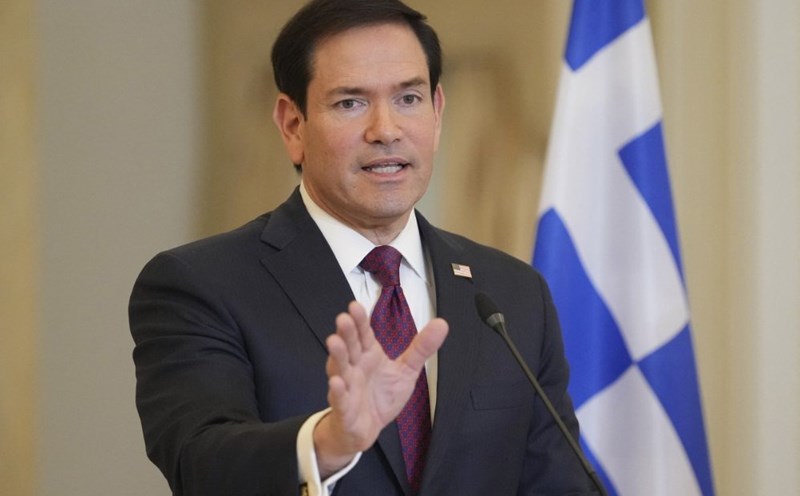
At the center of the controversy stands Secretary of State Marco Rubio, whose reputation for sharp political arguments makes him an intriguing figure in the escalating debate over citizenship and public office.
A dramatic account circulating around the controversy attributes a devastating verbal confrontation to Rubio, supposedly beginning with the declaration, “Let me be absolutely clear about something.”
But while the proposed constitutional amendment is real, the alleged Rubio confrontation, including descriptions of his gestures, remarks, and opponents’ reactions, has not been independently verified.
The documented political fight is nevertheless explosive, involving Republican Representative Nancy Mace, Democratic critics, constitutional restrictions, national security arguments, and the political rights of naturalized American citizens.
On May 20, 2026, Mace introduced a proposed constitutional amendment that would fundamentally change who is eligible to serve in several of the nation’s most powerful federal positions.
Her proposal would require members of Congress, federal judges, and Senate-confirmed executive officials to be natural-born citizens, expanding restrictions already associated with the presidency.
The proposal immediately placed a sensitive question at the forefront of American politics: Should becoming a United States citizen provide equal opportunities for federal leadership?
For Mace and her supporters, the argument centers on national allegiance, public trust, and the responsibility of individuals entrusted with enormous governmental authority.
For opponents, the amendment represents something considerably more troubling: a constitutional barrier that would permanently exclude millions of naturalized Americans from positions they can currently pursue.
The confrontation exposes a fundamental disagreement about what American citizenship means, how loyalty should be measured, and whether birthplace should determine eligibility for public service.
Mace’s argument rests on the belief that individuals exercising extraordinary governmental powers should satisfy particularly strict constitutional requirements regarding their connection to the United States.
Her proposal would extend the natural-born-citizen standard beyond the presidency to lawmakers, judges, ambassadors, Cabinet officials, and other senior federal officers requiring Senate confirmation.
Supporters argue that the amendment addresses concerns about foreign influence and the possibility of divided loyalties among people making sensitive decisions affecting American security.
These concerns are politically powerful because senior federal officials can influence military policy, intelligence oversight, government spending, diplomatic negotiations, and legislation affecting millions of Americans.
But critics reject the assumption that naturalized citizenship indicates weaker allegiance or greater vulnerability to foreign influence than citizenship acquired at birth.
Their objection goes directly to the amendment’s central premise: A person who voluntarily becomes an American citizen can demonstrate profound loyalty through service, sacrifice, and commitment.
Representative Pramila Jayapal, a Democrat from Washington and herself a naturalized American citizen, publicly condemned Mace’s proposal shortly after its introduction.
Jayapal argued that excluding naturalized citizens from federal leadership would undermine America’s immigrant heritage and disregard the contributions of people who chose to become Americans.
She also emphasized the personal significance of her naturalization ceremony, describing American citizenship as a profound commitment rather than a lesser form of national belonging.
Representative Raja Krishnamoorthi, another naturalized citizen, similarly criticized the proposal, arguing that American opportunity should depend on character and commitment rather than birthplace.
These responses transformed what might otherwise have remained an obscure constitutional proposal into a broader national confrontation over identity, belonging, and governmental legitimacy.

The debate becomes especially complicated when national security concerns are introduced, because loyalty to the Constitution is unquestionably essential for anyone entrusted with public authority.
Federal officials swear oaths, operate under ethics requirements, and may face extensive background investigations before receiving access to sensitive government information.
Security clearance procedures can examine foreign financial interests, outside relationships, potential conflicts, and other factors that might create vulnerability to improper influence.
However, those concerns are not exclusive to naturalized Americans. Citizens born in the United States can also possess foreign business interests or relationships requiring scrutiny.
That reality creates a major challenge for supporters of birthplace-based eligibility restrictions: How effectively would such requirements actually identify individuals posing legitimate security risks?
A natural-born citizen could conceivably maintain financial or political relationships abroad, while a naturalized citizen might have spent decades serving American institutions without divided loyalties.
Critics argue that evaluating an individual’s conduct, associations, and legal obligations provides a more meaningful security assessment than relying on birthplace alone.
Supporters counter that constitutional eligibility standards have historically drawn categorical distinctions, particularly regarding the presidency, and that the country can debate extending those requirements.
Neither position can be resolved simply by questioning an opponent’s patriotism. The disagreement concerns the relationship between constitutional qualifications, public accountability, and equal citizenship.
That is where Rubio’s political position becomes particularly interesting, even without a verified recording of the dramatic confrontation attributed to him.
Born in Miami to Cuban immigrant parents, Rubio embodies a political background deeply connected to immigration, American opportunity, and the experiences of families fleeing authoritarian government.
His biography also illustrates an important legal distinction: Children born in the United States generally acquire citizenship at birth, even when their parents immigrated from another country.
Rubio’s own eligibility for federal office therefore does not depend on naturalization, making his personal circumstances different from those of lawmakers who acquired citizenship later.
As secretary of state, Rubio occupies a position involving diplomacy, foreign governments, sensitive information, and America’s strategic interests across an increasingly unstable international landscape.
His responsibilities place questions of national allegiance and foreign influence directly within the broader political environment in which he operates.
Yet attributing a particular argument to Rubio requires evidence of what he actually said, not simply an interpretation of what his political philosophy might suggest.
The frequently repeated description of Rubio calmly removing his glasses and confronting Democratic opponents has not been established through an authenticated transcript or verified video.
Nor has credible evidence established that he personally challenged a specific congresswoman’s background during the supposed confrontation described in the circulating narrative.
Those details may create an unforgettable political scene, but compelling storytelling cannot substitute for the basic journalistic responsibility to distinguish documented events from unsupported claims.
The confirmed controversy is sufficiently significant without dramatic embellishment, particularly because the amendment would alter eligibility for positions central to American representative government.
Under the Constitution, representatives must satisfy citizenship, age, and residency requirements, while senators face a different set of qualifications reflecting the responsibilities of their office.
Neither position currently requires a candidate to have been a natural-born citizen, allowing naturalized Americans who meet existing requirements to serve in Congress.
The Constitution separately imposes a natural-born-citizen requirement on the presidency, creating an established distinction that Mace’s amendment seeks to expand considerably.
Changing those qualifications would require the extraordinarily demanding constitutional amendment process rather than an ordinary majority vote in Congress.
An amendment generally must win approval from two-thirds of both congressional chambers before securing ratification by three-fourths of the states.
Such a process makes sweeping constitutional change deliberately difficult, ensuring that temporary political majorities cannot easily rewrite the fundamental qualifications for federal office.
Mace’s May proposal, designated H.J. Res. 188, was referred to the House Judiciary Committee following its introduction, according to the official congressional record.
In June, she introduced another proposal addressing foreign citizenship, nationality, and allegiance among people seeking to occupy several important federal positions.
That separate proposal highlighted a distinction often lost in the public debate: Being naturalized is not the same thing as maintaining citizenship or allegiance to another country.
An American can become a naturalized citizen without retaining foreign citizenship, just as questions about foreign relationships can arise among citizens born on American soil.
Conflating those categories risks turning a discussion about legitimate security safeguards into a broader judgment about the patriotism of millions of Americans.
The distinction also matters politically because naturalized citizens include military veterans, public servants, entrepreneurs, scientists, and community leaders whose commitments cannot be determined by birthplace.
For supporters of stricter eligibility rules, however, the underlying concern remains whether government leaders should face stronger restrictions when exercising authority over national security.
They argue that American institutions must be protected against foreign interference and that public officials should be accountable to the country they serve.
Opponents respond that existing mechanisms for identifying misconduct should be strengthened rather than creating constitutional exclusions affecting citizens who have committed no wrongdoing.
The sharpest question is therefore not whether national loyalty matters. Both sides can agree that public officials must faithfully discharge their constitutional obligations.
The dispute concerns whether the government should presume different levels of eligibility based on how citizenship was obtained, rather than evaluating individual conduct.
That distinction could shape the future of the debate far more powerfully than any viral video claiming a politician delivered an unforgettable rhetorical knockout.
For Republicans, the proposal also creates questions about how a party emphasizing national sovereignty defines American identity in a country built through generations of immigration.
For Democrats, the confrontation presents an opportunity to defend naturalized citizens while responding seriously to legitimate public concerns about foreign interference.
Neither side benefits from overlooking the complexity, particularly when constitutional change would affect future candidates regardless of their political ideology.
The controversy also carries implications for voters, whose ability to choose representatives could narrow if candidates currently eligible for office become constitutionally disqualified.
That would represent a significant change in democratic participation, extending beyond individual politicians to the relationship between citizens and the institutions representing them.
Supporters may view that consequence as an acceptable safeguard, while critics see it as an unnecessary restriction on voters’ choices and citizens’ opportunities.
Meanwhile, the political messaging surrounding the amendment continues to expose how easily complex constitutional questions can become personalized confrontations over patriotism.
Accusations of divided loyalty are especially consequential because they can damage reputations without establishing any actual violation of law or official responsibility.
A public official’s policy disagreements, criticism of government decisions, or personal background do not independently demonstrate allegiance to a foreign state.
Evidence of improper foreign influence would require examination of specific conduct, financial arrangements, communications, or other facts relevant to the alleged misconduct.
That evidentiary standard is essential whether the individual under scrutiny is Republican, Democrat, natural-born, or naturalized, because national security cannot depend on partisan assumptions.
The most revealing feature of this controversy may ultimately be the question it forces Americans to confront about the promises and limitations of citizenship.
When immigrants complete the legal naturalization process, they undertake obligations to the United States and become members of the American political community.
Yet Mace’s proposed amendment would create permanent distinctions in eligibility for federal leadership that the existing Constitution does not impose on many offices.
Supporters regard such distinctions as prudent safeguards for national authority. Opponents believe they would weaken the principle that citizenship carries meaningful equality under law.
Rubio’s name may dominate sensational retellings of this conflict, but the real debate will be decided through constitutional arguments, public scrutiny, and political accountability.
The ultimate outcome remains uncertain, and no verified evidence establishes that Rubio delivered the dramatic confrontation repeatedly attributed to him.
What is beyond dispute is that Mace’s proposal has forced Washington to revisit one of America’s most emotionally charged constitutional questions.
America demands loyalty from its leaders. But whether that loyalty should be judged by birthplace, citizenship history, or demonstrated conduct remains deeply contested.
And as this constitutional battle continues, the question hanging over Capitol Hill is larger than any single politician’s opening line.
It concerns who gets to represent the American people, how the Constitution defines eligibility, and whether the country’s understanding of citizenship is about to face a historic test.
