
The most explosive number in the room was $47 million.
But when M@rco R.u.b.i.o opened the official audit records, the figure that changed the confrontation was considerably smaller.
$68,000.
That was the civil penalty federal election regulators had actually imposed on a campaign committee associated with Representative M@xine W@ters.
The distinction threatened to unravel an extraordinary allegation about hidden financial discrepancies, suppressed television footage, and a government cover-up.
Waters had challenged Rubio over financial accountability during a heated political discussion.
Rubio, serving as secretary of state, responded by examining the public record.
He placed a Federal Election Commission audit beside his microphone.
Then he opened another document describing the enforcement action that followed.
The records established real reporting violations involving Waters’ campaign committee.
But they did not establish the alleged $47 million discrepancy.
Nor did they support the claim that television networks had interrupted a broadcast to conceal the evidence.
Rubio pointed toward the final page.
“Congresswoman, the question isn’t whether a number sounds frightening.”
He paused.
“It’s whether the document actually proves what somebody claims it proves.”
Waters challenged him to read the findings accurately.
The moderator turned toward the financial table.
And the document marked Line Item Seven was about to reveal why the original allegation was so misleading.
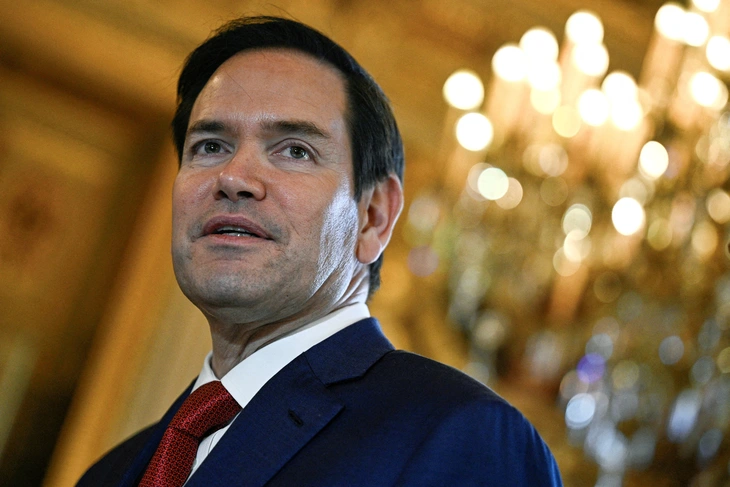
The Fourteen-Minute Confrontation That Started With One Number
The imagined confrontation began during a televised discussion about campaign finance and government accountability.
Waters defended the importance of regulatory oversight and criticized the use of financial allegations as political weapons.
Rubio challenged whether lawmakers consistently applied transparency standards to their own political operations.
The exchange became tense when the discussion turned toward campaign reporting.
Waters argued that financial investigations should be evaluated through the appropriate legal processes.
Rubio agreed.
But he questioned whether the public understood the outcomes of those processes.
Then the moderator introduced the circulating allegation.
It claimed that Waters had signed a certified statement containing an unexplained $47 million discrepancy.
According to the dramatic account, Rubio exposed the figure during a confrontation broadcast live on television.
The story went further.
It suggested that television networks abruptly cut the feed after fourteen minutes.
It also described six seconds of extraordinary silence after Rubio revealed the supposed evidence.
The moderator asked whether an authenticated recording established those events.
No verified broadcast or transcript matching that description had been identified.
Nor had the alleged $47 million audit finding been established.
Waters challenged the claim immediately.
Rubio responded that the financial records should be examined instead of relying on the sensational description.
He opened the first document.
It came from the Federal Election Commission.
And unlike the alleged television confrontation, its contents were publicly documented.
The Federal Audit That Actually Examined the Campaign’s Finances
The Federal Election Commission conducted an audit of Citizens for Waters, the principal campaign committee associated with M@xine W@ters.
The review concerned financial activity during the 2019–2020 election cycle.
Federal election law requires political committees to report receipts, disbursements, and other financial activity accurately.
The audit examined whether the committee complied with applicable disclosure and contribution requirements.
The report identified several areas of concern.
These included financial misstatements, excessive contributions, and cash disbursements.
The underlying activity was not a hypothetical financial controversy.
It appeared in official federal records.
The audit’s financial summary showed that the committee reported approximately $2.13 million in receipts during the relevant period.
It also reported approximately $2.18 million in disbursements.
Those totals immediately created a problem for the viral allegation.
A claim involving an unexplained $47 million discrepancy was not supported by the audit’s reported financial scale.
Rubio pointed toward the table.
“Congresswoman, if we’re going to discuss financial accountability, shouldn’t we begin with the actual numbers?”
Waters agreed that the official figures mattered.
But she challenged the implication that every accounting discrepancy established personal corruption.
Rubio acknowledged that distinction.
An inaccurate campaign filing could violate reporting requirements without proving that the candidate personally stole funds.
The moderator asked what the audit had actually found.
Rubio turned toward the next page.
It contained specific discrepancies in receipts and expenditures.
And the figures were serious enough to produce a federal enforcement action.
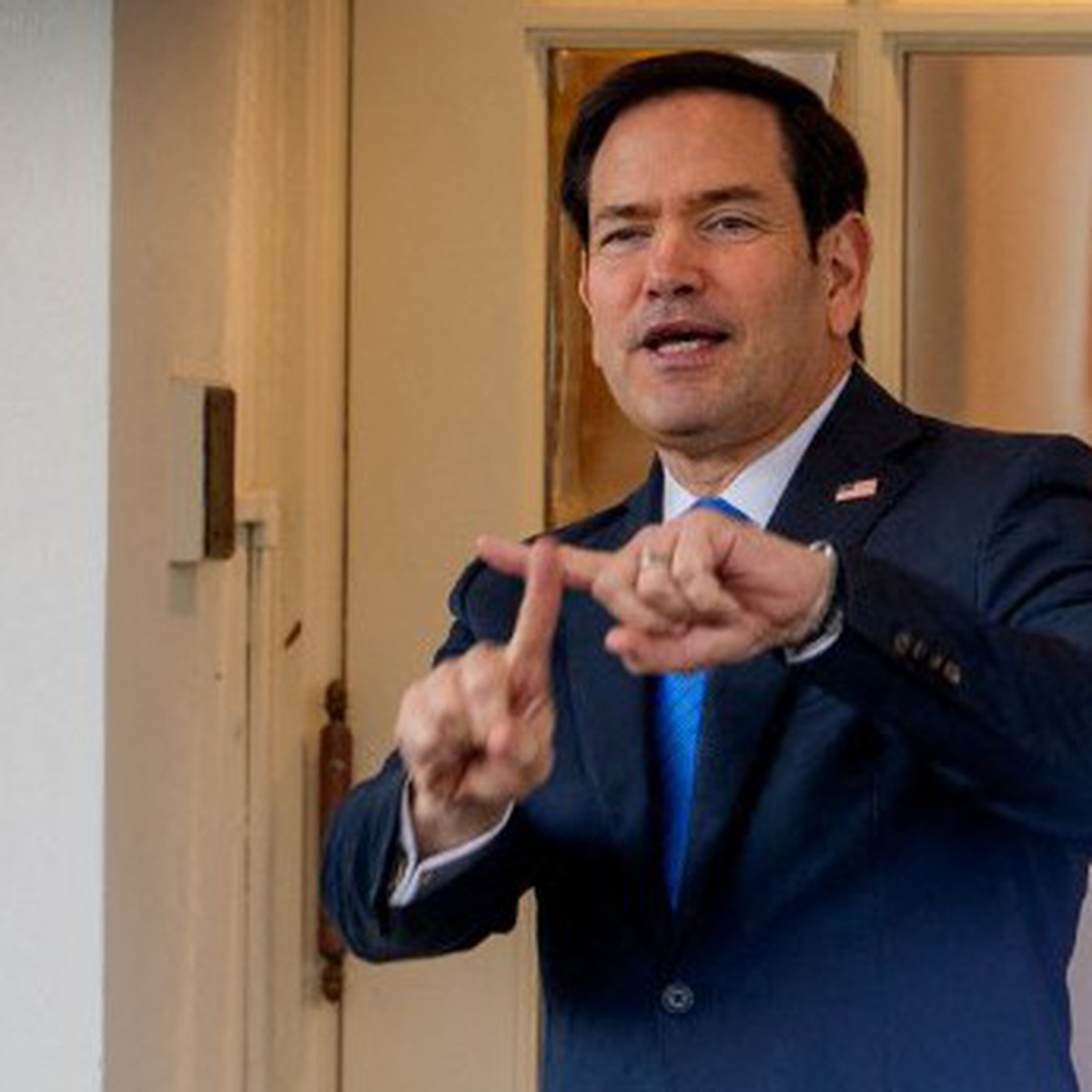
The Reporting Discrepancies That Led to Federal Enforcement
The Federal Election Commission’s subsequent enforcement records identified financial reporting problems involving Citizens for Waters.
During the 2020 reporting period, the committee understated receipts by $262,391.
It also understated disbursements by approximately $256,165.
Those were documented reporting discrepancies.
They were not equivalent to a $47 million loss.
The records also identified $19,000 in excessive contributions.
Another finding involved $7,000 in unlawful cash disbursements.
The problems concerned compliance with federal campaign-finance requirements.
They did not establish that Waters had personally received the disputed amounts.
Nor did the audit conclude that the discrepancies represented money stolen from taxpayers.
Rubio emphasized that political committees were responsible for accurate reporting.
Waters argued that the regulatory process existed precisely to examine such problems and determine the appropriate response.
The moderator asked whether the committee had taken corrective action.
The records showed that amended financial reports had been submitted.
Federal investigators stated that the amendments materially corrected the misstated financial activity.
The committee also addressed contribution-related issues through refunds and other corrective measures.
That detail complicated the confrontation.
The reporting errors were real.
But the record also documented efforts to correct them.
Rubio challenged whether corrections eliminated the significance of the original violations.
Waters responded that they did not erase the findings but were relevant to the final regulatory outcome.
Both points mattered.
A corrected filing does not mean the original reporting was accurate.
But a completed enforcement process cannot fairly be described as an unresolved secret scandal without examining its disposition.
The moderator asked what action federal regulators ultimately took.
Rubio opened the next document.
The answer was not hidden.
It was publicly announced in May 2025.
The $68,000 Penalty That Changed the Entire Narrative
On April 29, 2025, the Federal Election Commission accepted a signed conciliation agreement involving Citizens for Waters.
The agreement resolved violations identified through the agency’s review.
The commission subsequently made the outcome public.
The committee agreed to pay a civil penalty of $68,000.
It also agreed to send its treasurer to a Federal Election Commission training program.
The agreement addressed reporting inaccuracies, excessive contributions, and improper cash disbursements.
These were actual regulatory findings with a documented financial consequence.
The penalty was significant.
But it was not evidence that $47 million had vanished.
Rubio placed the enforcement summary beside the original audit.
“Congresswoman, federal regulators found violations and imposed a penalty.”
Waters acknowledged the enforcement outcome.
She maintained that the finding needed to be described accurately.
The moderator agreed.
The settlement concerned the campaign committee and its treasurer.
It did not establish that Waters personally diverted $47 million.
It also did not prove the existence of a secret bank account or hidden government transfer.
The distinction mattered because the viral account described a much larger financial scandal.
The official record supported a narrower conclusion.
There had been campaign-finance violations.
They had resulted in a civil enforcement agreement.
And the publicly documented penalty was $68,000.
Rubio argued that the public should take those violations seriously.
Waters responded that official findings should not be exaggerated into accusations unsupported by the record.
The discussion had reached an unexpected point.
Both politicians were relying on the same federal documents.
Their disagreement concerned what those documents permitted people to conclude.
Then Rubio introduced another section of the audit.
Its contents raised a separate concern about political money.
But they also revealed why the most dramatic figure in the viral story could not simply be accepted.
The Political Mailer Payments That Raised a Different Question
The original audit examined transactions involving a campaign mailer program.
Federal investigators reviewed payments from organizations that were not registered as federal political committees.
The transactions raised concerns about whether the funds complied with federal campaign-finance restrictions.
A legal analysis prepared during the audit described 47 payments totaling $568,000.
The payments were connected to a brochure-mailing arrangement.
The legal analysis also described approximately $567,230 in related disbursements.
Investigators questioned whether the funds came from sources permitted under federal law.
They also examined whether the transactions satisfied applicable reporting requirements.
The figures were materially different from the alleged $47 million discrepancy.
The number 47 appeared in the record as a count of payments.
It was not a finding that $47 million had disappeared.
That distinction was especially important.
A reader encountering the phrase “47 payments” could easily misunderstand it when presented alongside an unsupported multimillion-dollar allegation.
Rubio questioned whether the committee had adequately documented the source of the funds.
Waters maintained that regulatory findings should be evaluated through the commission’s established procedures.
The moderator returned to the enforcement record.
The Federal Election Commission had considered several findings and ultimately resolved the matter through its conciliation process.
The existing records did not substantiate the viral account’s claim of a secret $47 million audit gap.
They also did not establish that Rubio had exposed a suppressed document during an authenticated televised confrontation.
The moderator asked whether additional evidence might change that conclusion.
Rubio acknowledged that new evidence could warrant further examination.
But speculation about evidence not produced could not establish wrongdoing.
Waters agreed that public allegations needed factual support.
The confrontation had moved from a sensational number toward a more fundamental question.
What happens when a real regulatory violation becomes the foundation for a much larger accusation that the records do not support?
Rubio turned to the final page.
It was labeled Line Item Seven.
And its contents changed the meaning of the entire confrontation.
Line Item Seven: The Detail That Undermined the $47 Million Claim
The final page was a comparison prepared for the imagined discussion.
It listed the allegations circulating online beside the information established by official records.
The first entries concerned the campaign’s financial reporting.
They identified the documented discrepancies in receipts and disbursements.
Other entries summarized excessive contributions and cash-payment violations.
Another recorded the $68,000 civil penalty.
The sixth entry described the corrective actions required under the agreement.
Then came Line Item Seven.
Its heading was straightforward.
Evidence supporting the alleged $47 million discrepancy.
The space beneath it contained no authenticated supporting document.
There was no federal audit finding establishing the amount.
No verified financial statement identified the alleged gap.
And no authenticated recording established the supposed moment when Rubio revealed it.
The moderator examined the comparison.
The absence of corroboration did not establish that every conceivable financial allegation was impossible.
It meant that this particular accusation had not been substantiated.
Rubio returned to the original viral claim.
He questioned why a story describing an enormous financial scandal had not identified the audit page containing the alleged finding.
Waters challenged whether the senator was suggesting that the existence of genuine reporting violations justified the broader accusation.
Rubio answered that it did not.
The distinction was decisive.
An authentic audit could establish real violations.
But those violations could not be expanded into unrelated allegations without additional evidence.
The moderator returned to the comparison.
The federal records showed hundreds of thousands of dollars in reporting discrepancies.
They showed contributions and cash disbursements that raised compliance concerns.
They also documented the final settlement.
But they did not support a $47 million unexplained loss.
That was the revelation behind Line Item Seven.
The most consequential part of the financial comparison was not a newly discovered transfer.
It was the absence of documentation supporting the story’s central number.
The Six Seconds of Silence That Could Not Replace Evidence
The imagined confrontation reached its final moment.
Rubio closed the folder.
He looked toward Waters.
The original viral account claimed that an exchange like this had ended with six seconds of silence.
It also alleged that television networks deliberately interrupted the broadcast.
But no authenticated recording reviewed for this article established those claims.
A television broadcast interruption would not, by itself, prove a financial allegation.
Nor would a politician’s silence establish criminal misconduct.
A person might pause because of confusion, disagreement, surprise, or the ordinary mechanics of a televised discussion.
None of those reactions could substitute for documentary evidence.
The moderator returned to the actual enforcement record.
Federal regulators had examined the campaign committee.
They had identified violations.
They had negotiated a civil settlement.
And they had made the outcome public.
Rubio maintained that those findings deserved attention.
Waters argued that the investigation’s final disposition also mattered.
The moderator asked both participants whether the official records should be treated as authoritative regarding the findings they contained.
They agreed.
Then came the final question.
“If the evidence establishes a $68,000 penalty, why tell Americans it proves $47 million disappeared?”
The room grew quiet.
The question exposed the weakness in the original allegation.
It did not excuse the campaign-finance violations.
It demanded that the accusation remain consistent with the evidence.
The distinction mattered because exaggerating a legitimate finding could undermine the credibility of the entire investigation.
The same standard applied to both political parties.
A regulator’s finding should not be dismissed merely because the subject is politically popular.
But an official document should not be used to support allegations it never established.
The final confrontation therefore produced a very different conclusion from the one promised in the viral account.
The public record did contain a genuine financial controversy.
It simply did not contain the extraordinary $47 million revelation.
The Final Revelation That Changes How the Entire Story Should Be Understood
The most important document was not a secret certified statement.
It was the Federal Election Commission’s public enforcement record.
That record established what investigators found and how the matter was resolved.
Citizens for Waters had misstated financial activity.
The committee had accepted excessive contributions and made prohibited cash disbursements.
Federal regulators had required a civil penalty and additional compliance training.
Those findings were consequential.
They demonstrated why campaign-finance disclosure laws mattered.
They also showed that the regulatory system had identified problems and taken enforcement action.
But the records did not establish the much larger allegation circulating online.
There was no verified $47 million discrepancy.
There was no authenticated evidence of Rubio reading such a finding to Waters during a televised confrontation.
And there was no established network decision to suppress the supposed revelation at the fourteen-minute mark.
That distinction changed the story’s central question.
The issue was no longer whether a dramatic moment of silence proved a financial cover-up.
It was whether authentic government documents were being interpreted accurately.
The real audit supplied a basis for examining campaign-finance compliance.
The final agreement provided a documented regulatory consequence.
Together, they offered a more credible account than the unsupported claim of a massive missing sum.
The confrontation began with the suggestion that television audiences had been denied crucial evidence.
It ended with a different discovery.
The relevant financial records were already available through the Federal Election Commission.
Their most significant findings did not require a leaked broadcast or secret testimony.
They required careful reading.
Rubio’s strongest argument concerned the responsibility of political committees to report accurately.
Waters’ strongest defense concerned the obligation to distinguish regulatory findings from unsupported personal allegations.
Neither position eliminated the documented violations.
Neither justified the unverified $47 million claim.
The final lesson extended beyond the two politicians.
Public accountability depends on more than producing documents that look authoritative.
It requires showing how those documents support a particular conclusion.
A real audit can establish violations.
A real settlement can establish penalties.
But neither automatically proves every dramatic allegation attached to it.
That was the meaning of Line Item Seven.
The missing evidence was not proof of a hidden transfer.
It was the reason the original accusation could not be treated as established.
And the final consequence was more important than any supposed six-second silence.
The public was entitled to know about the real campaign-finance violations. It was also entitled to know that the alleged $47 million bombshell was not supported by the official audit.
Because when political accountability becomes a competition to produce the most frightening number, the truth can become the first thing lost.
