
The Viral Statement That Ignited a National Debate
A controversial video involving Islamic preacher Uthman ibn Farooq has reignited arguments about religious freedom, immigration, and what it means to belong in the United States.
The clip circulated online with a provocative declaration attributed to the California-based preacher.
“This is not your country, this is our country.”
For critics, the language appeared to challenge American national identity and suggest that religious affiliation determined who belonged in the country.
Others argued that the clip had been stripped of essential context, transforming a defense of Muslim Americans into a declaration of religious supremacy.
The controversy gained another political dimension when online accounts connected the remarks to Vice President JD Vance.
One widely circulated narrative portrays Vance directly confronting Farooq before announcing legislation targeting organizations accused of promoting anti-American ideology.
It describes an extraordinary exchange involving immigration visas, federal funding, and the future of American national security.
But the crucial details remain unverified.
No authenticated recording establishes that Vance personally confronted Farooq in the exchange described.
There is also no verified legislative announcement showing that Vance introduced a new bill specifically targeting Farooq or organizations associated with him.
That distinction is especially important because Vance is vice president, not a serving member of Congress empowered to introduce legislation directly.
He can advocate policies, support legislative proposals, and influence the administration’s priorities.
But a formal bill must be introduced through the congressional legislative process.
The circulating account therefore combines a real controversy over religious rhetoric with an unsubstantiated claim about a direct political confrontation.
The underlying questions remain significant.
When does provocative religious speech become a legitimate national security concern?
What authority does the federal government possess to restrict visas or funding?
And how should American constitutional protections apply when political leaders encounter speech they consider hostile to the country’s values?
Those questions are more complicated than the dramatic account suggests.
What Uthman Farooq Actually Said
Uthman ibn Farooq is a California-based Islamic preacher whose public religious discussions have attracted substantial attention online.
A video featuring his remarks about Muslims living in America resurfaced during the summer of 2026.
Social media accounts highlighted statements suggesting that the United States belonged to Muslims rather than their political opponents.
But the wider remarks concerned arguments over restricting Muslim immigration and religious practice.
In the longer version described by available reporting, Farooq challenged the idea that political leaders could exclude Muslims from American society.
He argued that Islam could not simply be eliminated from the United States through political pressure.
Some of his language was deliberately confrontational.
A widely circulated excerpt included his suggestion that people seeking a country without Muslims should reconsider their expectations.
Critics interpreted those remarks as hostile toward Americans of other faiths.
Others argued that he was responding to proposals that would deny Muslims equal rights or exclude them based on religion.
That difference in interpretation matters.
A statement rejecting religious exclusion does not necessarily mean that the speaker believes Muslims possess exclusive political ownership of the United States.
Similarly, defending religious freedom does not place every rhetorical choice beyond criticism.
Public figures can express controversial views and face substantial public disagreement without automatically committing a crime.
The original recording’s exact date and complete setting have not been reliably established through the available sources.
Consequently, it would be misleading to describe the clip as a new statement delivered during November 2026.
There is also no authenticated evidence establishing the supposed face-to-face confrontation with Vance.
The controversy therefore requires separating the preacher’s recorded remarks from political responses later attached to them online.
That distinction becomes even more important when the discussion turns toward immigration restrictions and federal punishment.
JD Vance’s Immigration Agenda Provides a Different Context
Vance has publicly supported stronger immigration enforcement and restrictions intended to protect American workers.
His approach has emphasized border security, visa compliance, and the economic consequences of immigration policy.
But his documented statements do not establish that he drafted legislation specifically in response to Farooq.
On October 8, 2026, Vance participated in a White House press conference addressing alleged fraud involving employment-based immigration.
The administration discussed concerns about companies using visa programs in ways that might disadvantage American workers.
Vance argued that immigration rules should not permit employers to evade labor protections or improperly replace domestic employees.
He also emphasized that allegations of misconduct should be investigated through the applicable legal framework.
That discussion involved employment-based immigration and allegations concerning corporate compliance.
It did not establish a proposal to revoke visas from religious organizations solely because officials disliked their political or theological views.
Vance continued discussing immigration during an October 15 CBS town hall in Michigan.
He faced questions about whether his administration’s policies unfairly portrayed immigrants as threats to American workers.
Vance responded by emphasizing the distinction between immigration itself and alleged abuse of visa programs.
He argued that some employers exploited immigration rules to reduce labor costs.
Critics questioned whether his rhetoric unfairly stigmatized immigrants who were following the law.
The exchange highlighted a continuing disagreement over economic priorities and immigration enforcement.
It did not involve an authenticated confrontation with Farooq.
More recently, Vance expressed skepticism about proposals allowing states to establish separate work authorization arrangements.
His comments indicated support for stronger action against employer fraud and violations of federal immigration law.
Those positions provide a documented picture of his policy priorities.
They do not verify the dramatic legislation described in the circulating story.
There is, however, another remarkable connection between Vance and the disputed phrase.
And it changes how the controversy should be understood.
The Unexpected Connection: Vance Used Similar Words Himself
On August 21, 2026, Vance delivered an economic speech in Middletown, Ohio.
During that address, he sharply criticized Democratic politicians and urged his audience to challenge the political direction of the opposition party.
His remarks included a striking phrase.
Vance encouraged supporters to tell what he described as far-left radicals that the country belonged to their political movement rather than its opponents.
The wording closely resembled the phrase circulating in connection with Farooq.
But the contexts were different.
Vance was making a partisan appeal directed at political opponents during a public speech.
Farooq’s controversial remarks concerned religious belonging and opposition to efforts to exclude Muslims.
Neither context can be accurately understood by isolating a short sentence from the surrounding argument.
The similarity nevertheless raises a useful question.
When political or religious figures use language implying that the country belongs to one group, how should listeners distinguish rhetoric from literal exclusion?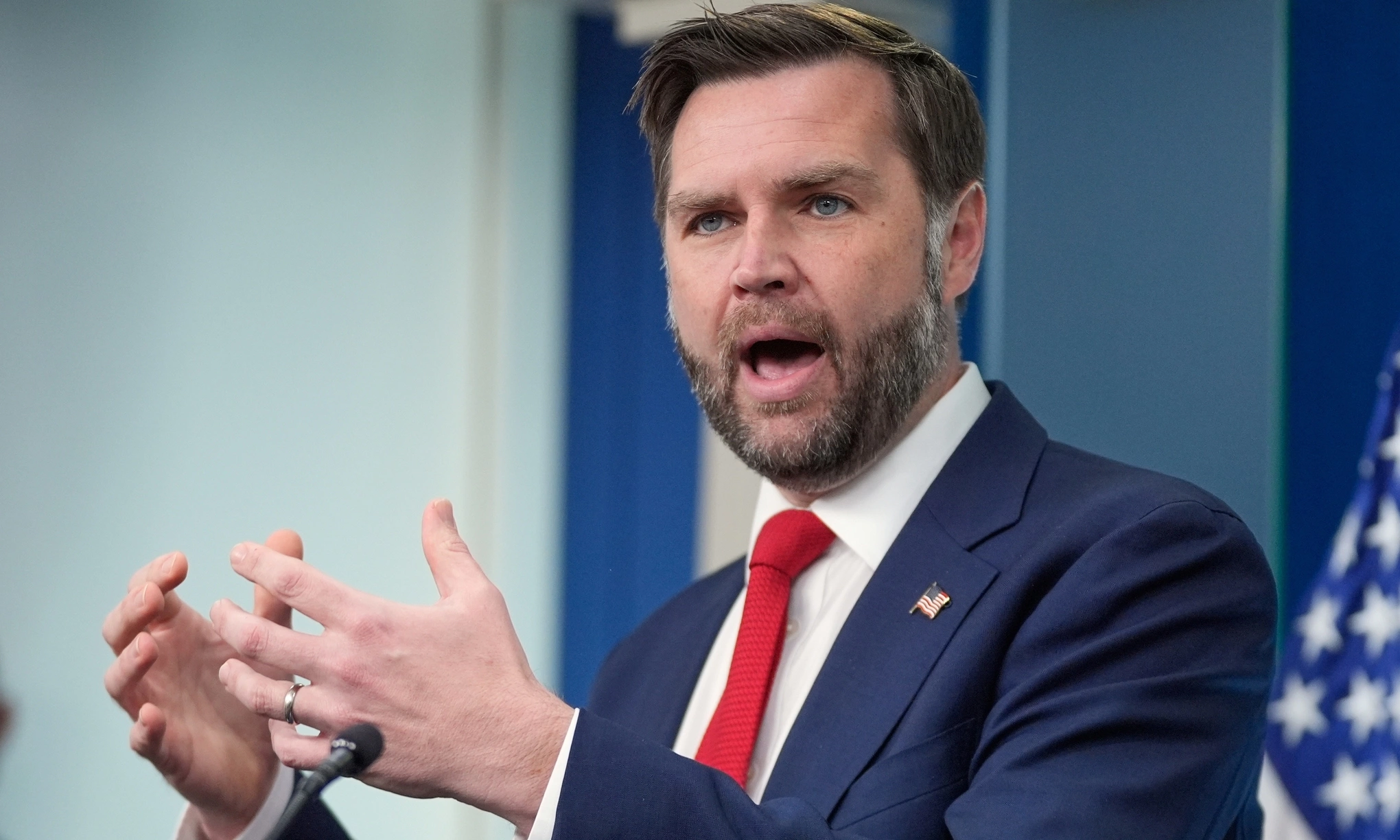
Political speeches frequently use language emphasizing collective identity and shared national ownership.
Such statements can be interpreted as expressions of solidarity.
They can also alienate people who believe the language excludes them.
The meaning depends on context, audience, and the conduct the speaker is advocating.
That principle should apply consistently.
A provocative statement made by a Muslim preacher deserves examination in its original setting.
A comparable statement made by a vice president also deserves interpretation within its political context.
Neither should automatically be transformed into proof of criminal intent.
The Constitution protects vigorous disagreement about national identity, religious beliefs, and political leadership.
But those protections have legal limits when speech becomes certain forms of unlawful conduct.
That is where the controversy moves from rhetoric toward constitutional law.
Can the Government Punish Organizations for Anti-American Speech?
The First Amendment protects freedom of speech and religious exercise against many forms of federal government interference.
Those protections do not depend on whether the government approves of a speaker’s political beliefs.
Americans can criticize elected officials, challenge national policies, and express unpopular religious opinions.
Speech that shocks or offends an audience is not automatically illegal.
Under the Supreme Court’s decision in Brandenburg v. Ohio, the government faces significant constitutional limits when attempting to punish advocacy of unlawful conduct.
The governing standard concerns speech directed toward producing imminent lawless action and likely to produce such action.
That protection does not mean every statement associated with violence is lawful.
True threats, certain forms of criminal solicitation, and material support for designated terrorist organizations can raise separate legal issues.
But broad political labels such as anti-American do not themselves establish those offenses.
The distinction is especially important for religious organizations.
An organization cannot ordinarily lose constitutional protections merely because government officials consider its theological views unpopular.
Likewise, the government cannot automatically revoke tax-exempt status solely because religious leaders make controversial political statements.
Federal tax law establishes specific requirements governing nonprofit organizations.
Violations must be evaluated under those requirements rather than through generalized ideological accusations.
The same principle applies to allegations involving funding.
If an organization knowingly provides prohibited support to a designated foreign terrorist organization, federal law may authorize substantial penalties.
But investigators must establish the relevant prohibited conduct.
They cannot assume that provocative religious rhetoric demonstrates a financial relationship with terrorism.
That distinction separates legitimate national security investigations from unconstitutional punishment for protected expression.
It also creates an important question concerning immigration enforcement.
Foreign nationals do not possess identical rights concerning admission to the United States as citizens residing within the country.
Nevertheless, immigration decisions remain subject to statutory requirements and applicable constitutional protections.
Officials cannot simply replace legal eligibility standards with a vague accusation that someone holds objectionable beliefs.
The Visa Question Behind the Alleged Legislation
The circulating narrative claims that Vance responded by drafting legislation targeting visas associated with organizations he considered hostile to America.
But visa law is more complicated than the story suggests.
The Immigration and Nationality Act establishes numerous grounds of inadmissibility and removability.
Those provisions address subjects including criminal activity, fraud, immigration violations, and certain national security concerns.
Specific legal restrictions also apply to individuals involved with terrorist organizations or prohibited activities.
Federal authorities can investigate credible allegations that a person violated those requirements.
But immigration enforcement must distinguish between conduct and constitutionally protected expression.
A religious sermon criticizing government policy is not automatically evidence of immigration fraud.
Nor does controversial political speech necessarily demonstrate participation in terrorism.
Investigators would need to identify the relevant legal provision and explain how the facts satisfy its requirements.
The person’s immigration status would also matter.
American citizens cannot be deported or have immigration visas revoked because they express controversial political or religious opinions.
Lawful permanent residents and other noncitizens possess different legal protections depending on their circumstances.
And an organization does not necessarily possess a visa merely because individuals associated with it may have immigration documentation.
Consequently, a proposal to revoke organizational visas would require much more precise legal language.
Congress would need to define which individuals were covered, what conduct triggered the restrictions, and what procedures applied.
Courts could then examine whether the resulting law complied with constitutional and statutory requirements.
The same practical challenge applies to federal funding.
Government agencies may impose lawful conditions on grants and contracts.
But restrictions targeting particular viewpoints or religious identities can raise serious constitutional concerns.
That is why the alleged legislation cannot be evaluated without an actual bill number, text, and legislative history.
The viral description provides none of those essential details.
As a result, it cannot establish that Vance advanced a legally defined proposal responding to Farooq.
The National Security Argument and Its Limits
Supporters of stronger immigration restrictions argue that federal authorities must identify genuine security threats before violence occurs.
They emphasize the government’s responsibility to protect residents from terrorism, intimidation, and organized criminal activity.
That responsibility is legitimate.
Law enforcement agencies can investigate credible threats, prohibited financing, and violations of immigration law.
But national security concerns do not eliminate the need for accurate evidence.
A disturbing quotation can justify questions about what a speaker meant.
It does not automatically establish an actionable threat.
A viral video can draw public attention to controversial rhetoric.
It does not automatically establish that an organization has committed a crime.
The same standards apply to individuals and institutions from different religious backgrounds.
Government investigations must identify conduct that violates the law.
They should not treat religious identity itself as evidence of dangerousness.
This distinction protects both public safety and constitutional rights.
An investigation focused on credible threats may prevent harm.
An investigation based only on unpopular beliefs may undermine freedoms that the government is obligated to protect.
The controversy involving Farooq demonstrates the difficulty of maintaining that balance during emotionally charged public debates.
Critics are entitled to challenge his rhetoric.
Supporters are entitled to argue that his statements were taken out of context.
But neither side can establish the legal consequences simply by repeating the most provocative excerpts.
The actual words, surrounding context, and any relevant conduct must remain central.
That is also true when evaluating political claims about proposed legislation.
A law cannot be accurately described without identifying what it would prohibit and whom it would affect.
And a political confrontation cannot be treated as a historical event without evidence that it occurred.
The Bigger Question About Who Belongs in America
The controversy began with a statement that appeared to challenge who could claim the United States as their country.
It expanded into allegations about immigration enforcement, federal funding, and the political response of Vice President Vance.
But the authenticated record supports a narrower conclusion.
Farooq’s remarks circulated widely and prompted disagreement about religious freedom and national belonging.
Vance has publicly supported stronger immigration enforcement and measures addressing alleged visa abuse.
He has also used similar ownership language in a different political context.
No verified record establishes that he personally confronted Farooq or unveiled the specific legislation described in the circulating narrative.
Those facts leave several important questions unresolved.
What did Farooq intend to communicate in the full original recording?
Which interpretations are supported by the broader context?
And what evidence would justify government action beyond public criticism?
The answers matter because the United States has a constitutional framework governing both national security and individual freedom.
Government officials can enforce immigration law.
They can investigate genuine threats and prohibited financial activity.
They can also propose new legislation addressing identified security problems.
But those powers must operate within applicable legal limits.
Religious identity cannot substitute for evidence of wrongdoing.
Political disagreement cannot automatically become a criminal accusation.
And controversial speech cannot be treated as proof of terrorism without the relevant legal and factual elements.
For Vance, the documented policy challenge involves distinguishing lawful immigration from fraud and unlawful conduct.
For Farooq, the controversy involves how his words should be interpreted and whether critics are accurately presenting their context.
For the public, the issue concerns the meaning of constitutional protection when speech is deeply unpopular.
The central question is not whether a provocative statement deserves criticism, but what evidence the government would need before turning that criticism into legal punishment.
That distinction is essential to any serious debate about visas, national security, and religious freedom.
The circulating story promises a confrontation ending with new legislation.
The verified record instead reveals a debate over immigration, political rhetoric, and the limits of government authority.
And those questions carry consequences beyond the individuals named in the controversy.
The United States must protect public safety while respecting the constitutional rights governing speech and religious exercise.
Whether lawmakers can maintain that balance is the issue that remains after the viral claims are separated from documented facts.
The question of who belongs in America cannot be answered through a selectively edited quotation alone.
It must be understood through the country’s laws, constitutional commitments, and the rights and responsibilities of the people who live under them.
