
“YOU HAVE 3 SECONDS TO APOLOGIZE!”: Viral M@rco Rubi0–A0C Showdown Raises Explosive Questions About Healthcare and Political Truth…
A dramatic confrontation involving Secretary of State M@rco Rubi0 and Representative Alexandria Ocasio-Cortez has become the subject of a sensational political narrative built around an alleged three-second ultimatum.
The account describes Rubio calmly demanding an apology after Ocasio-Cortez supposedly mocked his qualifications during a heated discussion about healthcare and the struggles of American working families.
But behind the extraordinary claims lies a critical problem: no authenticated congressional transcript, credible news report, or verified recording establishes that the confrontation unfolded as described.
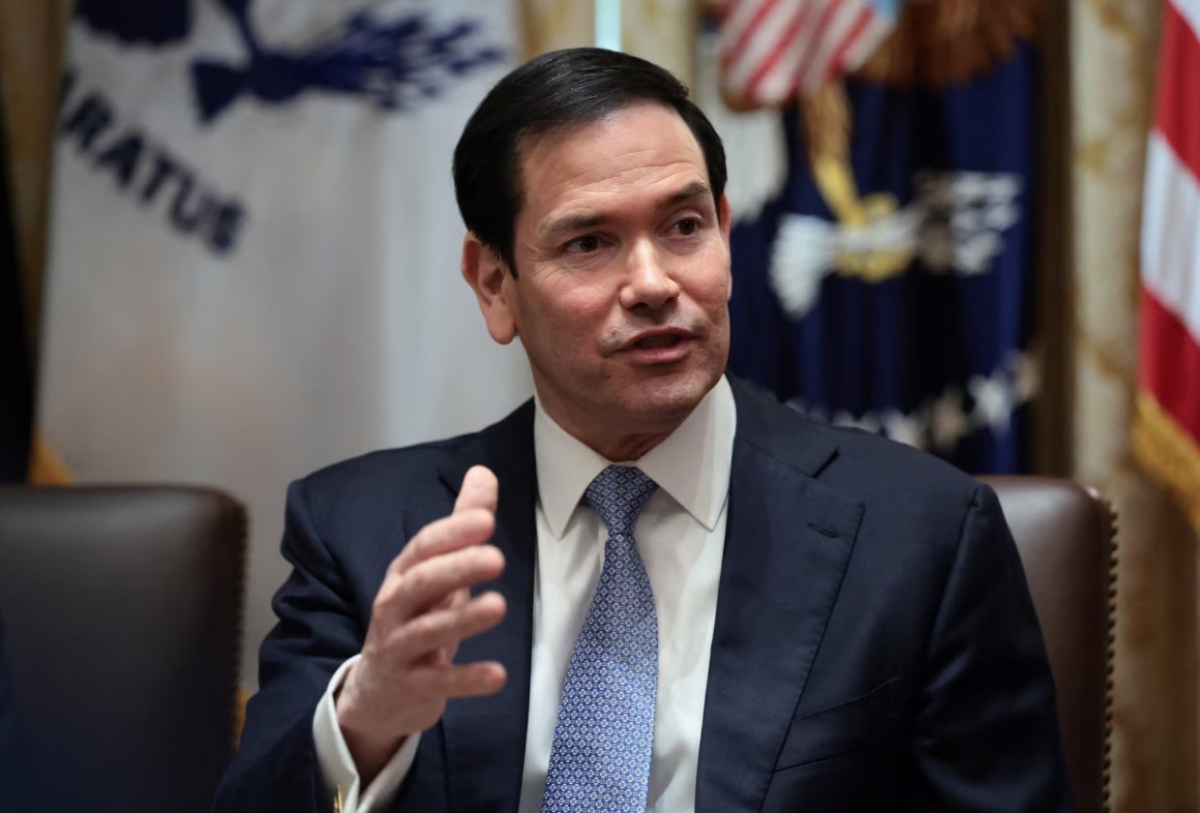
That distinction matters because the story combines recognizable political figures, genuine ideological disagreements, and emotionally charged accusations with an explosive exchange that has not been independently substantiated.
According to the circulating account, Ocasio-Cortez allegedly dismissed Rubio as a Louisiana farmer before he responded with a warning that she had only three seconds to apologize.
The narrative then claims Rubio opened a confidential report from 2018, identified families supposedly harmed by her policies, and delivered a devastating rebuttal that silenced the room.
Every element is designed to produce a powerful emotional reaction: an insult, an ultimatum, secret documents, suffering families, and the apparent collapse of a prominent politician’s credibility.
Yet the most consequential details remain unsupported, including the alleged quotation, the supposed confidential report, the identities of the families, and the existence of the congressional exchange itself.
There is also a glaring geographical inconsistency. Rubio represented Florida in the United States Senate, not Louisiana, and his political career has never centered on being a Louisiana farmer.
The Louisiana connection more closely resembles Senator John Neely Kennedy, another Republican politician frequently associated with sharp congressional questioning, folksy language, and confrontational exchanges with progressive Democrats.
That apparent confusion raises an important possibility: elements of different political personalities and previously circulated confrontation stories may have been combined into a single dramatic narrative.
Indeed, similar viral accounts involving Kennedy and Ocasio-Cortez have previously faced scrutiny after investigators found that purported Senate-floor confrontations were unsupported by authentic footage or official records.
Some of those accounts described angry exchanges, devastating quotations, and stunned audiences even though the underlying congressional events could not be verified as presented.

The Rubio story follows a comparable formula, transforming an ideological disagreement into a cinematic moment in which one politician supposedly destroys another through previously undisclosed evidence.
However, the absence of proof for the confrontation does not erase the genuine political disagreements between Rubio and Ocasio-Cortez over government responsibility, economic security, and healthcare affordability.
Those disagreements reflect competing approaches to the role of federal institutions and the degree to which government should intervene when families struggle to afford essential services.
Rubio entered national politics as a Republican senator from Florida, building his reputation around conservative principles, national security, economic opportunity, and opposition to expansive federal government programs.
After President Donald Trump returned to office, Rubio became secretary of state in January 2025, ending his Senate tenure and assuming responsibility for America’s diplomatic relationships and foreign policy priorities.
His confirmation received overwhelming bipartisan support, with senators voting 99–0 to approve his nomination, an unusually unanimous result for a high-profile Cabinet appointment.
That transition matters because the viral story portrays Rubio participating in an unspecified healthcare confrontation as a senator, despite his current responsibilities as the nation’s chief diplomat
Ocasio-Cortez, meanwhile, remains one of the Democratic Party’s most recognizable progressive voices, advocating an expanded federal role in healthcare, housing, labor protections, and economic inequality.
Her political identity has been shaped partly by arguments that healthcare costs and gaps in insurance coverage place unnecessary financial pressure on millions of American households.
She supports Medicare for All, a proposed single-payer healthcare system intended to guarantee coverage regardless of employment, income, or an individual’s ability to purchase private insurance.
Supporters argue that removing private insurance premiums and simplifying healthcare financing could make coverage more accessible while reducing the financial uncertainty experienced by working families.
Opponents challenge those claims, warning that a sweeping federal restructuring could require substantial new taxation, disrupt existing coverage arrangements, and introduce major implementation difficulties.
These competing positions create genuine political conflict without requiring an invented confrontation, because healthcare reform remains among the most consequential economic questions facing American voters.
For many households, the debate is not abstract. Insurance premiums, deductibles, prescription drug expenses, and unexpected medical bills can influence employment decisions and household financial stability.
A family with adequate insurance may still face significant out-of-pocket costs, while someone losing employment can suddenly confront uncertainty about continuing access to affordable medical coverage.
Such circumstances explain why Ocasio-Cortez frequently presents healthcare as a question of economic dignity rather than merely a debate over federal budgets and administrative structures.
Her policy arguments have also emphasized the relationship between healthcare affordability and the broader cost-of-living pressures confronting families in New York and across the country.
Rubio’s political tradition approaches many of those concerns differently, emphasizing economic opportunity, institutional accountability, and skepticism toward policies that concentrate additional authority within federal bureaucracies.
The disagreement ultimately concerns not whether working Americans deserve accessible healthcare, but which combination of government intervention, private institutions, and financial arrangements best achieves that objective.
That is a serious enough dispute to warrant rigorous questioning of both politicians’ assumptions, proposals, and the consequences their preferred policies might have for ordinary Americans.
The alleged confidential 2018 report is therefore particularly significant, because the narrative uses it to suggest Rubio possessed documentary evidence directly implicating Ocasio-Cortez in families’ suffering.
Yet the story provides no verifiable report title, issuing authority, document number, investigative finding, or independently identifiable family whose circumstances establish the accusations.
The year itself introduces another complication. Ocasio-Cortez won her first congressional election in November 2018 and did not take office until January 2019.

Consequently, a report supposedly demonstrating that families were destroyed by her congressional policies in 2018 would require an exceptionally clear explanation of its chronology and underlying evidence.
That does not mean her subsequent policies cannot be challenged. It means the particular allegation requires documentation before readers can reasonably treat it as an established finding.
Her actual healthcare record includes support for legislation expanding coverage and lowering prescription drug expenses, alongside continued advocacy for a universal single-payer system.
Her congressional office highlights the Inflation Reduction Act’s prescription drug provisions, including Medicare drug price negotiations and limits on certain out-of-pocket expenses for eligible beneficiaries.
Those measures provide concrete policy decisions that critics can evaluate, rather than relying on an unidentified document whose contents, relevance, and authenticity have not been established.
More recently, Ocasio-Cortez and Senator Chuck Schumer introduced legislation in October 2026 addressing healthcare coverage losses affecting New Yorkers enrolled in the state’s Essential Plan.
The proposal reflected the broader Democratic argument that federal healthcare policy changes were increasing financial insecurity among households already struggling with insurance costs and economic pressures.
Republicans, meanwhile, have defended their broader fiscal and healthcare priorities through arguments about government spending, program sustainability, and the need to control federal obligations.
Those disputes involve actual legislation, budgetary decisions, and families whose insurance arrangements may change depending on the policies adopted by Congress and state governments.
They also illustrate why the supposed Rubio confrontation can appear plausible to audiences already familiar with the ideological distance between prominent Republicans and progressive Democrats.
Rubio and Ocasio-Cortez have publicly represented contrasting visions of America’s political direction, including during the Munich Security Conference in February 2026.
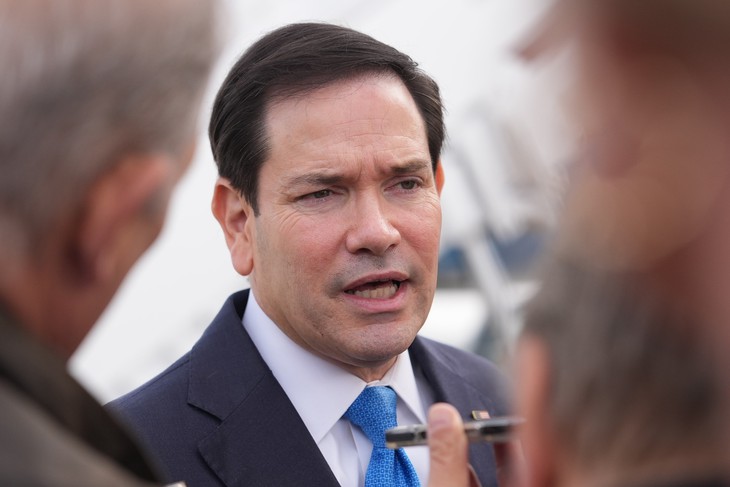
At that gathering, Ocasio-Cortez criticized aspects of American foreign policy and linked economic inequality to the dangers posed by authoritarian political movements.
Rubio emphasized Western identity, national sovereignty, immigration, and the importance of preserving the cultural and political foundations of American and European societies.
Their appearances offered a documented example of competing political philosophies, although they did not establish the direct healthcare exchange described in the viral narrative.
The difference between independently recorded disagreement and an alleged personal confrontation is essential, particularly when dramatic quotations are presented as if they were verbatim testimony.
A genuine congressional exchange would ordinarily have an identifiable date, a committee or public venue, relevant participants, and recordings or written testimony permitting independent verification.
A confidential report could also be identified through a document trail, even if particular protected details remained unavailable to the public for legitimate legal reasons.
The circulated account instead depends heavily on atmospheric descriptions, including a silent room, an intimidating stare, and an allegedly devastating revelation that supposedly left Ocasio-Cortez unable to respond.
Such descriptions can be effective storytelling devices, but without independent corroboration, they cannot establish what either politician actually said or how anyone present reacted.
The phrase demanding an apology within three seconds is especially important because quotation marks imply that the words were spoken exactly as represented.
Without an authenticated recording or transcript, attributing that sentence directly to Rubio would create a misleading impression of firsthand reporting about an event that remains unverified.
Nor is there verified evidence supporting the suggestion that Ocasio-Cortez publicly laughed at Rubio’s background or dismissed him using the supposed Louisiana farmer insult.
The accusation that her policies destroyed named working families also raises a substantial evidentiary question requiring documentation of the families, the policies involved, and the causal connection.
This matters for both politicians because inaccurate confrontation stories can distort their actual positions and replace substantive disagreements with personalized political performances designed primarily for attention.
The problem extends beyond one viral narrative. Modern political media frequently rewards short clips, emotional headlines, and simplified stories featuring an unmistakable winner and loser.
Complex policy disputes become easier to circulate when reduced to a dramatic insult followed by a supposedly irresistible response from a favored political figure.
However, that presentation can obscure the very questions voters need answered, including whether proposed healthcare reforms would lower costs, expand coverage, or introduce unexpected financial burdens.
It can also encourage audiences to assess politicians through the perceived humiliation of their opponents rather than the measurable performance of legislation and public programs.
Recent developments have made those substantive issues even more important as Americans continue confronting healthcare affordability alongside broader concerns about economic conditions and household expenses.
On November 13, Rubio addressed economic frustrations during remarks to the Federalist Society, acknowledging that many Americans continued experiencing serious financial pressure despite broader measures of national prosperity.
His comments highlighted an important political reality: the lived experience of families purchasing necessities can differ substantially from optimistic assessments based on aggregate economic indicators.
Although the address was not a healthcare debate with Ocasio-Cortez, its emphasis on household affordability demonstrates why economic security remains central to both Republican and Democratic political arguments
The essential healthcare questions therefore remain unanswered by the sensational confrontation narrative, regardless of how dramatically the alleged exchange is presented or how widely it circulates.
What would Medicare for All cost? How would Americans experience the transition? Could alternative reforms preserve existing coverage while making care significantly less expensive?
Those questions deserve answers based on legislation, financial projections, independently examined evidence, and clearly documented statements rather than claims about confidential reports that cannot be located.
Rubio’s conservative priorities and Ocasio-Cortez’s progressive agenda offer legitimate material for political scrutiny, especially where their competing approaches have meaningful consequences for American families.
Their disagreements are also significant without fabricated threats, imaginary moments of silence, or accusations about unidentified victims whose alleged experiences have not been independently verified.
Ultimately, the strongest evidence against a politician’s position is not a theatrical ultimatum. It is a documented contradiction, an unsuccessful policy, or a measurable consequence that withstands scrutiny.
The viral claim of Rubio silencing Ocasio-Cortez remains unsupported, while the broader struggle over healthcare affordability and government responsibility continues to affect millions of Americans.
And that leaves the real political challenge unresolved: when Americans examine the records instead of the spectacle, whose policies can actually deliver the security working families need?
