
— And His Final Warning Leaves Washington’s Republican Establishment Reeling
Secretary of State Marc0 Rubi0 stared at the Senate’s departing lawmakers, watching another precious afternoon disappear while Donald Trump’s remaining nominees faced an increasingly unforgiving confirmation deadline.
Republicans had suffered devastating midterm losses, and Democrats were preparing to assume control of the Senate when the new Congress convened in January.
The outgoing Republican majority still possessed something its political opponents could not immediately take away.
Time.
But as Senate Majority Leader John Thune prepared to send lawmakers home for an extended weekend, conservative frustration was reaching a breaking point.
Some Republicans wanted around-the-clock sessions, overnight votes, and every available hour devoted to confirming Trump’s remaining executive and judicial nominees.
Rubio understood the stakes.
He had served in the Senate for years before becoming Trump’s secretary of state, and he knew how quickly legislative deadlines could destroy political ambitions.
When an exhausted Republican colleague defended the chamber’s schedule, Rubio finally spoke.
“We are led by cowards in expensive suits.”
Nobody immediately answered.
But his next question would force the room to confront something far more uncomfortable than an interrupted holiday.
The Senate Clock Becomes a Political Weapon
The confrontation unfolded inside a private Republican strategy meeting as lawmakers debated how aggressively to pursue Trump’s remaining nominations.
Thune stood beside a conference table covered with scheduling memoranda, nomination lists, and proposed legislative priorities.
He had recently secured another term leading Senate Republicans despite the party’s electoral setbacks.
His challenge was substantial.
The outgoing majority needed to address government funding, defense legislation, judicial vacancies, and unfinished executive nominations before Democrats gained control.
Every priority competed for the same limited number of legislative hours.
Thune argued that Senate procedure required careful coordination, particularly when controversial nominations could face extended debate and procedural objections.
“We can’t pretend the calendar is unlimited,” he told the group.
A conservative senator interrupted.
“Nobody’s pretending that, John.”
“That’s why we’re asking you to use every hour we’ve got.”
Thune insisted that forcing continuous sessions would not automatically produce successful confirmation votes.
Some nominations lacked sufficient support, while others required additional review before colleagues would agree to proceed.
Rubio listened.
He understood those obstacles better than most officials in the room.
But he was troubled by an argument that appeared to treat the Senate’s existing schedule as something beyond political control.
“John, nobody is asking you to invent more days,” Rubio finally said.
“We’re asking why you’re giving away the ones you already have.”
Thune turned toward him.
“Marco, managing the Senate isn’t as simple as keeping the lights on.”
Rubio nodded slowly.
“Then explain which problem gets solved by turning them off.”
The question drew attention across the table.
Thune described the need for negotiations, staff preparation, and time for members to evaluate nominees.
Rubio accepted that senators required reliable information before confirming anyone to a powerful federal position.
But he challenged the assumption that those responsibilities demanded an extended break.
“If the work isn’t finished, why are we acting like leaving Washington is the responsible choice?”
The room became quieter.
Rubio had moved the discussion away from personal convenience and toward the consequences of unfinished business.
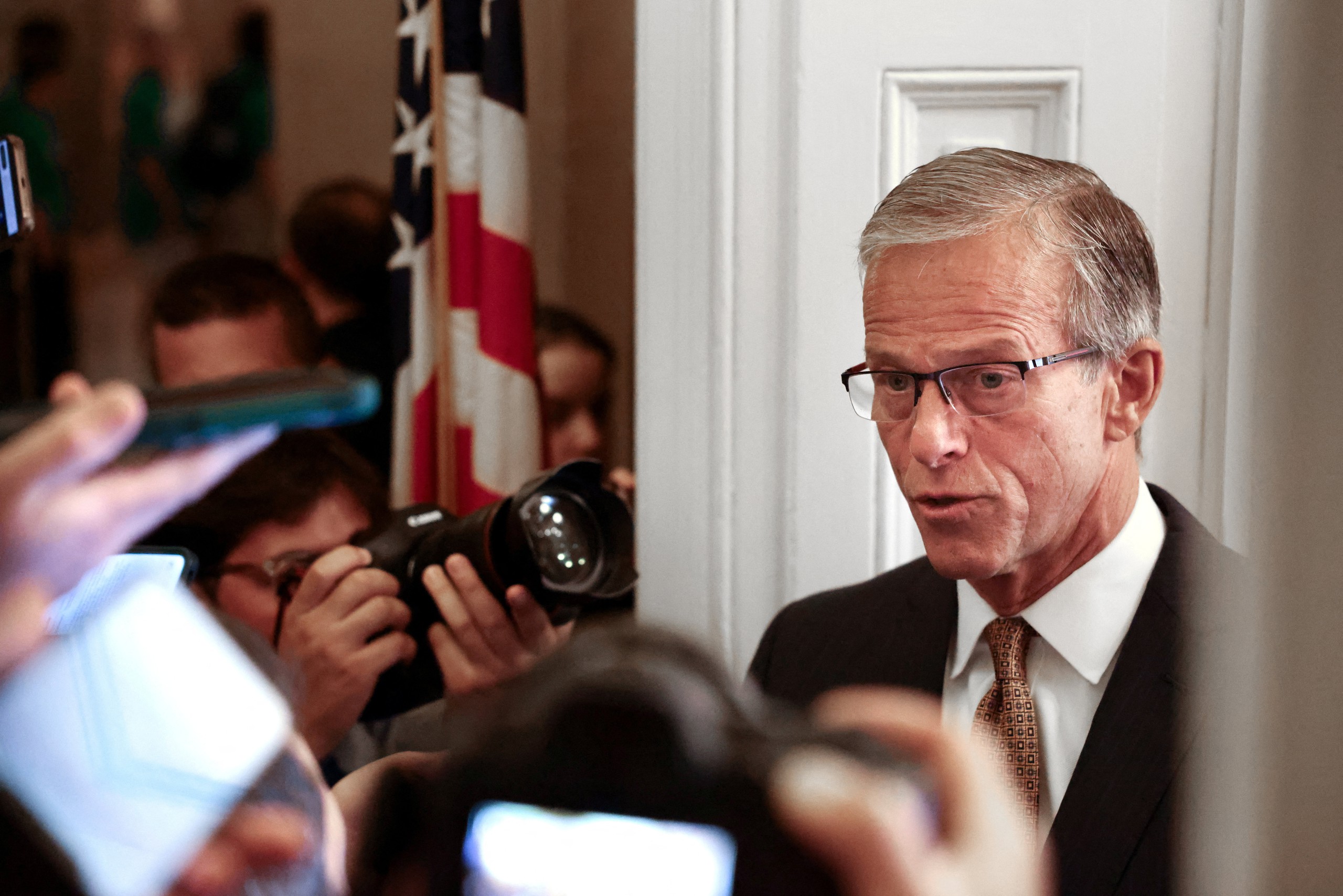
Rubio Challenges the Establishment’s Convenient Excuses
Thune’s allies argued that the Senate could not operate effectively through permanent confrontation.
They warned that aggressive scheduling might deepen partisan hostility without producing enough votes to confirm disputed nominees.
Rubio acknowledged that possibility.
But he questioned whether leadership had explored every legitimate option before accepting delays.
“Let’s separate two problems,” he said.
“One is that we don’t have the votes.”
“The other is that we don’t want to spend the time finding out.”
A senior Republican insisted that senators had already worked through difficult negotiations.
Rubio glanced toward the nomination list.
“Then why are we discussing another weekend away while these names are still sitting here?”
Thune reminded him that many nominees had complex records requiring examination.
Rubio agreed that confirmation should never become a ceremonial rubber stamp.
He had faced Senate questioning himself before receiving unanimous confirmation as secretary of state.
But careful review, he argued, did not justify allowing vacancies to remain unresolved merely because the chamber preferred its usual routines.
“Nobody should be confirmed without scrutiny,” Rubio said.
“But scrutiny requires senators to actually be here doing the scrutinizing.”
A few lawmakers nodded.
Others appeared irritated by the implication that their work ethic was inadequate.
Rubio continued without raising his voice.
“If the nominee isn’t qualified, reject the nominee.”
“If the evidence is incomplete, demand the evidence.”
“But don’t hide behind process when what you really mean is that nobody wants another late night.”
Thune leaned forward.
“That’s an unfair characterization.”
Rubio looked directly at him.
“Then give me the fair one.”
For several seconds, the discussion returned to staffing limitations, Senate rules, and the difficulty of assembling sufficient votes.
Rubio listened until the explanation ended.
Then he asked for the document showing which nominations were genuinely blocked by procedural obstacles.
Nobody immediately produced a complete breakdown.
That omission became the turning point.
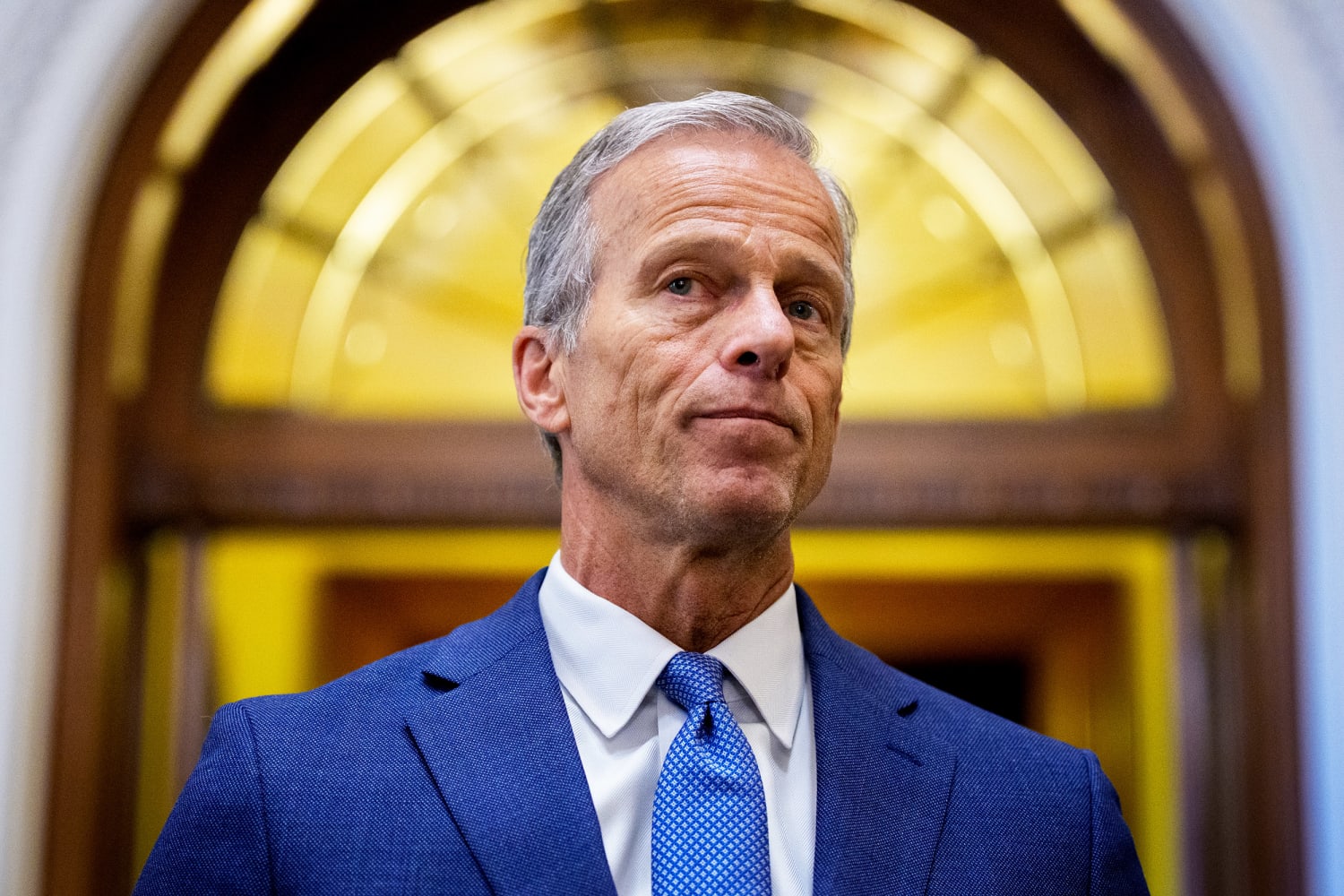
The Nomination List Reveals an Uncomfortable Problem
Rubio pulled the scheduling memorandum toward him and began examining the remaining nominations.
The document separated nominees into three categories.
Some had completed committee review and appeared ready for floor consideration.
Others faced unresolved objections from individual senators or required additional hearings.
A third group remained delayed because leadership had not assigned a final voting schedule.
Rubio tapped the third column.
“These are the ones I want explained.”
Thune examined the page.
Several names belonged to positions that could become harder to fill after the transition to Democratic control.
Rubio did not argue that those nominees deserved automatic approval.
He argued that the Senate owed them a decision.
“There’s a difference between losing a vote and refusing to hold one,” he said.
A senior senator countered that leadership needed to prioritize nominees with the strongest prospects for confirmation.
“Then rank them,” Rubio replied.
“Tell the president which nominations are ready.”
“Tell him which ones lack support.”
“And tell the public which positions Congress has decided to leave vacant.”
Thune acknowledged that a more detailed public schedule might clarify the chamber’s remaining priorities.
But he cautioned against publishing commitments that depended on negotiations with senators who might change their positions.
Rubio accepted that uncertainty while rejecting the idea that uncertainty made planning useless.
“We can’t control every vote,” he said.
“But we can control whether we’re willing to take responsibility for scheduling one.”
The distinction shifted the argument.
Instead of demanding unquestioning loyalty to Trump’s nominees, Rubio was demanding a transparent explanation of what the majority could accomplish.
And he wanted that explanation before lawmakers disappeared for another extended break.
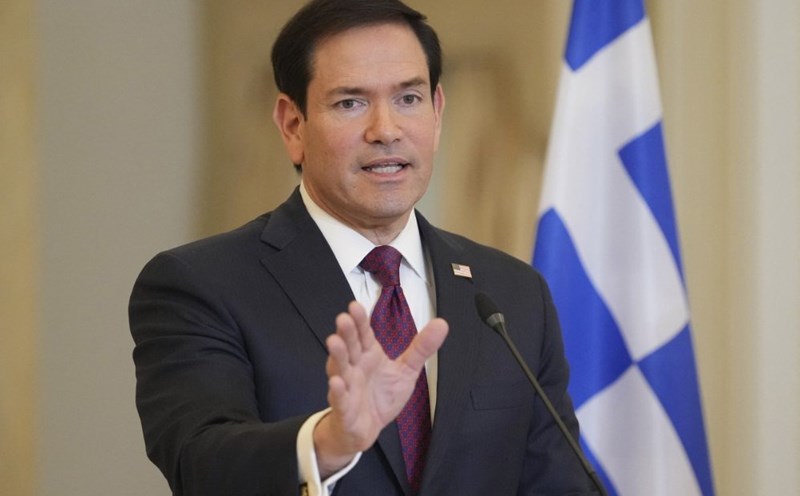
The Cots in the Cloakroom Challenge Changes Everything
A conservative senator finally proposed what several members had been discussing privately.
“If the problem is time, we’ll bring cots into the cloakroom.”
“We’ll sleep here.”
“We’ll work through the weekend.”
“We’ll vote whenever necessary.”
The suggestion drew nervous laughter from lawmakers who understood how exhausting continuous Senate proceedings could become.
Rubio did not laugh.
“That’s at least an answer,” he said.
Thune raised an important objection.
“Sleeping in the cloakroom doesn’t create sixty votes.”
“Nor does it eliminate procedural requirements.”
Rubio agreed.
“Then nobody should pretend it does.”
He explained that the cots were not the essential issue.
The proposal represented a willingness to distinguish unavoidable procedural obstacles from scheduling decisions lawmakers could actually change.
“Don’t sell the public a photograph of senators sleeping on uncomfortable furniture,” Rubio warned.
“Show them a schedule that explains what those sacrifices accomplish.”
Thune asked whether Rubio expected the chamber to abandon all other legislative priorities.
“No,” Rubio answered.
“I expect you to tell us what matters most and defend the order you’ve chosen.”
He pointed toward the government funding deadline.
“Keeping the government funded matters.”
He pointed toward the defense legislation.
“National security matters.”
Then he returned to the nominations.
“And staffing the government with officials who can lawfully carry out its responsibilities matters.”
Rubio was no longer discussing whether senators deserved a holiday.
He was challenging the leadership’s ability to explain its priorities under intense political pressure.
The distinction mattered because a dramatic overnight session could accomplish nothing without the votes and legal procedures needed to complete Senate business.
But an unexplained recess could also conceal decisions that leaders were unwilling to defend publicly.
Rubio wanted those decisions exposed.
John Thune Fires Back With a Reality Check
Thune finally set aside his prepared schedule.
“Marco, there’s something you’re leaving out.”
Rubio waited.
“You can demand every hour on the calendar, but you still need fifty senators willing to vote together.”
Thune explained that Republican disagreements were not limited to personalities or scheduling preferences.
Some members questioned individual nominees.
Others disagreed about the administration’s legislative priorities.
Still others wanted assurances about government spending before committing to additional procedural battles.
“Leadership cannot manufacture unity that doesn’t exist,” Thune said.
Rubio considered the argument.
“That’s true.”
The acknowledgment briefly changed the atmosphere.
Then Rubio continued.
“But leadership can make members explain where they stand.”
He suggested that senators should receive a clear list identifying each pending nomination, outstanding objection, and realistic path toward a final vote.
Thune warned that public pressure could harden opposition instead of resolving it.
Rubio accepted that risk.
But he argued that avoiding public accountability also carried consequences.
“Maybe the votes aren’t there,” he said.
“Maybe some nominees really cannot be confirmed.”
“Then we should say so instead of pretending another weekend will somehow change the arithmetic.”
Thune looked down at the documents.
The argument had become more difficult than a simple accusation of laziness.
Rubio was asking leadership to distinguish between the work that remained possible and the ambitions the party could no longer achieve.
That difference had consequences for every nomination.
Rubio’s Final Warning Leaves the Room Silent
As the meeting approached its conclusion, Thune asked his colleagues to identify a realistic schedule for the remaining legislative session.
Rubio stood beside the conference table.
He had one final point.
“John, I know what this chamber can do when senators believe something matters.”
“I’ve watched people stay here until midnight over issues that never mattered half as much as the speeches surrounding them.”
He looked around the room.
“Now we’re facing an actual deadline.”
“Every nomination we leave unresolved becomes a decision the next Senate may handle differently.”
“Some nominees should lose.”
“Some deserve further investigation.”
“But others deserve a final vote, and we’re running out of excuses for avoiding one.”
Thune responded that the leadership would review the remaining calendar.
Rubio shook his head.
“A review isn’t a decision.”
He pushed the scheduling memorandum back toward the majority leader.
“Give the country a list.”
“Show which nominees are ready.”
“Show which ones are blocked.”
“Show which votes you intend to schedule.”
“And if you can’t get the votes, admit it.”
Nobody interrupted.
Rubio lowered his voice.
“Because the worst thing we can do is tell voters we’re fighting while quietly accepting the outcome we claim we’re trying to prevent.”
Then he delivered his final warning.
“You cannot surrender time twice.”
The sentence landed differently from his earlier accusation about expensive suits.
It captured the practical limitation that neither political determination nor party loyalty could overcome.
Once the outgoing majority’s authority expired, its unfinished business would pass into a different political environment.
Thune remained beside the table, examining the schedule.
Rubio continued.
“Spend the time wisely, or explain why you didn’t.”
“But don’t come back after January pretending the calendar betrayed you.”
“The calendar didn’t vote.”
“Nobody forced us to waste an opportunity we still had.”
The meeting ended without a promise to confirm every nominee.
Such a promise would have been impossible to guarantee.
Instead, Thune agreed to circulate a revised schedule identifying nominations ready for floor consideration and separating them from those requiring further action.
The proposed schedule would also identify the votes leadership believed could realistically occur before the transition.
It was a limited concession, not a sweeping political victory.
But the distinction mattered.
The party would no longer be able to describe every unfinished nomination as the unavoidable consequence of insufficient time.
Lawmakers would have to confront specific choices about priorities, procedural obstacles, and the limits of their remaining majority.
Rubio had entered the discussion accusing the establishment of surrendering too easily.
Thune had responded by exposing the practical realities of managing a divided Senate.
Neither argument erased the other.
The remaining question was whether Republican leadership could convert its final weeks of power into decisions that survived public scrutiny.
As lawmakers gathered their documents, Rubio offered one last observation.
“Nobody remembers how comfortable the chairs were.”
“They remember what you did while you had the votes.”
The deadline was approaching.
The chamber still had work to do.
And every hour that disappeared would leave the next Congress with one more decision the outgoing majority had failed to make.
