
Ted Cr.u.z was halfway through his opening statement when Sheldon Whi.t.e.h.o.u.s.e placed a single document on the Senate committee table.
The Texas senator had been describing a proposed presidential veto override as an extraordinary assault on executive authority.
His argument was forceful, carefully delivered, and designed to highlight the political consequences of the proposed legislation.
But Whi.t.e.h.o.u.s.e had noticed something that would become increasingly difficult to explain.
The document contained the exact constitutional provision governing the procedure Cr.u.z was criticizing.
Whi.t.e.h.o.u.s.e waited until Cr.u.z described the proposed override as a constitutional coup.
Then the Rhode Island senator leaned toward his microphone.
“Even a Rhode Island middle schooler knows a veto override is not a constitutional coup.”
The fictional hearing room fell silent.
Cr.u.z turned toward him, apparently preparing to challenge the remark.
Whi.t.e.h.o.u.s.e continued before the senator could redirect the conversation.
“Senator, we’re not discussing some secret procedure invented by your political opponents.”
He tapped the document.
“We’re discussing Article I, Section 7, of the United States Constitution.”
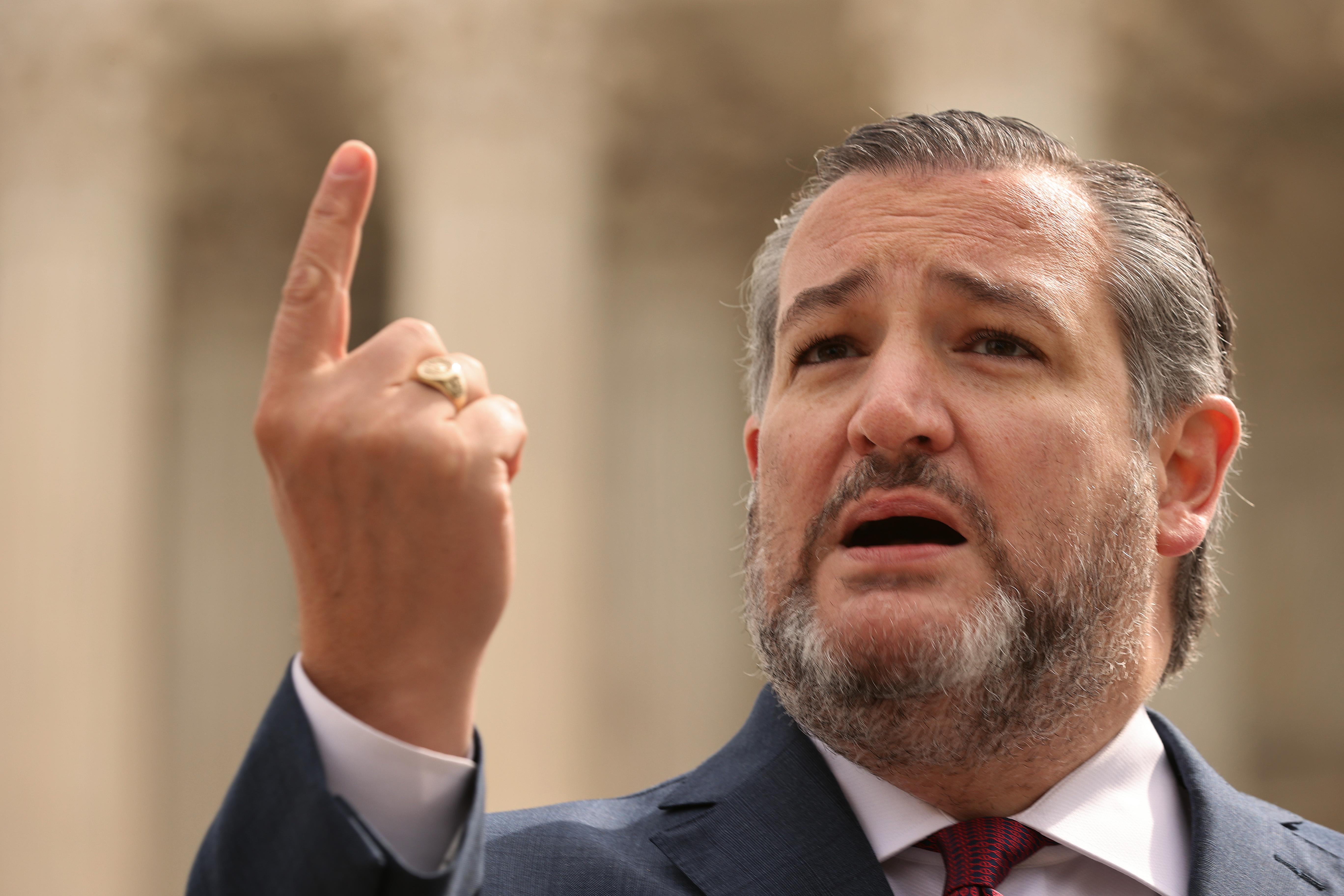
The moderator glanced toward the constitutional adviser sitting beside the committee clerk.
Whi.t.e.h.o.u.s.e slowly pushed the document toward Cr.u.z.
“Would you mind explaining which part of this provision you believe authorizes an unconstitutional takeover?”
Cr.u.z responded that the proposed override threatened the president’s ability to pursue his legislative agenda.
Whi.t.e.h.o.u.s.e acknowledged that an override could defeat a president’s preferred policy.
But he challenged the suggestion that such an outcome represented a constitutional violation.
“Those are two entirely different arguments, Senator.”
The adviser confirmed that the Constitution explicitly permits Congress to reconsider legislation vetoed by a president.
A successful override requires two-thirds support among voting members in both chambers, with a quorum present.
That requirement makes the process difficult, but its constitutional legitimacy is not dependent on presidential approval.
Whi.t.e.h.o.u.s.e pointed toward the relevant passage.
“Congress doesn’t need the president’s permission to exercise a power the Constitution already gives it.”
Cr.u.z responded that the political circumstances surrounding this particular proposal remained deeply troubling.
He argued that lawmakers were attempting to undermine an agenda supported by millions of Americans.
Whi.t.e.h.o.u.s.e did not dispute that the legislation could have serious political consequences.
Instead, he questioned why those consequences justified describing an established constitutional procedure as a coup.
The chairman asked both senators to focus on the actual disagreement.
Cr.u.z returned to the microphone.
He explained that the proposed legislation would substantially change the administration’s policy direction.
The president had rejected the measure because of serious objections to its substance and implementation.
Congressional supporters nevertheless wanted to enact it over those objections.
Cr.u.z maintained that the effort represented an aggressive political challenge to presidential leadership.
Whi.t.e.h.o.u.s.e nodded.
“Now we’re getting somewhere.”
The senator opened a second folder.
It contained the constitutional steps required to complete an override.
The first page described the president’s decision to return legislation with objections.
The next described reconsideration by the chamber where the legislation originated.
The final page explained the voting requirements in the second chamber.
Whi.t.e.h.o.u.s.e arranged all three pages in front of Cr.u.z.
“Tell me exactly which of these steps becomes unconstitutional when the president happens to be from your party.”
The question changed the atmosphere.
Cr.u.z answered that the constitutional procedure itself was established law.
However, he insisted that lawmakers could still misuse legitimate powers for destructive political purposes.
Whi.t.e.h.o.u.s.e acknowledged that constitutional authority did not automatically make every policy decision wise.
But he wanted to identify the precise accusation being made.
Was Cr.u.z criticizing the policy, the political motivations, or the constitutional procedure itself?
Cr.u.z argued that the three issues were closely connected.
Whi.t.e.h.o.u.s.e responded that closely connected questions still required separate answers.
He then asked the adviser to explain what a successful veto override actually accomplished.
The adviser described a legislative outcome, not a transfer of presidential office.
A qualifying congressional supermajority could enact legislation despite the president’s objections.
The president would remain in office.
The executive branch would retain its constitutional responsibilities.
And the enacted legislation would remain subject to applicable constitutional limitations.
Whi.t.e.h.o.u.s.e turned toward Cr.u.z.
“That’s not overthrowing a president. That’s Congress performing its constitutional function.”
Cr.u.z responded that political language sometimes reflected the extraordinary consequences of legislative decisions.
Whi.t.e.h.o.u.s.e challenged that explanation.
“Extraordinary consequences don’t turn a lawful vote into an unlawful seizure of power.”
The chairman called for order as several members attempted to speak simultaneously.
But Whi.t.e.h.o.u.s.e had another document ready.
He removed a historical summary of presidential veto overrides.
The record showed that Congress had exercised this authority under presidents from different political parties.
Some overrides concerned major national policy disputes.
Others involved narrower disagreements over legislative details.
The political circumstances varied.
The constitutional process remained the same.
Whi.t.e.h.o.u.s.e asked whether Cr.u.z accepted the legitimacy of earlier overrides carried out under Republican presidents.
Cr.u.z responded that each historical dispute required examination on its merits.
Whi.t.e.h.o.u.s.e agreed that the underlying legislation could be debated individually.
But he returned to the constitutional question.
“If the process was legitimate then, why would the same process become a coup today?”
Cr.u.z emphasized that he was criticizing the political objectives behind the current effort.
Whi.t.e.h.o.u.s.e paused.
Then he slowly closed the historical folder.
“Then perhaps you should say that instead.”
The fictional committee room grew quieter.
The exchange had reached its first significant turning point.
Cr.u.z’s strongest argument concerned the policy consequences of the proposed override.
Whi.t.e.h.o.u.s.e’s challenge concerned the language used to describe its constitutional legitimacy.
Those positions could be debated without treating the Constitution itself as uncertain.
But Whi.t.e.h.o.u.s.e believed the distinction carried consequences beyond the immediate legislative dispute.
He opened a third folder.
This one contained a hypothetical vote-count worksheet prepared for the hearing.
The worksheet illustrated how the override threshold would operate in each chamber.
Whi.t.e.h.o.u.s.e asked the clerk to display the numbers.
If all 100 senators voted, 67 affirmative votes would satisfy the two-thirds requirement.
If all 435 House members voted, 290 affirmative votes would be required.
The actual threshold would depend on how many members voted, provided a quorum was present.
The adviser confirmed the calculation.
Whi.t.e.h.o.u.s.e turned toward Cr.u.z.
“These are not easy numbers to reach.”
Cr.u.z acknowledged that the Constitution established a demanding threshold.
Whi.t.e.h.o.u.s.e continued.
“So the framers didn’t give Congress some effortless shortcut around the presidency.”
The adviser explained that the arrangement balanced presidential resistance against substantial congressional agreement.
A president could block legislation through a veto.
But sufficiently broad congressional support could overcome that objection.
Neither branch possessed unlimited legislative authority.
The system required institutional negotiation.
Whi.t.e.h.o.u.s.e pointed toward the worksheet.
“Then why describe this safeguard as an attack on the Constitution?”
Cr.u.z argued that the legislation could still represent a serious political mistake.
He maintained that the president’s objections deserved meaningful consideration.
Whi.t.e.h.o.u.s.e agreed.
But he reminded the committee that presidential objections were already central to the override process.
The president’s veto message formally explained those objections.
Congress could consider them before deciding whether to repass the legislation.
The process was specifically designed to address disagreements of that kind.
The adviser confirmed that the relevant procedure followed established congressional practices.
Whi.t.e.h.o.u.s.e returned to the central accusation.
“Senator, disagreeing with the president isn’t the same as illegally removing the president.”
The chairman asked Cr.u.z whether he wished to clarify his terminology.
Cr.u.z responded that his language reflected the intensity of the political struggle.
He said the proposed legislation could undermine commitments made to the electorate.
Whi.t.e.h.o.u.s.e acknowledged that elected officials had responsibilities to their constituents.
But he emphasized that Congress also derived authority from voters.
Members of the House and Senate were not appointed to serve exclusively as presidential supporters.
They possessed independent legislative responsibilities.
Their votes could support the president.
Their votes could also oppose the president.
The Constitution provided procedures for both circumstances.
Whi.t.e.h.o.u.s.e placed his hand on the constitutional document.
“A president doesn’t stop being president because Congress overrides a veto.”
Cr.u.z replied that nobody was seriously proposing to remove the president through the legislation.
The answer gave Whi.t.e.h.o.u.s.e another opening.
“Then why use language suggesting that the government is being overthrown?”
The room fell silent again.
The chairman asked the constitutional adviser to distinguish a political coup from a lawful veto override.
The adviser explained that a coup generally involves an unlawful seizure or displacement of governmental authority.
A constitutional veto override operates through authorized legislative procedures.
The two concepts describe fundamentally different events.
However, lawmakers remained free to criticize the policies enacted through those procedures.
Whi.t.e.h.o.u.s.e nodded.
“That’s the distinction I’ve been asking for.”
Cr.u.z responded that intense political rhetoric was common across party lines.
He suggested that lawmakers frequently accused their opponents of threatening constitutional government.
Whi.t.e.h.o.u.s.e acknowledged that political exaggeration was not confined to one party.
But he argued that repetition did not make inaccurate constitutional terminology more useful.
The discussion then moved toward an unexpected subject.

Cr.u.z’s own legal background.
Whi.t.e.h.o.u.s.e placed a brief biographical summary beside the Constitution.
The document identified Cr.u.z’s Harvard Law School education and his experience as Texas solicitor general.
He had argued cases before the United States Supreme Court.
His professional background included substantial constitutional litigation experience.
Whi.t.e.h.o.u.s.e looked toward him.
“Senator, nobody here doubts that you’ve studied constitutional law.”
Cr.u.z remained silent.
Whi.t.e.h.o.u.s.e continued.
“That’s precisely why your choice of words deserves serious examination.”
The chairman interrupted before the exchange became personal.
He reminded both senators that educational credentials did not determine whether a particular argument was correct.
The committee needed to evaluate constitutional text and legal reasoning.
Whi.t.e.h.o.u.s.e agreed.
Then he removed the biographical document.
The focus returned to the legislation.
Cr.u.z argued that the proposed override deserved opposition because of its substantive effects.
Whi.t.e.h.o.u.s.e acknowledged that lawmakers could make that case publicly.
They could examine financial costs.
They could challenge administrative consequences.
They could question whether the legislation achieved its stated goals.
And they could vote against the measure without undermining constitutional principles.
But none of those arguments required calling the override procedure itself unlawful.
The moderator asked whether the distinction could change the public debate.
Whi.t.e.h.o.u.s.e responded that constitutional language carried significant weight.
When officials described lawful procedures as illegitimate, citizens could misunderstand how their government operated.
Cr.u.z countered that citizens also deserved strong warnings about harmful legislation.
Whi.t.e.h.o.u.s.e agreed that forceful warnings were appropriate when grounded in accurate descriptions.
The adviser emphasized that constitutional legitimacy and policy wisdom were different questions.
A measure could satisfy constitutional procedures and still produce controversial results.
Conversely, a popular political objective could not justify bypassing constitutional requirements.
The committee examined both possibilities.
Then Whi.t.e.h.o.u.s.e returned to the original hypothetical proposal.
He asked whether the override had actually received the necessary supermajorities.
The clerk answered that the fictional proposal had not yet completed the required voting process.
It remained a contested legislative effort.
That answer introduced a second problem with the earlier rhetoric.
The purported constitutional crisis had been described before the legislative outcome was even established.
Whi.t.e.h.o.u.s.e pointed toward the vote-count worksheet.
“So we’re debating a potential outcome under rules Congress hasn’t finished applying.”
Cr.u.z acknowledged that the votes remained uncertain.
But he argued that lawmakers should warn constituents before consequential decisions occurred.
Whi.t.e.h.o.u.s.e accepted the importance of advance debate.
He then asked whether those warnings should accurately describe the legal process underway.
The adviser answered that precision was important when explaining constitutional procedures.
The chairman called for a brief recess.
When the hearing resumed, Whi.t.e.h.o.u.s.e returned with one final document.
It was not another historical example.
Nor was it an additional constitutional opinion.
Instead, it was a short statement summarizing Cr.u.z’s clarified position during the hearing.
The statement identified objections to the proposed legislation’s political and policy consequences.
It did not challenge the existence of Congress’s constitutional override authority.
Whi.t.e.h.o.u.s.e placed the statement next to the original description of a constitutional coup.
The contrast became the decisive moment.
One characterization suggested an unlawful attack against the presidency.
The other described a lawful legislative disagreement with potentially serious political consequences.
The committee could evaluate the second claim through ordinary policy debate.
The first required a legal argument that had not been established.
Whi.t.e.h.o.u.s.e looked toward Cr.u.z.
“Senator, this is what your argument sounds like when we remove the accusation of a coup.”
Cr.u.z examined the statement.
He responded that he continued to oppose the legislative proposal strongly.
Whi.t.e.h.o.u.s.e acknowledged his opposition.
He did not ask Cr.u.z to support the legislation.
Nor did he demand agreement about the president’s policy agenda.
Instead, he asked whether the senator accepted that a properly executed override would be constitutionally authorized.
Cr.u.z confirmed the existence of that authority.
Whi.t.e.h.o.u.s.e slowly nodded.
The chairman asked the clerk to preserve the clarification in the hearing’s record.
That action gave the exchange a concrete consequence.
The committee now had a clear distinction between the disputed policy and the constitutional procedure governing it.
Whi.t.e.h.o.u.s.e gathered his documents.
But before sitting down, he requested one final question.
The chairman granted permission.
Whi.t.e.h.o.u.s.e turned directly toward Cr.u.z.
“Senator, you know the Constitution gives Congress the power to override a veto.”
He paused.
“You know that power requires substantial support in both chambers.”
Then he placed the original constitutional document back on the table.
“If Congress follows the Constitution exactly, what gives you the right to tell Americans their constitutional government has been overthrown?”
The room became silent.
Cr.u.z responded that his concerns involved the legislation’s political consequences, not the existence of the override power.
Whi.t.e.h.o.u.s.e accepted the clarification without withdrawing his criticism of the earlier terminology.
The exchange ended without establishing that Cr.u.z had committed a crime or knowingly lied about constitutional law.
His legal knowledge did not prove his intentions.
And political disagreement did not establish deliberate dishonesty.
But the fictional hearing had exposed a significant distinction between political rhetoric and constitutional procedure.
A president possesses the power to veto legislation.
Congress possesses the authority to override that veto through the required supermajorities.
Both powers are part of the same constitutional structure.
Neither becomes illegitimate simply because one political faction dislikes the result.
The proposed legislation could still be criticized.
Its consequences could still be debated.
Its supporters could still be challenged.
And its opponents could still attempt to defeat it through lawful congressional procedures.
But calling the process a constitutional coup did not change what the Constitution authorized.
Whi.t.e.h.o.u.s.e closed his folder.
Cr.u.z gathered his prepared remarks.
The chairman ended the fictional hearing with the constitutional text still displayed behind the committee table.
The document had remained unchanged throughout the confrontation.
Only the political description of its provisions had been challenged.
That was the lasting consequence of the exchange.
The dispute had begun with an accusation that Congress was attempting to overthrow constitutional authority.
It ended with a clarification that Congress was considering a power the Constitution expressly provides.
The distinction mattered beyond the two senators involved.
Every administration eventually encounters disagreement from Congress.
Every political party must decide whether it respects constitutional procedures when those procedures produce unwelcome outcomes.
And every lawmaker bears responsibility for distinguishing legitimate disagreement from allegations of unlawful conduct.
The final lesson was not that presidential vetoes should always be overridden.
It was not that Congress should always prevail.
It was that constitutional powers do not disappear whenever they become politically inconvenient.
The real test of constitutional loyalty comes when the rules protect the very political outcome you most strongly oppose.
