
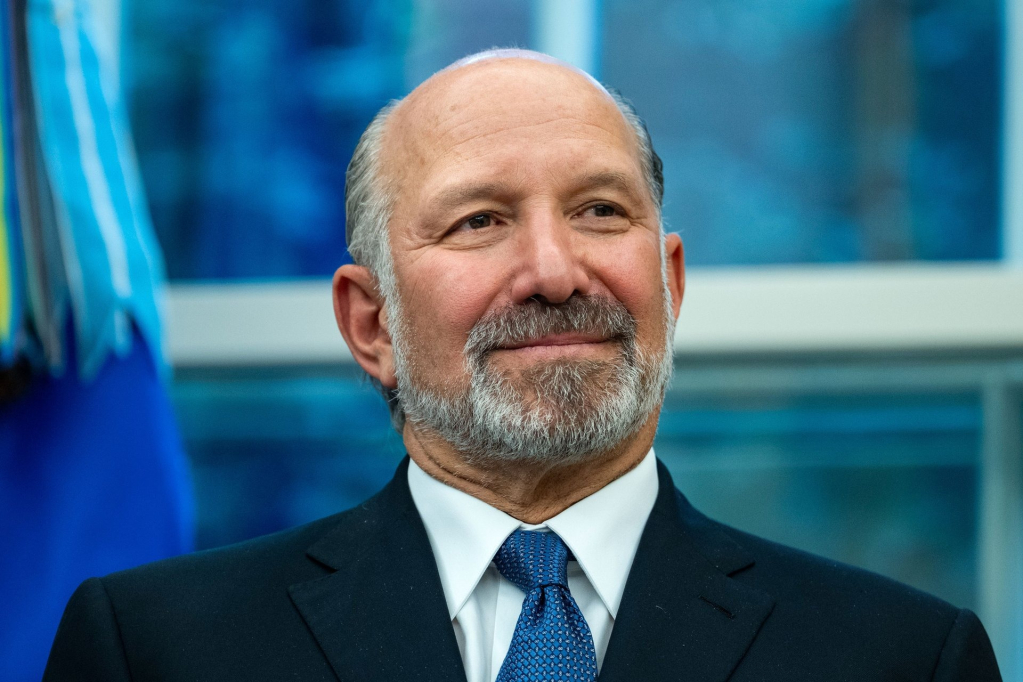
Commerce Secretary Howard Lutnick is facing growing pressure from Republican and Democratic lawmakers over the export of advanced Nvidia artificial intelligence chips to a Singapore-based company under investigation for potentially diverting sensitive American technology to China.
At the center of the controversy is Megaspeed International, a company reportedly responsible for purchasing more than $4 billion worth of advanced Nvidia processors.
The transaction has raised significant national security questions about the effectiveness of American export controls and the Commerce Department’s response to intelligence warnings.
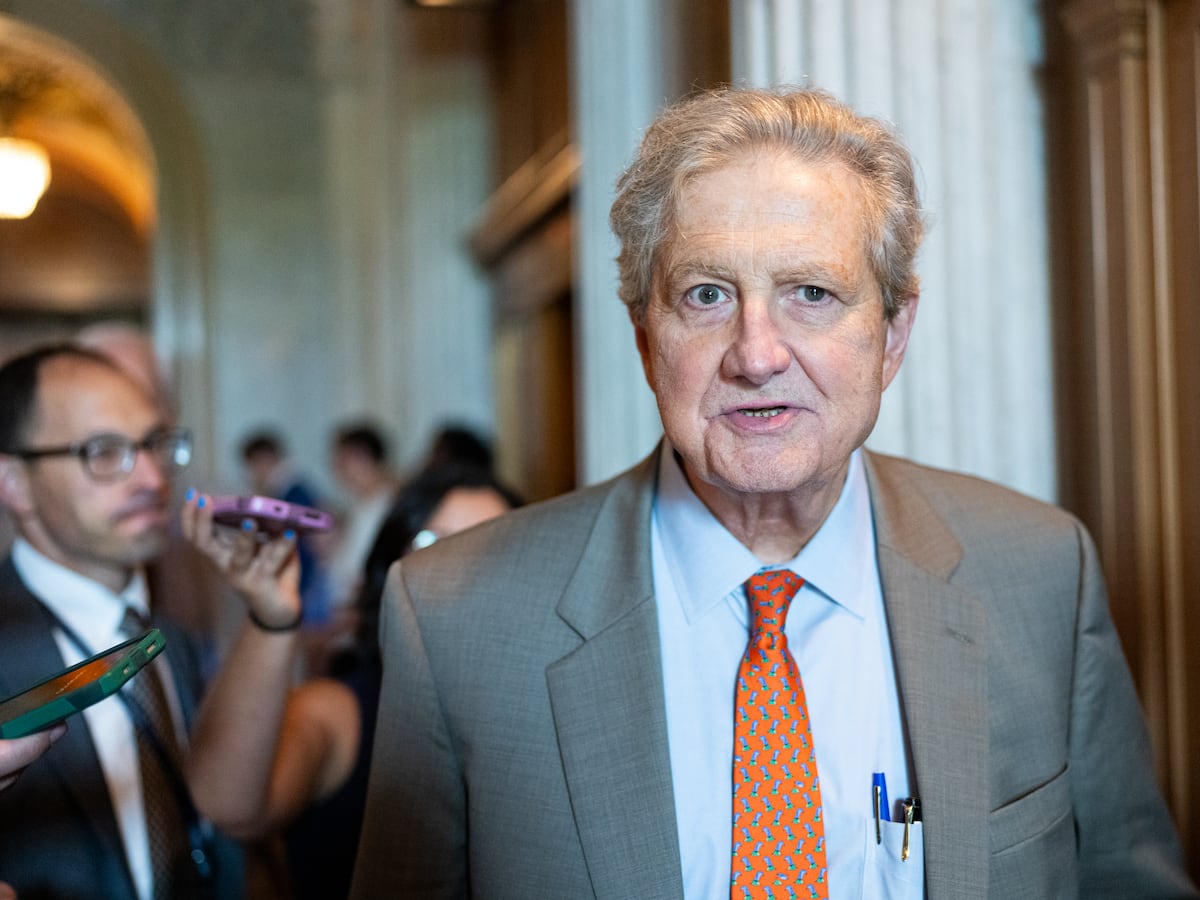
Louisiana Senator John Kennedy has emerged as one of the Republicans demanding a public explanation from Lutnick.
Kennedy questioned why the department permitted substantial chip sales while concerns about the company’s connections and activities were reportedly circulating within the federal government.
His criticism was particularly notable because it targeted a senior member of President Donald Trump’s administration.
Rather than dismissing the controversy as a partisan attack, Kennedy argued that the Commerce secretary had an obligation to explain the decisions made under his authority.
The senator called for Lutnick to answer publicly and suggested that Congress could compel testimony if voluntary cooperation proved insufficient.
The pressure has already produced a significant development.
Lutnick has agreed to testify before the Senate Banking Committee on December 10, 2026, according to reporting published November 13.
The hearing is expected to examine how advanced American chips reached Megaspeed and whether federal officials responded appropriately to potential security risks.
Kennedy’s threat of a subpoena remains significant, although there is no confirmation that the committee has formally issued one against Lutnick.

For lawmakers, the broader question extends beyond one company or one Cabinet secretary.
It concerns whether the United States can protect critical artificial intelligence technology while allowing American semiconductor companies to compete internationally.
Kennedy Challenges Lutnick Over the $4 Billion Transaction
Kennedy’s criticism intensified during the second week of November as lawmakers learned more about the government’s handling of Megaspeed.
Speaking to reporters, the Louisiana Republican questioned why the Commerce Department had permitted exports of advanced Nvidia chips to the company.
Kennedy said he wanted to understand whether Lutnick personally approved the relevant decisions.
He also questioned what officials knew about the ultimate destination of the processors.
The senator’s concerns reflected the possibility that technology exported to Singapore could subsequently reach restricted Chinese customers.
That possibility carries particular significance because sophisticated AI processors can support both civilian and military applications.
Kennedy argued that the Commerce secretary should address the issue directly rather than wait for congressional investigators.
In comments reported by POLITICO, Kennedy declared that Lutnick needed to answer publicly before the country.
His language was characteristically forceful.
But his central demand was straightforward: explain why the sales were permitted and what safeguards existed.
Kennedy also wanted to know whether federal officials had considered intelligence suggesting possible links between Megaspeed and Chinese interests.
The senator’s criticism did not establish that Lutnick had committed wrongdoing.
Instead, it focused on the department’s responsibility to enforce export restrictions and respond to potential threats.
That distinction is important because export licensing decisions can involve complex legal, commercial, and national security considerations.
Congressional oversight is intended to establish whether those decisions complied with the law and protected American interests.
Kennedy believes the available reporting warrants substantial scrutiny.
His comments indicated that he would support stronger congressional action if officials failed to provide adequate explanations.
Why Megaspeed International Is Under Investigation
Megaspeed International is a Singapore-based company that acquired substantial quantities of advanced Nvidia computing equipment.
The company has attracted scrutiny because of allegations that some processors could have been diverted to China.
American export controls restrict access to certain advanced semiconductor technologies when national security concerns are involved.
These restrictions are especially relevant to powerful AI chips capable of supporting sophisticated computing systems.
Such processors can be used to train artificial intelligence models, process enormous datasets, and support advanced scientific research.
They can also have military and intelligence applications.
For that reason, Washington has imposed restrictions on exports of certain technologies to China and other destinations.
The concern involving Megaspeed is that a company operating outside China could potentially purchase restricted American technology and transfer it to prohibited customers.
Such arrangements can make export enforcement considerably more difficult.
Regulators must determine not only the identity of the immediate purchaser but also the intended end user.
They may need to examine ownership structures, contractual relationships, shipping records, and the locations where equipment is installed.
Megaspeed has denied wrongdoing.
The allegations involving the company remain subject to investigation.
The reported value of its Nvidia purchases does not itself establish that the transactions were illegal.
A company can purchase substantial quantities of computing equipment for legitimate commercial purposes.
The legal question concerns whether specific exports violated restrictions or involved misleading representations about their destination.
Investigators must establish those facts through documents, records, and other evidence.
Kennedy’s demand for answers focuses on whether the Commerce Department adequately addressed those risks before permitting the sales.
Treasury Secretary Bessent Raises Questions About Commerce
The controversy expanded when Treasury Secretary Scott Bessent publicly discussed the administration’s handling of Megaspeed.
On November 13, Bessent said that several government agencies had supported placing the company under tighter export restrictions.
According to his account, Treasury, State, Defense, and other officials had favored action for months.
The Commerce Department, however, possessed the relevant authority to move forward with the proposed restrictions.
Bessent’s comments increased pressure on Lutnick because they suggested disagreement within the administration.
The issue was no longer limited to criticism from lawmakers.
A fellow Cabinet secretary was publicly identifying Commerce as the department responsible for the delay.
The allegations raised questions about how national security recommendations were evaluated.
They also prompted scrutiny of communications between officials responsible for export licensing and enforcement.
However, Bessent’s statements do not by themselves demonstrate that Lutnick intentionally weakened national security protections.
A complete assessment would require examining the underlying intelligence, legal recommendations, and internal deliberations.
Government agencies may disagree over how to balance export restrictions with commercial and diplomatic priorities.
But when several agencies reportedly support tighter controls, Congress can reasonably examine why another department takes a different position.
That disagreement became central to the developing investigation.
Kennedy’s criticism reflected a similar concern.
He wanted to know whether the Commerce secretary had received warnings and, if so, why the government continued permitting access to advanced chips.
Lutnick Agrees to Testify Before the Senate
The escalating pressure prompted a response from the Commerce Department.
On November 13, officials confirmed that Lutnick had agreed to appear voluntarily before the Senate Banking Committee.
CBS News reported that the appearance was scheduled for December 10.
The agreement represented an important development because lawmakers had been discussing the possibility of compulsory testimony.
Senator Tim Scott, the Republican chairman of the Banking Committee, had called for Lutnick to address the controversy publicly.
Scott also sought testimony from individuals connected to Nvidia.
The committee’s involvement is significant because it possesses oversight responsibilities involving economic policy and export controls.
Lawmakers can question executive officials about how regulations are implemented and whether administrative decisions reflect congressional intent.
The hearing could provide an opportunity to examine the department’s handling of Megaspeed.
Questions may include when officials first received warnings, which agencies recommended restrictions, and why particular licensing decisions were made.
Senators may also seek explanations concerning communications between Commerce officials and Nvidia representatives.
However, agreeing to testify does not establish liability or wrongdoing.
Lutnick will have an opportunity to explain the department’s decisions and respond to lawmakers’ concerns.
The distinction between voluntary testimony and a subpoena also matters.
A subpoena is a formal legal demand requiring testimony or documents under applicable congressional procedures.
Kennedy indicated that compulsory testimony should remain an option if necessary.
But Lutnick’s agreement to appear voluntarily means the immediate dispute is not about whether Congress has already compelled his attendance.
The confirmed development is a scheduled hearing.
Its significance will depend on the information presented and the questions answered.
Nvidia’s Leadership Controversy Adds Another Dimension
The Megaspeed investigation has also become connected to controversy surrounding Nvidia’s former chief executive, Jensen Huang.
Reports published in November described allegations involving Huang’s relationship with Alice Huang, an executive associated with Megaspeed.
American intelligence officials reportedly suspected that Alice Huang had connections to Chinese intelligence.
Those suspicions have not been established through a public criminal conviction.
China has denied the spying allegations.
Jensen Huang has said he was unaware of the alleged intelligence concerns.
The controversy nevertheless raised questions about whether personal relationships could have affected access to sensitive technology or government decision-making.
Nvidia has been one of the world’s most influential companies in advanced artificial intelligence computing.
Its processors are central to major AI research projects, data centers, and commercial technology platforms.
The company’s prominence makes export controls particularly consequential.
A restriction involving Nvidia products can affect international computing capacity and major commercial investments.
Congressional investigators therefore want to know whether private relationships influenced decisions affecting national security.
The questions have become more urgent following reports that Jensen Huang resigned from Nvidia in November.
Lawmakers have called for testimony from individuals connected to the company and from officials responsible for export enforcement.
But allegations concerning personal relationships must be evaluated separately from evidence of illegal technology transfers.
A relationship alone does not prove espionage.
Nor does it establish that export officials knowingly approved prohibited transactions.
Those conclusions would require reliable evidence concerning actual conduct.
The Senate investigation may help clarify what federal officials knew and how they responded.
Congress Demands Preservation of Sensitive Records
The investigation has already prompted formal requests for government documents.
On November 11, Democratic Senators Elizabeth Warren and Chris Coons sent a letter addressing the administration’s handling of Nvidia-related export controls.
The letter was directed to Commerce Secretary Lutnick, Secretary of State Marco Rubio, and White House Chief of Staff Stephen Miller.
The senators requested preservation of relevant records concerning Nvidia exports and potential diversion of technology to China.
They also sought information about reported intelligence concerns involving the company’s former leadership.
The request covered communications, internal records, and materials relevant to decisions concerning export restrictions.
Warren and Coons asked officials to confirm that appropriate preservation instructions had been issued.
Their letter established a November 17 deadline for that confirmation.
The request is significant because congressional investigations depend heavily on documentary evidence.
Officials may be questioned about decisions made months earlier.
Emails, memoranda, meeting records, and licensing documents can help establish the sequence of events.
Preserving those materials reduces the risk that relevant information becomes unavailable during an investigation.
The senators also requested a briefing concerning possible national security risks.
Their actions demonstrated that concerns about Megaspeed extended across party lines.
Republicans such as Kennedy wanted explanations from Commerce officials.
Democrats demanded records showing how export decisions were reached.
The approaches differed in emphasis, but both centered on government accountability.
The letters do not prove that the administration acted improperly.
They establish that lawmakers are seeking information necessary to evaluate its conduct.
House Republicans Join the Investigation
The Senate Banking Committee is not the only congressional body examining the controversy.
Republican lawmakers in the House have also sought testimony and documents.
Representative Brian Mast, chairman of the House Foreign Affairs Committee, requested a December 2 hearing involving senior Commerce Department officials.
The request included Jeffrey Kessler, the undersecretary responsible for industry and security.
Kessler oversees the Bureau of Industry and Security, which plays a central role in enforcing American export controls.
The committee also sought information from Nvidia’s legal representatives.
Separately, Representative John Moolenaar, chairman of the House Select Committee on the Chinese Communist Party, called for additional scrutiny.
Moolenaar indicated that lawmakers were discussing possible testimony from Nvidia representatives.
He also acknowledged that congressional subpoena powers could be used if voluntary cooperation proved insufficient.
This growing oversight effort reflects the importance Congress places on advanced semiconductor technology.
The United States has invested considerable political and economic resources in maintaining leadership in artificial intelligence.
Controlling access to sensitive computing equipment has become a major element of national security policy.
Lawmakers are concerned that companies operating through intermediary countries could undermine those restrictions.
The challenge is especially difficult because advanced chips can be incorporated into larger systems.
Tracing their ultimate destination may require coordination between governments, manufacturers, distributors, and enforcement agencies.
The Megaspeed controversy offers a concrete test of that system.
What the $4 Billion Figure Really Means
The reported $4 billion figure has attracted considerable attention.
But understanding its significance requires separating the value of the transactions from the allegations under investigation.
The amount refers to reported purchases of advanced Nvidia chips associated with Megaspeed.
It does not represent an established government loss of $4 billion.
Nor does it prove that every chip involved was illegally transferred.
Investigators must determine the specific products purchased, the relevant export restrictions, and the ultimate destinations.
Some transactions may have been authorized under existing rules.
Others could require additional scrutiny depending on the licensing conditions and intended customers.
The issue also involves timing.
Export regulations can change, and a transaction permitted under one set of rules may be restricted under another.
That makes the chronology of government decisions especially important.
Congressional investigators will need to establish when officials identified potential risks.
They will also need to determine whether the department possessed adequate authority to intervene.
A major question concerns whether Megaspeed should have been placed on the Entity List earlier.
The Entity List is a federal export-control tool that can impose licensing requirements on transactions involving designated organizations.
Adding a company can significantly restrict its ability to obtain American technology.
But the decision requires an administrative process and consideration of relevant information.
Kennedy’s criticism focuses on whether that process moved quickly enough.
The answer depends on records that have not yet been fully examined in public.
Why Advanced AI Chips Are a National Security Priority
The controversy extends far beyond the financial value of one company’s purchases.
Advanced artificial intelligence processors are increasingly important to economic competitiveness and military capability.
They support the development of powerful AI models and large-scale computing systems.
Such technology can improve scientific research, logistics, industrial design, and communications.
It can also support intelligence analysis and military planning.
Because of those potential applications, American export controls seek to limit access by certain foreign organizations.
China has invested heavily in domestic semiconductor production and artificial intelligence development.
The United States has sought to preserve technological advantages in particularly advanced computing equipment.
The result is an increasingly complicated international trade environment.
Companies must navigate restrictions involving chip performance, destination countries, customers, and end uses.
Governments must also distinguish legitimate commercial activity from efforts to evade restrictions.
A Singapore-based purchaser is not automatically prohibited from buying American technology.
But regulators may need additional safeguards when concerns arise about possible reexports.
Those safeguards can include licensing conditions, end-user verification, and enforcement investigations.
The effectiveness of the system depends on information sharing among government agencies.
It also depends on cooperation from manufacturers and distributors.
The Megaspeed investigation could reveal whether existing procedures were adequate.
It may also identify areas where lawmakers believe additional safeguards are needed.
Kennedy’s Subpoena Warning Raises the Stakes
Kennedy’s comments have attracted attention because of his willingness to question a senior official in a Republican administration.
The senator did not present his concerns as a minor administrative disagreement.
He argued that the Commerce Department needed to explain why the transactions proceeded despite reported intelligence concerns.
His demand for public testimony placed additional pressure on Lutnick.
Kennedy also suggested that Congress should use its subpoena authority if voluntary testimony became necessary.
That warning carries institutional significance.
Congressional committees can compel certain testimony and documents as part of legitimate oversight investigations.
However, exercising subpoena powers requires compliance with applicable procedures.
It is not the same as an individual senator simply announcing that an official must appear.
The current record does not establish that Kennedy personally issued a subpoena against Lutnick.
Instead, the Commerce secretary has agreed to testify voluntarily.
That development may reduce the immediate need for compulsory action.
But the possibility of subpoenas remains relevant if lawmakers seek additional documents or testimony.
The hearing could also lead to further investigations if the information provided raises new questions.
For now, Kennedy’s warning represents a demand for accountability rather than proof of misconduct.
It shows that the controversy has become significant enough to attract scrutiny from members of the president’s own party.
The December 10 Hearing Could Clarify Key Questions
The planned Senate Banking Committee hearing will provide an opportunity to examine several unresolved issues.
One concerns when Commerce officials first received warnings about Megaspeed.
Another involves the department’s reasons for not imposing restrictions earlier.
Lawmakers may also question whether other federal agencies recommended stronger action.
The role of private companies is likely to receive attention.
Investigators want to understand communications between Nvidia representatives and officials responsible for export decisions.
They may also examine whether commercial interests influenced administrative judgments.
These questions are significant, but they do not establish wrongdoing in advance.
Lutnick may provide explanations based on legal authority, intelligence assessments, or policy considerations.
Other officials may offer different interpretations of the same events.
Congress will need to evaluate those accounts alongside available documents.
The December hearing is therefore an opportunity for fact-finding.
It is not a predetermined legal judgment.
The outcome could influence future export-control legislation and oversight practices.
It may also affect how government agencies coordinate decisions involving advanced technology.
However, no particular conclusion can be assumed before the testimony occurs.
The Real Stakes for Washington
The Nvidia–Megaspeed controversy has brought together several issues that rarely remain separate in modern economic policy.
They include national security, corporate influence, international trade, intelligence operations, and government accountability.
The reported $4 billion in chip purchases has become a focal point because the technology involved is strategically important.
Kennedy’s questions concern whether the Commerce Department exercised sufficient caution.
Bessent’s comments have intensified scrutiny by suggesting that multiple agencies supported stronger restrictions.
Democratic lawmakers have demanded preservation of records.
Republican committee chairs have sought testimony from government and corporate officials.
Together, these developments demonstrate that the issue has generated substantial bipartisan interest.
Yet the central allegations remain under investigation.
Megaspeed denies wrongdoing.
Suspicions involving foreign intelligence have not been established through a public conviction.
And no authenticated evidence currently proves that Lutnick knowingly authorized illegal transfers.
What is confirmed is that Kennedy has demanded answers, Lutnick has agreed to testify on December 10, and Congress is examining whether American export controls adequately protected sensitive AI technology.
The most consequential question is not whether a senator delivered a memorable warning.
It is whether federal officials can demonstrate that decisions involving billions of dollars in advanced computing equipment were made with appropriate attention to national security.
For Lutnick, the coming hearing offers an opportunity to explain the department’s actions.
For Kennedy and his colleagues, it offers an opportunity to test those explanations against the available evidence.
And for the country, the controversy raises a question extending beyond any individual administration: Can the United States maintain its leadership in artificial intelligence while preventing strategically sensitive technology from reaching unauthorized foreign users?
