
Elizabeth Warren Mocks Kennedy’s Louisiana Roots—His Three-Second Ultimatum Changes Everything

The laughter came at the worst possible moment, cutting through a heated discussion about American healthcare and turning an already tense congressional exchange into an intensely personal confrontation.
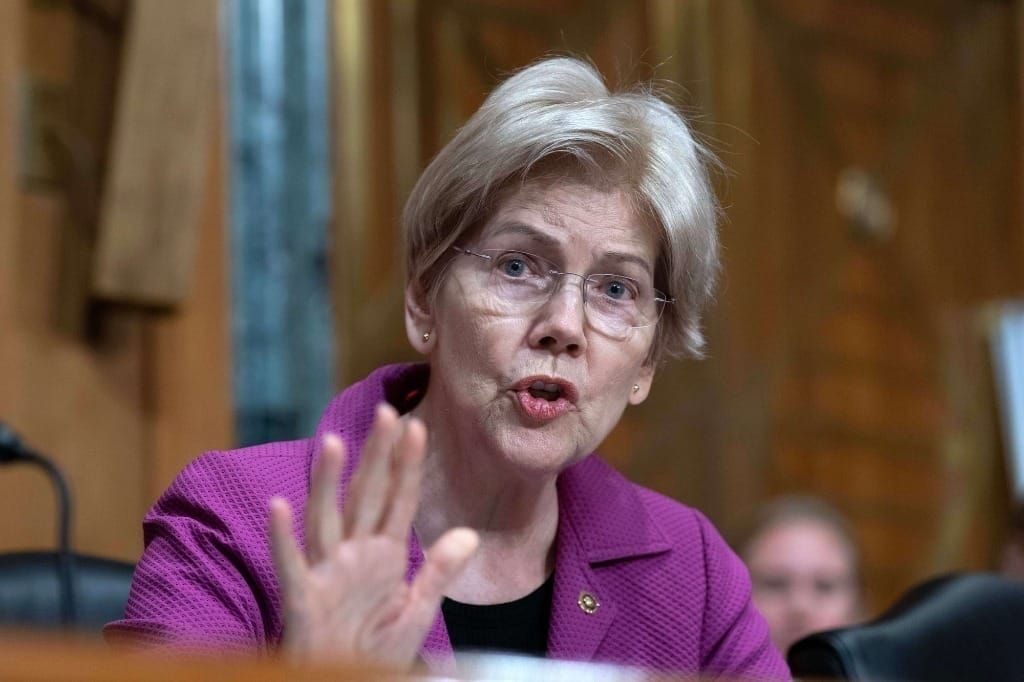
In this fictional Capitol Hill showdown, Senator Elizabeth Warren had been defending her approach to healthcare reform when Republican Senator John Neely Kennedy challenged whether Washington’s promises were producing meaningful improvements for struggling families.
What began as a disagreement over insurance coverage, medical expenses, and government accountability suddenly became something far more confrontational when Warren questioned Kennedy’s background and qualifications to address complicated healthcare policy.
The Massachusetts Democrat looked across the imaginary hearing table and laughed dismissively, suggesting that Kennedy’s Louisiana upbringing hardly qualified him to lecture policymakers about the complexities of the American healthcare system.
Several observers reacted immediately. The remark had shifted attention away from the legislation under discussion and toward the personal background of a senator whose distinctive Southern speaking style was nationally recognizable.
Kennedy did not raise his voice. He remained seated, adjusted his glasses, and allowed the uncomfortable silence to stretch across the fictional hearing room.
Then he leaned toward his microphone and delivered five words that changed the entire atmosphere.
“You have three seconds. Apologize.”
The first second passed without a response. Warren remained focused on the substance of her criticism, apparently unwilling to accept that her remark required the immediate apology Kennedy demanded.
The second second passed as several lawmakers exchanged glances, uncertain whether the confrontation would escalate into an argument over personal conduct or return to healthcare policy.
By the third second, the fictional chairman appeared ready to intervene. Kennedy, however, simply lowered his eyes toward a thick folder resting beside his microphone.
There was no apology. Instead, Warren challenged the appropriateness of Kennedy’s ultimatum, insisting that political disagreements should be resolved through evidence rather than demands for personal deference.
Kennedy accepted that the discussion should return to evidence. He opened the folder and introduced what he described as a hypothetical 2018 healthcare oversight review containing troubling questions about administrative failures.
The imaginary document was not a verified government report, and its findings were not evidence of misconduct by Warren or any real healthcare organization.
Within the fictional narrative, however, the report offered a way to examine the consequences of poorly implemented healthcare programs, particularly for working families who depended on timely coverage decisions.
Kennedy turned the first page and asked whether academic credentials, political reputation, or legislative experience mattered more than the actual outcomes experienced by patients.
Warren responded that expertise and evidence were essential to designing effective healthcare policy, but acknowledged that government programs should ultimately be evaluated according to their results.
Kennedy appeared to seize upon that distinction, suggesting that the disagreement should focus on whether institutions were delivering the services they promised rather than the personal backgrounds of individual lawmakers.
The fictional confrontation had reached its first significant turning point. Warren’s remark about Louisiana had opened a dispute about qualifications, while Kennedy had redirected attention toward the people affected by policy decisions.
The underlying policy divide reflected genuine differences between the two senators, whose public careers have involved competing approaches to government oversight, healthcare spending, and federal economic policy.
Warren has long supported stronger consumer protections and broader access to affordable healthcare, frequently arguing that concentrated corporate power contributes to financial difficulties for American families.
Kennedy has emphasized government accountability, fiscal discipline, and the importance of questioning whether federal programs use public resources effectively.
Those contrasting priorities provided the foundation for the imagined hearing, although the personal confrontation, the ultimatum, and the documents introduced by Kennedy were fictional.
In the invented report, investigators had reviewed a healthcare assistance program struggling with delayed eligibility decisions, inconsistent communication, and difficulties coordinating services among separate administrative offices.
The findings described a hypothetical pattern of incomplete records, processing errors, and complaints from families who believed they had been left without clear explanations about their coverage.
Kennedy asked why any government-supported program should receive continued praise if families were unable to determine whether their applications had been approved or why their medical bills remained unpaid.
Warren challenged his interpretation, arguing that administrative problems required careful investigation rather than assumptions that the broader healthcare initiative had failed.
She emphasized that complex insurance systems involved multiple institutions, including state administrators, private insurers, medical providers, and federal agencies operating under different legal responsibilities.
Kennedy agreed that healthcare administration was complicated but maintained that complexity could not excuse failures to provide timely information to patients facing urgent financial and medical decisions.
He turned another page, drawing attention to a hypothetical family whose insurance application had remained unresolved while a child required continuing medical treatment.
The fictional case involved a mother named Rebecca, a warehouse employee who had applied for assistance after her employer reduced working hours and changed the family’s insurance eligibility.
According to the invented case summary, Rebecca had submitted the requested documents repeatedly but received conflicting instructions from separate offices responsible for processing her application.
Her child continued receiving treatment, but uncertainty over coverage created mounting bills and forced the family to postpone other essential expenses.
Kennedy read the family’s fictional complaint aloud, emphasizing the frustration of being told repeatedly that an application was under review without receiving a definitive explanation.
Warren responded that stories like Rebecca’s illustrated why policymakers needed stronger consumer protections, simpler enrollment procedures, and better administrative oversight.
Kennedy countered that those protections were meaningful only when implemented effectively, questioning why families should be expected to trust promises that agencies could not consistently fulfill.
Their exchange exposed a central problem in American healthcare: access to insurance coverage does not automatically eliminate administrative barriers, unexpected expenses, or disputes over payment responsibilities.
Even families with coverage can face complicated billing procedures, denied claims, provider-network restrictions, and uncertainty over whether particular treatments are covered.
For workers living paycheck to paycheck, those problems can create serious financial pressure at the precise moment when medical circumstances demand their attention.
The fictional hearing shifted toward another case involving an elderly patient whose medical appointments had been repeatedly rescheduled because coverage information could not be verified.
Kennedy asked whether administrators had established meaningful performance standards for resolving similar problems, including deadlines for answering inquiries and correcting incomplete records.
Warren answered that transparent performance measures were important, but insisted that policymakers also consider whether agencies had sufficient resources and personnel to process applications accurately.
Kennedy questioned whether providing more funding without correcting administrative weaknesses could perpetuate the same problems rather than produce the improvements families expected.
Warren challenged that suggestion, arguing that understaffed offices and outdated systems could themselves be major causes of poor performance, making targeted investment an essential part of reform.
The disagreement grew sharper as the two senators debated whether persistent healthcare problems demonstrated inadequate funding, flawed program design, weak oversight, or some combination of those factors.
Kennedy returned to the fictional 2018 review, asking whether the responsible administrators had established measurable goals before receiving additional public resources.
Warren responded that performance targets could help identify problems, but cautioned against evaluating healthcare programs through narrow financial measures that overlooked patient outcomes and long-term benefits.
The fictional senator from Louisiana acknowledged that healthcare was more complicated than ordinary commercial transactions, but argued that patients deserved a clear explanation whenever promised services failed.
“Folks don’t go to the hospital because they want to study government paperwork,” Kennedy said in the imagined exchange. “They go because somebody needs help.”
Warren did not dispute the sentiment. Instead, she argued that the same families needed affordable coverage, protections against excessive medical bills, and reliable access to necessary treatment.
Her response brought the debate back toward a fundamental question: whether government should primarily expand healthcare access or concentrate on improving the administration of existing programs.
In reality, these priorities are not mutually exclusive. Expanding coverage without effective administration can leave patients frustrated, while improving administration cannot help people who remain unable to obtain insurance.
The fictional chairman reminded both senators that their discussion should address those practical challenges rather than return to personal criticism about educational background or regional identity.
Kennedy then placed a second group of papers on the desk, introducing a hypothetical financial summary showing that administrative expenses had increased during the period covered by the invented review.
The figures were created for the fictional scenario and did not establish any actual financial irregularity, misuse of healthcare funds, or improper conduct involving Warren.
Within the story, Kennedy questioned whether the additional expenditures had produced shorter processing times, fewer coverage disputes, or measurable improvements in patient satisfaction.
Warren argued that administrative spending could serve legitimate purposes, including modernizing technology, hiring qualified personnel, and improving compliance with complicated healthcare requirements.
Kennedy replied that such investments should ultimately demonstrate benefits through reliable performance data rather than being defended exclusively through descriptions of their intended purposes.
Warren challenged him to apply the same standard to private insurers, noting that administrative inefficiencies and confusing billing practices could also create substantial difficulties for patients.
Kennedy agreed that accountability should extend to private organizations receiving payments for healthcare services, including insurers and contractors whose decisions affected patients’ financial security.
That acknowledgment briefly reduced the personal intensity of the fictional confrontation, revealing that both politicians could support stronger oversight while disagreeing about how to achieve it.
But the unresolved insult continued to influence the exchange, particularly when Kennedy returned to the suggestion that his background made him less qualified to discuss healthcare.
He asked whether the experiences of ordinary families in Louisiana were somehow less relevant than those of patients living in Massachusetts or other states with different healthcare systems.
Warren responded that regional differences mattered and that policymakers should consider how healthcare challenges varied across rural communities, major cities, and economically disadvantaged areas.
She also acknowledged that healthcare debates should include perspectives from patients and families regardless of geography, education, income, or political affiliation.
Kennedy suggested that such a standard made dismissive assumptions about regional background especially unhelpful, because they could obscure legitimate concerns raised by representatives of underserved communities.
The discussion broadened into the difficulties facing rural healthcare systems, where hospital closures, workforce shortages, transportation barriers, and limited specialist availability can complicate access to treatment.
Those challenges are particularly relevant in states with large rural populations, where patients may travel significant distances for medical appointments or depend on financially vulnerable local hospitals.
Warren argued that federal policy should consider those inequalities and help prevent communities from losing essential healthcare infrastructure because of economic disadvantages.
Kennedy responded that preserving access also required responsible administration, sustainable financing, and safeguards against spending practices that failed to improve services.
Their disagreement now centered on the relationship between investment and accountability, rather than the personal qualifications of the politicians defending different approaches.
The fictional chairman asked Kennedy to identify the strongest conclusion supported by his imaginary 2018 report, warning against presenting preliminary administrative findings as proof of deliberate misconduct.
Kennedy answered that the report did not establish criminal wrongdoing but raised questions about whether management failures had created preventable difficulties for patients.
Warren agreed that documented administrative failures deserved investigation, while emphasizing that any conclusions about a healthcare initiative should consider broader evidence rather than isolated examples.
The exchange became more revealing as Kennedy approached the final page, which contained a summary of unresolved complaints and recommended corrective actions.
The fictional document identified several recurring problems, including inconsistent communication, incomplete case tracking, inadequate explanations for delayed decisions, and insufficient coordination among administrative offices.
Those weaknesses suggested that improving healthcare outcomes required more than passing legislation or announcing new programs. It also required competent implementation and a willingness to correct operational failures.
Kennedy asked whether lawmakers should demand regular public reporting on patient complaints, processing delays, and the effectiveness of corrective measures.
Warren replied that transparency was essential, particularly when families depended on government-supported programs for access to medical treatment.
She added that such reporting should also examine whether agencies had adequate resources and whether private contractors were meeting their responsibilities to patients.
The fictional atmosphere changed again when Kennedy asked whether Warren would support the same standards of accountability even when the programs under examination had been championed by her own political allies.
Warren answered that oversight should not depend on partisan loyalty, arguing that effective healthcare policy required correcting mistakes regardless of which party originally supported a program.
Kennedy acknowledged her response before returning to the final page of the report, where the imagined investigators had identified a troubling gap between promised reforms and documented follow-up actions.
Some recommendations had been assigned to administrators, but the fictional review did not clearly establish whether those recommendations had been completed or whether patients had received meaningful relief.
Kennedy questioned how public officials could celebrate improvements when the institutions responsible for implementing them had not produced sufficient evidence that earlier problems were resolved.
Warren responded that policymakers should demand updated information, examine the implementation process, and adjust failing procedures rather than assume that every deficiency invalidated the broader program.
Their exchange illustrated the difference between political accountability and political punishment. Identifying a failure can justify reform without automatically establishing that the entire policy framework should be abandoned.
Likewise, defending the purpose of a healthcare initiative does not eliminate the need to acknowledge mistakes or explain why promised improvements have not materialized.
As the fictional hearing approached its conclusion, Kennedy returned to the final page and prepared a question linking the administrative findings to Warren’s earlier remarks.
He lowered his glasses, glanced toward the chairman, and addressed the Massachusetts senator with the same restrained tone he had used when the personal confrontation began.
“Senator Warren,” he asked, “if the families harmed by these failures deserve answers, why should the politicians defending the program be exempt from the same scrutiny?”
The question brought the debate into sharper focus because it challenged the distinction between defending a policy’s intentions and accepting responsibility for examining its shortcomings.
Warren did not immediately endorse Kennedy’s characterization. She argued that supporting a policy did not make an elected official personally responsible for every administrative error committed during implementation.
But she agreed that lawmakers who advocated programs should be willing to examine evidence of problems, acknowledge failures, and support appropriate corrective action.
Kennedy accepted that distinction while maintaining that public trust depended on politicians applying accountability standards consistently, particularly when those standards became politically inconvenient.
The fictional chairman then asked both senators whether they would support an independent evaluation of the problems described in the hypothetical report.
Warren indicated that independent review could be appropriate when supported by credible documentation and accompanied by safeguards against misleading allegations.
Kennedy agreed that the review should rely on authenticated records, measurable outcomes, and findings that distinguished administrative failures from misconduct requiring separate investigation.
The hearing ended without either participant completely abandoning their political views, but the tone had changed significantly from the earlier confrontation over personal background.
Kennedy’s demand for an apology had created the dramatic opening, while the fictional healthcare report provided a framework for examining whether institutional promises matched patient experiences.
Warren’s response demonstrated that concerns about administrative failures could coexist with support for broader healthcare access and stronger protections for people facing medical expenses.
The imaginary 2018 report did not prove that Warren had defended a program responsible for patient deaths, concealed financial misconduct, or knowingly ignored warnings about dangerous healthcare practices.
Instead, the scenario illustrated how political debates can turn into personal confrontations when policymakers focus on credentials and motives rather than the practical consequences of legislation.
For Americans struggling with medical bills, prescription costs, insurance disputes, and limited access to treatment, the central issue is not which senator delivers the sharpest comeback.
It is whether government institutions and private healthcare organizations provide dependable services, communicate clearly, protect patients, and respond effectively when mistakes occur.
A family waiting for coverage approval may care little about the ideological origins of a particular program if the delay leaves them unable to arrange essential treatment.
Similarly, a rural patient facing a long journey for specialist care may judge healthcare reform according to whether promised resources actually improve local access.
Those experiences highlight why meaningful oversight must examine outcomes without ignoring the financial, geographic, and administrative conditions influencing healthcare delivery.
The fictional Kennedy-Warren confrontation ultimately revealed that economic fairness, public investment, and administrative accountability are interconnected responsibilities rather than mutually exclusive political objectives.
Warren’s emphasis on access and affordability addressed the importance of ensuring that healthcare protections reach individuals who might otherwise struggle to obtain necessary services.
Kennedy’s emphasis on measurable performance addressed whether institutions responsible for delivering those protections could demonstrate that their procedures worked effectively.
Neither concern disappears because an argument becomes personal, and neither can be settled through an ultimatum demanding an apology within three seconds.
The imagined final exchange left the fictional committee confronting a question larger than either senator’s reputation: how should policymakers respond when programs supported for legitimate reasons produce disappointing results?
The strongest answer requires transparent evidence, fair evaluation, effective corrective measures, and recognition that the consequences of healthcare decisions extend far beyond congressional hearing rooms.
The story began with laughter, an insult, and a dramatic countdown. It ended with a debate about responsibilities that every political party faces when its preferred policies encounter real-world difficulties.
And the question that remained was one American families could ask of any elected official, regardless of ideology or background.
When healthcare promises collide with patients’ actual experiences, will Washington defend its political arguments—or demonstrate that it is prepared to fix what went wrong?
