
Senator John K.e.n.n.e.d.y was still holding the election report when Representative Ilhan O.m.a.r leaned toward her microphone and repeated the words that had suddenly become the center of Washington’s latest political argument.
“Congratulations, you are stupid!”
A few people in the hearing room laughed.
Others looked toward K.e.n.n.e.d.y, expecting an immediate response.
The Louisiana Republican had spent the morning criticizing his own party’s reaction to disappointing election results.
He had questioned Republican leadership, challenged the excuses offered by political insiders, and demanded greater accountability from lawmakers who appeared disconnected from ordinary voters.
O.m.a.r believed his remarks exposed a contradiction.
K.e.n.n.e.d.y had spent years criticizing Democrats.
Now he was accusing his own political allies of making avoidable mistakes.
She wanted to know whether his harsh judgment extended to the voters who had supported them.
K.e.n.n.e.d.y did not immediately answer.
He removed his glasses, examined the folder resting beside his microphone, and slowly looked across the committee table.
Then he delivered a quiet response.
“Congresswoman, you’ve made one mighty important mistake.”
O.m.a.r raised an eyebrow.
K.e.n.n.e.d.y continued.
“You seem to think criticizing the people running a political party is the same thing as insulting the people who voted for it.”
The room became quiet.
K.e.n.n.e.d.y opened his folder.
Inside were three documents concerning electoral accountability, economic dissatisfaction, and the decisions political leaders make after losing public support.
He was about to explain why his criticism had been directed toward Washington’s political establishment.
But the final document would reveal something more consequential than another exchange of insults.
It concerned what party leaders had been telling voters while privately acknowledging problems they had failed to address.
The confrontation had begun with a discussion about the responsibilities of elected officials after an electoral defeat.
K.e.n.n.e.d.y argued that politicians often responded to disappointing results by blaming the wrong people.
Campaign strategists blamed turnout.
Consultants blamed advertising.
Party officials blamed unfavorable media coverage.
Some lawmakers insisted that voters had simply misunderstood their achievements.
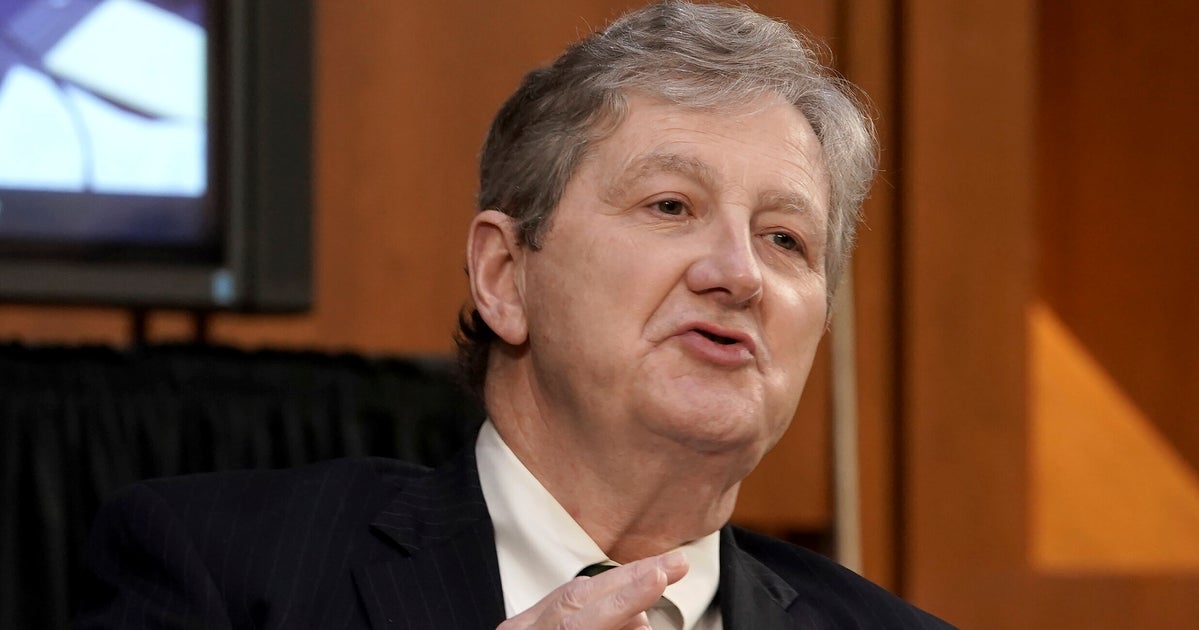
K.e.n.n.e.d.y rejected the idea that those explanations were always sufficient.
He believed elected officials had a responsibility to examine whether their decisions had actually improved the lives of the people they represented.
O.m.a.r questioned whether his criticism was selective.
She argued that Republican lawmakers had spent considerable time defending policies they claimed would benefit working Americans.
Now K.e.n.n.e.d.y appeared to be acknowledging that those promises had not convinced enough voters.
K.e.n.n.e.d.y agreed that political promises should be measured against actual results.
But he challenged the implication that admitting a mistake amounted to abandoning one’s principles.
“Sometimes the smartest thing a politician can say is that he got something wrong,” K.e.n.n.e.d.y replied.
O.m.a.r responded that acknowledging mistakes was only meaningful when followed by action.
K.e.n.n.e.d.y nodded.
“Now that’s a point worth discussing.”
He turned toward the first document.
The paper contained an illustrative election analysis prepared for the hearing.
It compared campaign messaging with the concerns expressed by voters in a hypothetical survey.
The survey described several households struggling with housing costs, groceries, transportation, and medical expenses.
Some respondents believed political leaders were more interested in partisan arguments than practical solutions.
Others wanted elected officials to explain how proposed policies would affect their monthly budgets.
K.e.n.n.e.d.y highlighted those concerns.
He argued that politicians could not assume economic statistics automatically reflected the experiences of individual families.
A favorable national indicator did not necessarily mean every household felt financially secure.
O.m.a.r agreed that broad economic figures could conceal significant differences.
Then she asked whether K.e.n.n.e.d.y believed his own party had contributed to those frustrations.
K.e.n.n.e.d.y answered that political accountability should apply to everyone holding public office.
O.m.a.r pressed further.
“Then why did your colleagues spend so much time insisting everything was going well?”
K.e.n.n.e.d.y looked down at the report.
“That’s exactly the sort of question they ought to answer.”
His response complicated O.m.a.r’s approach.
She had expected K.e.n.n.e.d.y to defend his party’s decisions without qualification.
Instead, he was openly challenging the idea that political loyalty required defending every mistake.
But O.m.a.r was not finished.
She returned to the phrase that had opened the confrontation.
“Your criticism sounds very different when you’re the one being criticized, Senator.”
K.e.n.n.e.d.y leaned back.
He asked whether she considered criticism of elected officials equivalent to criticism of ordinary voters.
O.m.a.r replied that political rhetoric could affect both.
A lawmaker who described political failure using contemptuous language could alienate the very people whose support he hoped to regain.
K.e.n.n.e.d.y acknowledged that language mattered.
Then he explained the distinction he believed she was overlooking.
Voters made decisions based on the information, priorities, and choices available to them.
Political leaders possessed different responsibilities.
They developed policies.
They negotiated legislation.
They allocated campaign resources.
And they made strategic decisions that voters could later evaluate.
K.e.n.n.e.d.y argued that those responsibilities justified direct criticism.
He was not suggesting voters lacked intelligence because they supported a particular candidate.
He was questioning whether political leaders had adequately understood the people they were supposed to represent.
“There’s a difference between asking voters to trust you and earning that trust,” K.e.n.n.e.d.y said.
O.m.a.r responded that earning trust also required consistency.
She argued that lawmakers should not recognize economic frustration only after their party experienced political losses.
K.e.n.n.e.d.y agreed that public officials should listen before an election, not merely afterward.
That agreement did not end the confrontation.
It made the next question more difficult.
If both senators believed politicians needed to listen to voters, why did their parties repeatedly accuse one another of ignoring ordinary Americans?
K.e.n.n.e.d.y opened the second document.
It contained a fictional internal strategy memorandum describing how political organizations sometimes evaluate election results.
The memorandum illustrated several possible responses to an electoral defeat.
One involved changing the party’s message.
Another involved adjusting campaign spending.
A third proposed examining whether the party’s legislative priorities reflected voter concerns.
K.e.n.n.e.d.y argued that the third approach deserved greater attention.
He questioned whether political organizations sometimes preferred expensive messaging campaigns to difficult policy discussions.
O.m.a.r challenged him to provide evidence connecting that general concern to particular decisions by Republican leaders.
K.e.n.n.e.d.y acknowledged that the illustrative memorandum did not establish misconduct by any identifiable official.
But he maintained that the problem deserved examination.
Political organizations could spend substantial resources explaining their policies without resolving the underlying concerns voters had raised.
O.m.a.r argued that Democrats faced similar questions.
K.e.n.n.e.d.y agreed.
“That’s one thing Washington has managed to make bipartisan,” he remarked.
“We can spend a fortune explaining why people ought to be happy.”
Several people laughed.
K.e.n.n.e.d.y continued.
“And then act surprised when they tell us they aren’t.”
The humor briefly reduced the tension.
But O.m.a.r immediately returned to the original accusation.

She questioned whether K.e.n.n.e.d.y’s criticism of political insiders was merely an attempt to distance himself from decisions he had previously supported.
K.e.n.n.e.d.y challenged her to identify the specific decisions she believed contradicted his remarks.
O.m.a.r referred to broad disagreements over economic policy and government spending.
K.e.n.n.e.d.y replied that those disagreements required examining individual legislation rather than treating every Republican decision as identical.
O.m.a.r argued that lawmakers still carried responsibility for policies they supported.
K.e.n.n.e.d.y accepted that principle.
Then he asked whether the same standard should apply to Democrats.
O.m.a.r answered that it should.
K.e.n.n.e.d.y turned toward the chairman.
“Then perhaps we ought to spend less time measuring who’s the better Republican or Democrat.”
He paused.
“And more time measuring whether our decisions are helping the people who sent us here.”
The hearing had now moved beyond its opening insult.
The dispute concerned how politicians should assign responsibility after an electoral setback.
But K.e.n.n.e.d.y still had one document waiting.
He described it as the most important part of his presentation.
The third attachment contained a fictional comparison between public campaign messaging and private strategic concerns.
Its first section described optimistic statements about economic progress.
The second listed concerns raised by campaign advisers about affordability and voter dissatisfaction.
The third identified policy questions that had remained unresolved during the election period.
The contrast was striking.
The public messages emphasized achievements.
The private analysis acknowledged problems.
K.e.n.n.e.d.y argued that such a discrepancy could become politically damaging when leaders failed to address it.
O.m.a.r leaned forward.
“Are you suggesting that leaders knowingly misled voters?”
K.e.n.n.e.d.y looked toward the memorandum.
“I’m suggesting that when people tell politicians something is wrong, the politicians ought to listen.”
O.m.a.r asked whether the document established deliberate deception.
K.e.n.n.e.d.y acknowledged that it did not.
The memorandum was an illustrative example, not an authenticated record proving wrongdoing by a named political leader.
But the scenario presented an important question.
What should elected officials do when internal analysis conflicts with their public messaging?
K.e.n.n.e.d.y believed the answer required more than another campaign advertisement.
O.m.a.r argued that any accusation of deliberate dishonesty required evidence of knowledge and intent.
K.e.n.n.e.d.y agreed that those were separate questions.
Then he identified the central problem.
Even without proving intentional deception, a political organization could damage public trust by repeatedly overlooking concerns expressed by its own supporters.
The distinction became the hearing’s most substantive discovery.
A disappointing election result did not automatically establish that leaders had lied.
But it could create a strong reason to examine whether their policies, priorities, and communications had become disconnected from voters.
K.e.n.n.e.d.y returned to the economic examples.
He described a hypothetical household facing a rent increase while simultaneously paying more for transportation and groceries.
The family heard politicians discuss economic achievements.
But the improvement was difficult to recognize in its monthly budget.
K.e.n.n.e.d.y asked whether lawmakers should dismiss that experience simply because broader indicators appeared favorable.
O.m.a.r answered that they should not.
Then she challenged K.e.n.n.e.d.y to explain what his party would actually change.
The question required more than acknowledging frustration.
It demanded specific priorities.
K.e.n.n.e.d.y identified housing affordability, household expenses, government accountability, and the effectiveness of federal programs as subjects deserving attention.
O.m.a.r responded that those issues had long been part of political debates.
She argued that recognizing them after a defeat was not the same as producing solutions.
K.e.n.n.e.d.y acknowledged that distinction.
“Talking about a problem doesn’t fix it,” he replied.
“Sometimes Washington forgets that because talking is what we’re especially good at.”
The chairman encouraged the senators to focus on practical accountability.
K.e.n.n.e.d.y proposed that lawmakers compare their stated policy objectives with measurable outcomes.
If a proposal promised to reduce financial pressure, its effects should be evaluated.
If a program claimed to improve housing access, lawmakers should examine whether eligible households actually benefited.
If elected officials promised government efficiency, they should identify the changes and costs involved.
O.m.a.r supported evaluating policy outcomes but warned against using isolated statistics to judge complex programs.
K.e.n.n.e.d.y agreed that measurements needed context.
The disagreement had become more precise.
K.e.n.n.e.d.y emphasized the importance of consequences.
O.m.a.r emphasized the importance of interpreting those consequences accurately.
Neither point eliminated the other.
Then the chairman returned to the phrase that had opened the hearing.
He asked K.e.n.n.e.d.y whether he believed insulting political opponents improved the quality of public debate.
K.e.n.n.e.d.y answered that political language could become unnecessarily personal.
But he maintained that strong criticism of leadership decisions was sometimes justified.
O.m.a.r asked whether he would apply the same judgment to his own remarks.
K.e.n.n.e.d.y looked toward her.
“Congresswoman, if I make a foolish argument, you’re welcome to explain why it’s foolish.”
He paused.
“But that doesn’t mean everybody who ever voted for me is a fool.”
The distinction brought the discussion back to the opening misunderstanding.
O.m.a.r argued that public figures should be careful when using language that might appear to condemn large groups of people.
K.e.n.n.e.d.y agreed that political criticism needed clear targets.
Then he asked whether criticism of a party’s leadership could still be legitimate when it came from within that party.
O.m.a.r said it could.
K.e.n.n.e.d.y leaned toward his microphone.
“Then why should I apologize for telling Republican leaders they need to do better?”
The room became quiet.
O.m.a.r responded that he did not need to apologize for demanding accountability.
She argued that the same accountability should apply to the decisions he had personally supported.
K.e.n.n.e.d.y accepted the challenge.
He maintained that elected officials should explain their records rather than hide behind party affiliation.
That acknowledgment changed the direction of the confrontation.
The discussion no longer concerned whether K.e.n.n.e.d.y had insulted all Republican voters.
It concerned whether public officials were willing to accept responsibility for the consequences of their own decisions.
The chairman asked K.e.n.n.e.d.y to summarize his criticism in one sentence.
K.e.n.n.e.d.y looked toward the three documents.
He considered the election analysis, the strategy memorandum, and the comparison between public messaging and internal concerns.
Then he turned toward O.m.a.r.
“Here’s my problem with Washington.”
He lowered his voice.
“We’ve got too many people who’d rather explain away a defeat than understand why it happened.”
O.m.a.r replied that understanding an election also required examining the policies voters had rejected or questioned.
K.e.n.n.e.d.y agreed.
Then he made the distinction that resolved the central argument.
He was not describing ordinary voters as incapable of understanding politics.
He was criticizing leaders who failed to respond when voters communicated dissatisfaction.
The chairman asked whether the hypothetical strategy memorandum established a coordinated cover-up.
K.e.n.n.e.d.y answered that it did not.
The document illustrated how political organizations might become disconnected from voters.
It was not proof that named officials had secretly concealed illegal conduct or manipulated election results.
That clarification mattered.
The hearing’s most important discovery was not evidence of a criminal conspiracy.
It was the difference between political messaging and measurable accountability.
K.e.n.n.e.d.y argued that leaders needed to examine that difference before asking voters for renewed trust.
O.m.a.r argued that leaders also needed to acknowledge their own participation in the decisions under scrutiny.
The positions remained different.
But both created obligations that could be evaluated.
The chairman proposed a framework for the committee’s final discussion.
Lawmakers should identify the promises they made, the actions they took, and the results that followed.
They should distinguish broad political claims from evidence about specific decisions.
And they should avoid assigning collective blame to voters merely because their chosen candidates failed.
K.e.n.n.e.d.y supported the emphasis on leadership responsibility.
O.m.a.r supported the requirement to examine individual records.
The proposal did not settle their political disagreements.
But it transformed the argument into a question that could be answered through evidence.
As the session approached its conclusion, O.m.a.r returned to her original criticism.
She argued that political leaders should not excuse their own mistakes by blaming colleagues.
K.e.n.n.e.d.y acknowledged that responsibility could not be transferred simply by delivering a clever speech.
Then he looked toward the chairman.
“That’s why I don’t want another report telling us which consultant had the prettiest PowerPoint.”
A few people laughed.
“I want to know what decisions we made, what happened afterward, and what we’re going to do differently.”
The chairman allowed him one final statement.
K.e.n.n.e.d.y removed his glasses again.
He looked toward O.m.a.r.
Then he delivered the question that brought the confrontation to its conclusion.
“Congresswoman, if holding leaders accountable is so important, why should either party protect its own from criticism?”
O.m.a.r considered the question.
She answered that neither party should shield its officials from legitimate scrutiny.
But she emphasized that criticism needed to be accurate and applied consistently.
K.e.n.n.e.d.y nodded.
The exchange did not produce a personal humiliation or reveal a verified secret conspiracy.
It clarified a political disagreement with consequences beyond the hearing room.
K.e.n.n.e.d.y believed Republicans needed to confront their own strategic and policy failures rather than blame voters.
O.m.a.r believed that acknowledgment required lawmakers to examine their individual records and the consequences of policies they supported.
Neither position removed the need for evidence.
The chairman struck the gavel.
The hearing ended without establishing the existence of a massive political cover-up.

But the debate had identified a specific standard for accountability.
An election defeat could prompt serious examination of leadership decisions.
Such an examination should address actual policies, recorded choices, and measurable results.
It should not substitute insults for evidence.
Nor should it treat voters as responsible for every mistake made by the officials they elected.
K.e.n.n.e.d.y gathered his papers.
O.m.a.r returned to her notes.
The three documents remained on the desk.
Their central lesson was no longer about which politician had delivered the sharper remark.
It was about the responsibilities that follow when political leaders discover their promises have failed to convince the public.
K.e.n.n.e.d.y’s criticism had been directed toward an establishment he believed was too comfortable making excuses.
O.m.a.r’s challenge had forced him to explain how that criticism applied to his own record.
And the final exchange established a principle neither side could reasonably reserve for its opponents.
Political accountability means being willing to question your own leaders, not merely finding better insults for the people on the other side.
