
Senator John K.e.n.n.e.d.y had barely opened his manila folder when Representative A.O.C delivered an accusation that immediately changed the atmosphere inside the congressional hearing room.
She was discussing generational responsibility, political accountability, and the events surrounding the January 6 attack on the United States Capitol.
Her argument was pointed.
Older political leaders, she suggested, had spent decades making decisions whose consequences younger Americans were now being forced to confront.
K.e.n.n.e.d.y listened without interrupting.
He adjusted his glasses and waited for the chairman to recognize him.
Then he placed a thick folder on the desk.
Inside were congressional records, a timeline of the Capitol attack, and excerpts from Ocasio-Cortez’s public descriptions of her experience.
K.e.n.n.e.d.y believed the debate had become too dependent on emotional accusations.
Ocasio-Cortez believed his criticism ignored the circumstances that made the attack frightening.
Neither appeared willing to retreat.
Then K.e.n.n.e.d.y leaned toward his microphone.
“Congresswoman, before we start assigning blame to entire generations, perhaps we ought to examine the actual record.”
He opened the folder.
The room became quiet.
And one detail inside the timeline would force both lawmakers to confront a contradiction neither had fully addressed.
The confrontation had begun during a hearing examining public trust in American institutions.
Ocasio-Cortez argued that many younger voters felt abandoned by political leaders who had failed to address economic insecurity and threats to democratic institutions.
She connected those concerns to the legacy of older generations in Washington.
K.e.n.n.e.d.y objected to the broad accusation.
He argued that age alone could not establish responsibility for individual decisions.
A young politician could make a poor decision.
An older politician could make a responsible one.
And a political argument should be evaluated through evidence rather than assumptions about the people making it.
Ocasio-Cortez replied that generational criticism concerned patterns of leadership, not the character of every older American.
K.e.n.n.e.d.y acknowledged the distinction.
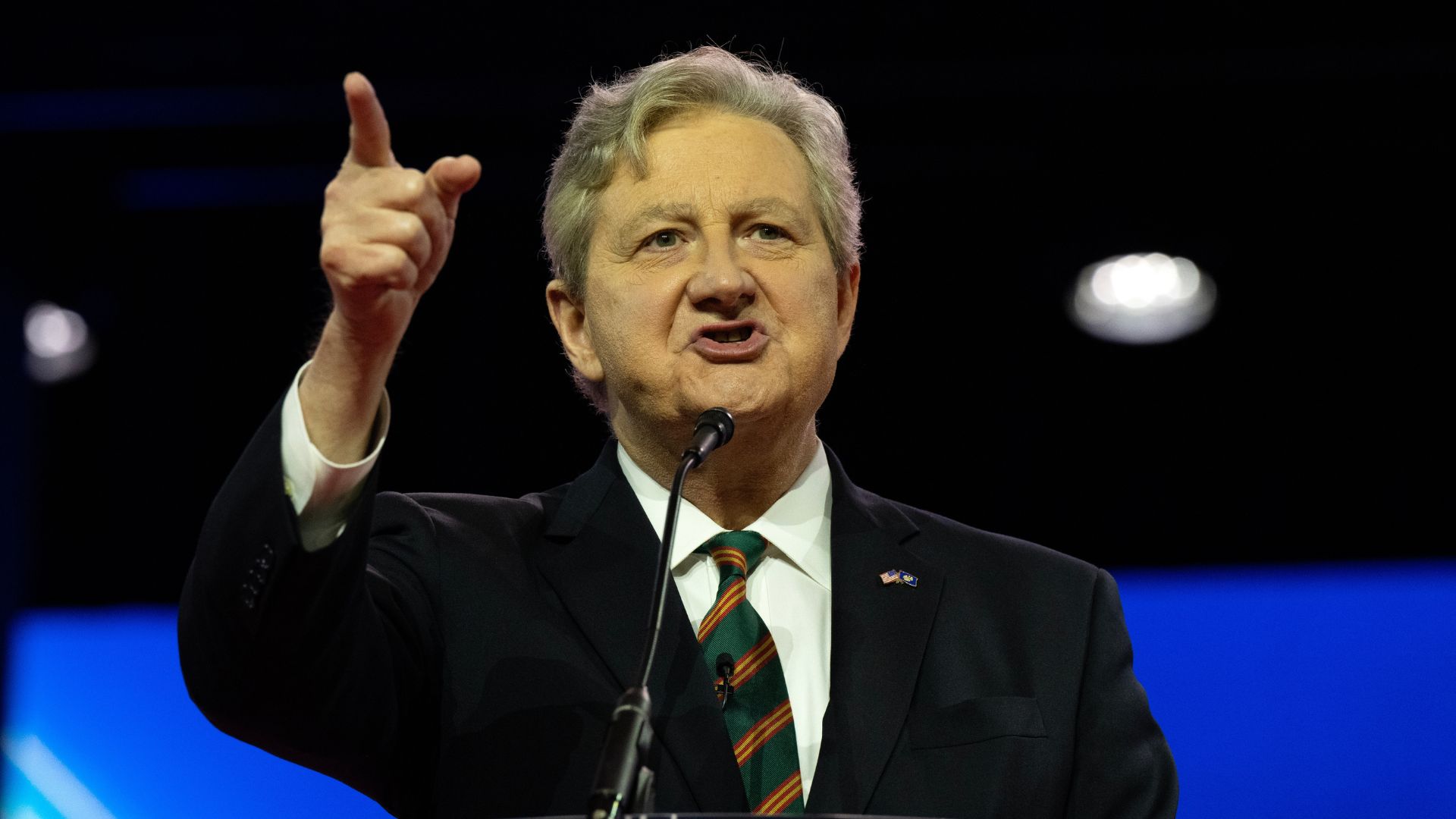
But he questioned whether sweeping political rhetoric made accountability more difficult.
“It’s mighty convenient to blame everybody born before a certain year,” K.e.n.n.e.d.y remarked.
“That way, nobody has to explain exactly who made which decision.”
Ocasio-Cortez responded that public officials should examine the consequences of their policies.
K.e.n.n.e.d.y agreed.
Then he turned toward the subject of January 6.
He wanted to examine how public figures described dangerous events and how those descriptions were interpreted.
Ocasio-Cortez had publicly discussed her fear during the attack.
Her accounts included the confusion surrounding an encounter with a police officer and the uncertainty she experienced while sheltering inside a congressional office building.
K.e.n.n.e.d.y argued that different details of those accounts needed to be understood accurately.
Ocasio-Cortez challenged his framing.
She argued that discovering the identity of someone approaching a frightened person did not automatically erase the fear experienced before that identity became clear.
K.e.n.n.e.d.y looked toward the chairman.
“That may be true, Congresswoman.”
He paused.
“But if we’re going to discuss what happened, shouldn’t we distinguish what somebody feared from what actually occurred?”
The chairman allowed the discussion to continue.
K.e.n.n.e.d.y displayed a prepared timeline.
It began with the disruption of congressional proceedings on January 6.
The next entries described security concerns spreading across the Capitol complex.
Another documented uncertainty about the location and intentions of people moving through nearby areas.
A final entry concerned the encounter described by Ocasio-Cortez.
K.e.n.n.e.d.y pointed toward the final line.
He emphasized that the person involved in that particular encounter was a law enforcement officer.
Ocasio-Cortez immediately responded.
“That does not mean the danger across the Capitol complex was imaginary.”
K.e.n.n.e.d.y acknowledged that the attack itself was real.
He also acknowledged that lawmakers and staff had faced legitimate security concerns.
But he wanted to know whether every alarming moment had been described with sufficient precision.
Ocasio-Cortez replied that fear during a rapidly developing emergency did not provide a person with perfect information.
The distinction mattered.
An individual could reasonably experience fear before learning that an unfamiliar person was a police officer.
The later identification could change the factual understanding of the encounter.
It could not establish that the earlier emotional experience had been dishonest.
K.e.n.n.e.d.y studied the timeline.
Then he introduced the first complication.
The document distinguished the location of the congressional office building from the Capitol building itself.
He asked whether the physical location of an incident mattered when evaluating public descriptions.
Ocasio-Cortez answered that geography mattered.
But she argued that different buildings within the Capitol complex could still be affected by a broader security emergency.
K.e.n.n.e.d.y agreed that threats could extend beyond a single structure.
Then he asked whether public statements should accurately identify where particular events occurred.
Ocasio-Cortez said they should.
The exchange had not established that either participant had deliberately misrepresented the incident.
Instead, it identified several different questions.
Where had the encounter occurred?
What did Ocasio-Cortez know at that moment?
When did she learn that the person involved was an officer?
And how should those facts be explained to the public?
K.e.n.n.e.d.y opened another page.
It contained a fictional reconstruction of how two different summaries could describe the same frightening event.
The first emphasized the fear experienced by a person hearing an unexpected disturbance.

The second emphasized the later identification of the person responsible for the disturbance.
K.e.n.n.e.d.y asked which description was accurate.
Ocasio-Cortez answered that the descriptions were incomplete when separated.
The person’s fear mattered.
So did the later identification.
K.e.n.n.e.d.y leaned back.
“Then perhaps the whole story matters more than whichever half produces the better headline.”
The remark attracted scattered laughter.
Ocasio-Cortez responded that selectively emphasizing the officer’s identity could also distort the experience.
K.e.n.n.e.d.y acknowledged that possibility.
But he maintained that public figures had a responsibility to provide enough context for readers to distinguish fear from confirmed threats.
The chairman asked both lawmakers to avoid suggesting that an incomplete description automatically established deliberate deception.
K.e.n.n.e.d.y accepted the direction.
Then he introduced a second folder.
This one contained a comparison of public statements and legislative positions concerning congressional security.
K.e.n.n.e.d.y argued that elected officials should connect their public concerns to specific policy proposals.
He questioned whether emotional testimony sometimes received more attention than practical solutions.
Ocasio-Cortez rejected the suggestion that personal experience and legislative action were incompatible.
She argued that lawmakers could discuss traumatic events while also pursuing institutional reforms.
K.e.n.n.e.d.y agreed in principle.
But he pressed for examples of concrete decisions.
He wanted to know which proposals had been advanced, what those proposals required, and how lawmakers had voted.
The hearing now moved into a broader discussion of congressional responsibility.
K.e.n.n.e.d.y displayed a sample voting summary.
It contained several legislative proposals addressing government security, accountability, and institutional oversight.
The documents were prepared as examples for the hearing rather than verified accusations about either lawmaker’s historical voting record.
K.e.n.n.e.d.y questioned whether political figures sometimes supported broad principles while disagreeing with legislation intended to implement them.
Ocasio-Cortez answered that the contents of a bill mattered more than its title.
A proposal described as improving security could contain provisions a lawmaker considered unnecessary or harmful.
Likewise, opposing a particular bill did not automatically mean opposing the general objective.
K.e.n.n.e.d.y looked toward the summary.
“So voting against a bill doesn’t necessarily mean opposing everything the bill claims to accomplish?”
Ocasio-Cortez agreed.
K.e.n.n.e.d.y nodded.
“Then voting for a bill doesn’t necessarily mean every promise in its title will become reality.”
The chairman recognized the relevance of the distinction.
Legislative accountability required examining actual provisions, amendments, and recorded votes.
A simplified description could conceal the reasons behind an individual decision.
K.e.n.n.e.d.y turned toward Ocasio-Cortez.
“That’s why I like reading the fine print.”
She responded that the same standard should apply when evaluating statements about January 6.
K.e.n.n.e.d.y studied her for a moment.
The exchange had returned to the original controversy.
But this time, the question concerned consistency.
Could lawmakers demand complete context for their own statements while giving their political opponents the same consideration?
K.e.n.n.e.d.y asked whether Ocasio-Cortez believed personal accounts should be examined using verifiable information.
She said they should.
Then she added that examining evidence should not become a method of dismissing experiences merely because those experiences were emotionally powerful.
K.e.n.n.e.d.y replied that emotional power should not exempt a claim from scrutiny.
Both positions established legitimate concerns.
The question was how to evaluate them together.
Then K.e.n.n.e.d.y introduced another photograph.
It showed a staged scene prepared for the committee’s discussion of political symbolism.
The image depicted a lawmaker reacting emotionally during a public event.
K.e.n.n.e.d.y asked whether a photograph of someone crying established the sincerity or insincerity of the emotion.
Ocasio-Cortez replied that it did not.
K.e.n.n.e.d.y agreed.
He noted that photographs captured moments without necessarily explaining everything surrounding them.
A person’s emotional reaction could be genuine.
The surrounding political interpretation could still be debated.
Ocasio-Cortez challenged K.e.n.n.e.d.y to apply that reasoning consistently.
She argued that an image of tears could not establish theatrical dishonesty any more than it could prove the merits of a political position.
K.e.n.n.e.d.y accepted the distinction.
The photograph could show that someone appeared emotional.
It could not independently establish hidden motives.
That clarification undermined a common style of political accusation.
Critics sometimes described visible emotion as proof of manipulation.
Supporters sometimes treated visible emotion as proof that a political argument was correct.
Neither conclusion necessarily followed from the image alone.
The chairman asked the senators to return to the January 6 timeline.
K.e.n.n.e.d.y opened the final attachment in his folder.
It contained a comparison of the known location information, the reported encounter, and the sequence in which the officer’s identity became understood.
The important distinction appeared in the final column.
The document separated information available during the incident from information established afterward.
K.e.n.n.e.d.y examined the entries.
He had been emphasizing what investigators could identify after the encounter.
Ocasio-Cortez had been emphasizing the uncertainty experienced during it.
Those were different perspectives on the same sequence.
The timeline did not establish that the officer had been an attacker.
But it also did not prove that a person frightened before recognizing him had knowingly misrepresented the situation.
K.e.n.n.e.d.y asked the committee’s legal adviser to explain the difference between a mistaken perception and an intentionally false statement.
The adviser described the importance of knowledge and intent.
Someone could misunderstand an event without deliberately deceiving others.
A knowingly false factual assertion would involve a different question.
The evidence necessary to distinguish those possibilities would depend on the specific statement and circumstances.
K.e.n.n.e.d.y looked toward Ocasio-Cortez.
“Then the fact that somebody was scared doesn’t prove every interpretation was correct.”
She agreed.
But she immediately added another point.
“And discovering additional facts afterward doesn’t prove the original fear was dishonest.”
K.e.n.n.e.d.y nodded.
The distinction had narrowed the dispute.
Then he identified one final issue.
He argued that public officials had a responsibility to correct material misunderstandings when more reliable information became available.
Ocasio-Cortez replied that corrections should accurately identify what was misunderstood.
She objected to treating a clarification about an officer’s identity as proof that the broader attack had not occurred.
K.e.n.n.e.d.y agreed that the attack itself was not in dispute.
But he maintained that public figures should describe individual incidents precisely.
The chairman asked both participants to state the central principle they wanted the committee to recognize.
Ocasio-Cortez emphasized the importance of understanding how people experience rapidly developing emergencies.
K.e.n.n.e.d.y emphasized the importance of distinguishing subjective experience from independently established facts.
The positions were not mutually exclusive.
But the confrontation still contained a deeper disagreement about political accountability.
K.e.n.n.e.d.y returned to Ocasio-Cortez’s opening criticism of his generation.
He asked whether she believed older politicians should be judged by their actual decisions rather than age alone.
She agreed that individual decisions mattered.
Then K.e.n.n.e.d.y asked whether that principle should extend to younger politicians.
Ocasio-Cortez answered that it should.
K.e.n.n.e.d.y looked down at the folder.
For a moment, he appeared ready to deliver another sarcastic remark.
Instead, he closed the document.

He removed his glasses and leaned toward the microphone.
Then he asked the question that brought the entire confrontation into focus.
“Congresswoman, if you demand that we judge your actions in context, shouldn’t you offer that same fairness to everyone else?”
The room fell quiet.
For eleven seconds, the discussion stopped.
Ocasio-Cortez looked toward K.e.n.n.e.d.y.
Then she answered.
“Yes, Senator, but fairness also means not reducing someone’s experience to whichever detail is politically convenient.”
K.e.n.n.e.d.y listened without interrupting.
Her answer returned the challenge to him.
The principle of consistent standards applied in both directions.
K.e.n.n.e.d.y could demand precise descriptions without dismissing legitimate fear.
Ocasio-Cortez could criticize generational leadership without assigning identical responsibility to everyone of a particular age.
Neither position required abandoning scrutiny.
Both required greater care in describing the available evidence.
The chairman asked whether the hearing had established deliberate deception by Ocasio-Cortez concerning the encounter.
The adviser answered that the materials presented did not establish such a conclusion.
The officer’s identity was relevant.
So were the circumstances and the information available at the time.
A claim of intentional dishonesty required evidence beyond the existence of a later clarification.
K.e.n.n.e.d.y accepted that the documents did not prove deliberate fabrication.
Ocasio-Cortez acknowledged that factual details should be communicated accurately.
The confrontation had produced a consequential clarification.
The officer’s identity could not be used to deny the reality of the January 6 attack.
But a personal account also needed to distinguish what someone believed at the time from what investigators subsequently established.
The chairman directed staff to prepare a summary separating those categories.
The summary would distinguish contemporaneous perceptions, later verified facts, and interpretations that remained disputed.
It would also avoid treating emotional photographs as evidence of hidden motives.
Those decisions created a narrower and more useful framework for evaluating political claims.
K.e.n.n.e.d.y returned his documents to the folder.
Ocasio-Cortez gathered her notes.
The chairman prepared to end the hearing.
But one final observation remained.
K.e.n.n.e.d.y looked toward the timeline.
“Politics would be a whole lot easier if everybody came with a warning label telling us which parts were facts and which parts were opinions.”
A few people laughed.
Then he continued.
“Unfortunately, we have to do that work ourselves.”
Ocasio-Cortez responded that such work required examining complete records rather than isolated fragments.
K.e.n.n.e.d.y agreed.
The chairman struck the gavel.
The hearing ended without establishing the personal humiliation or deliberate deception suggested by the opening accusations.
Instead, the committee had examined a distinction central to public accountability.
A person’s emotional experience and the later factual reconstruction of an event were not necessarily identical.
Neither could be understood responsibly by erasing the other.
The eleven seconds of silence had marked a turning point.
But the answer following those seconds mattered more.
K.e.n.n.e.d.y had asked whether political standards should apply consistently.
Ocasio-Cortez had challenged him to demonstrate the same consistency in his treatment of the evidence.
The hearing’s final record required both.
The manila folder remained on K.e.n.n.e.d.y’s desk.
Its timeline documented an important distinction about the encounter.
But the final question expanded the argument beyond one lawmaker’s account.
It concerned the standard every public official should face when describing controversial events.
If context matters when defending ourselves, it cannot suddenly become irrelevant when we are judging someone else.
