
Congresswoman J@smine Cr0ckett stood beside a massive financial chart and looked directly at Senator Mitch McConnell.
The congressional oversight forum had already become tense.
McConnell defended his record of advancing conservative judicial nominees, arguing that elections gave Senate majorities the authority to shape the federal judiciary.
Crockett challenged the influence of wealthy donors and organizations financing expensive judicial confirmation campaigns.
Then she unveiled a financial diagram.
At its center was a figure that immediately transformed the discussion.
$1.6 billion.
The money came from businessman Barre Seid and entered the Marble Freedom Trust, an organization controlled by conservative legal activist Leonard Leo.
Investigative reporters had traced the extraordinary transaction through corporate documents and financial records.
Crockett pointed toward another connection.
A separate network of judicial advocacy organizations had spent millions supporting conservative Supreme Court nominees.
The diagram also identified a $9 million contribution to a political organization associated with McConnell.
Crockett turned toward the senator.
“Senator, I’m not asking whether billionaires have political opinions.”
She placed the financial record on the table.
“I’m asking how Americans are supposed to trust judicial independence when they cannot identify everyone financing the campaigns surrounding their courts.”
McConnell challenged the suggestion that lawful donations established corruption.
Crockett acknowledged that distinction.
But the final page contained a question about financial influence, disclosure, and the public’s ability to examine judicial power.

The $1.6 Billion Transfer That Put Judicial Money Under Scrutiny
Crockett opened the first section of her financial presentation.
It concerned the Marble Freedom Trust.
In August 2022, ProPublica and The Lever published an investigation describing a massive transfer involving Barre Seid, the longtime owner of Tripp Lite.
The businessman had transferred ownership of his company to the newly established nonprofit trust.
In March 2021, Eaton Corporation acquired Tripp Lite for approximately $1.65 billion.
The transaction left the Marble Freedom Trust with an extraordinary financial endowment.
Leonard Leo served as the trust’s chairman and trustee.
The structure also allowed Seid to avoid potentially hundreds of millions of dollars in capital-gains taxes.
That result followed from the applicable tax treatment of the transaction, not a documented finding of criminal tax evasion.
The arrangement created one of the largest known political advocacy donations in American history.
Crockett highlighted the amount.
She argued that financial resources of this scale could support political advocacy for many years.
McConnell challenged whether the transfer violated federal law.
Crockett acknowledged that the reporting did not establish an unlawful donation.
But she questioned whether the public could adequately evaluate the political influence created by such concentrated funding.
The senator defended the right of individuals to support organizations advancing their legal and political views.
Crockett accepted that lawful political participation deserved protection.
Then she introduced the next question.
What happens when a wealthy donor provides extraordinary resources to an organization whose activities can influence judicial nominations and legal policy?
The financial documents established that the transfer occurred.
They did not establish that Seid personally purchased a judicial decision.
Nor did they demonstrate that McConnell received the $1.6 billion.
Those distinctions mattered.
But the scale of the transaction raised substantial questions about how political influence operates outside ordinary campaign contributions.
The next section connected that financial network to judicial confirmation battles.
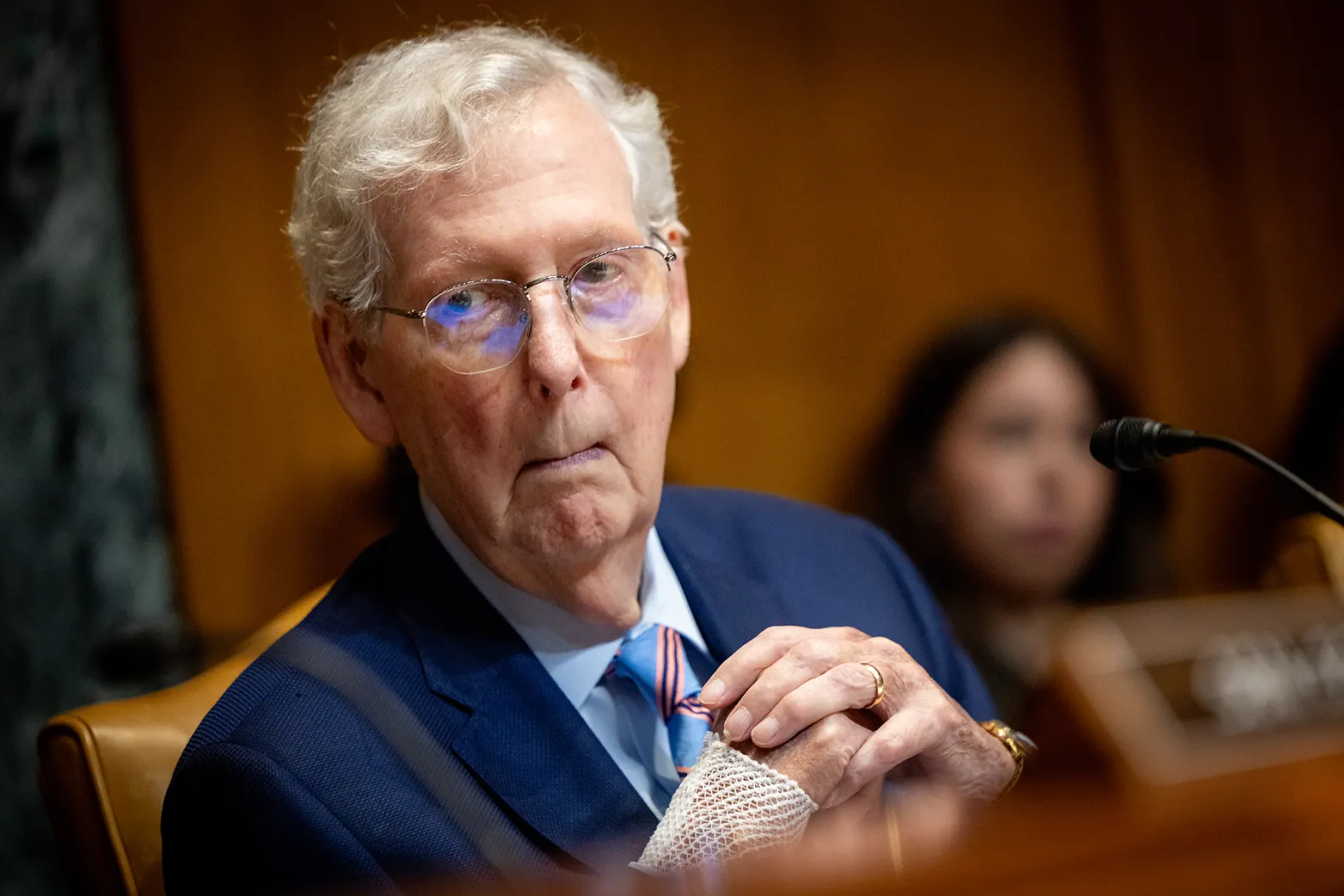
The Judicial Crisis Network and the Money Behind Supreme Court Confirmations
Crockett displayed records concerning the Judicial Crisis Network, also associated with the Concord Fund.
The organization had participated prominently in campaigns surrounding Supreme Court nominations.
It opposed President Barack Obama’s nomination of Merrick Garland.
It later supported the confirmations of Neil Gorsuch, Brett Kavanaugh, and Amy Coney Barrett.
Those efforts involved extensive public advocacy and advertising expenditures.
According to a June 2022 investigation by Citizens for Responsibility and Ethics in Washington, the Concord Fund raised approximately $48.1 million during one fiscal year.
The money came from contributors whose identities were not publicly disclosed in the organization’s tax records.
Crockett pointed toward the figure.
She argued that judicial confirmation battles increasingly resembled expensive political campaigns.
McConnell responded that nominees deserved public discussion and that outside organizations could legitimately express support.
Crockett did not dispute that principle.
Instead, she questioned whether voters should know more about the financial interests supporting those campaigns.
The distinction became especially important when she introduced earlier donation records.
The Judicial Crisis Network received contributions of approximately $17.9 million and $17.1 million in successive fiscal years.
The ultimate sources of those contributions were not publicly identified.
PolitiFact examined the records in 2019 and confirmed the reported figures.
However, the available documents did not establish whether both contributions came from the same donor.
Crockett emphasized that uncertainty.
The records demonstrated substantial anonymous financial support.
They did not reveal every original contributor.
McConnell argued that donor anonymity could protect lawful political association.
Crockett acknowledged the concern.
But she maintained that secrecy could also prevent citizens from examining potential financial interests surrounding judicial advocacy.
The moderator asked whether the records established illegal payments to Supreme Court justices.
Crockett answered that they did not.
The documented money financed political organizations and advocacy activities.
It was not evidence that judges had accepted bribes.
But the financial relationships raised a separate question about transparency.
And Crockett’s next document concerned McConnell’s connection to the broader political network.
The $9 Million Connection That Put McConnell at the Center
Crockett enlarged another section of the financial chart.
The 2022 ProPublica investigation reported that Leonard Leo’s network had contributed $9 million to a political organization associated with McConnell.
The amount connected two influential parts of conservative political organizing.
One involved organizations helping advance judicial nominees and conservative legal ideas.
The other involved the Senate Republican political operation associated with McConnell’s leadership.
Crockett questioned whether such relationships created public concerns about concentrated influence.
McConnell challenged the implication that a contribution to a political organization amounted to a personal payment.
The distinction was essential.
The reported $9 million was not established as money deposited into McConnell’s personal bank account.
Nor did the investigation establish that the payment purchased a specific Senate vote.
Crockett acknowledged those limitations.
But she argued that the relationship mattered when examining how outside organizations and Senate leadership advanced shared judicial priorities.
McConnell defended his judicial confirmation record.
He maintained that the Senate possessed constitutional authority to provide advice and consent on judicial nominations.
He also argued that voters could evaluate the decisions made by elected senators.
Crockett challenged whether voters could fully evaluate the political environment without knowing the ultimate sources of major advocacy funding.
The disagreement sharpened.
A contribution could be lawful while still raising questions about political access.
A senator could share an organization’s judicial philosophy without acting improperly.
And an organization could spend millions supporting a nominee without establishing that the nominee had promised favorable rulings.
Those propositions were not contradictory.
Crockett argued that they demonstrated why accurate financial disclosure was important.
McConnell maintained that political advocacy should not be confused with criminal conduct.
The moderator asked whether Crockett possessed authenticated bank records showing that McConnell had personally received money in exchange for judicial action.
She answered no.
The documents established organizational financial relationships.
They did not establish personal bribery.
That clarification changed the original accusation.
But it did not eliminate the question of how wealthy donors participated in judicial politics.
Crockett turned toward her final financial diagram.

The Giant Financial Web Reveals What the Public Still Cannot See
The display contained several interconnected organizations.
The Marble Freedom Trust appeared at the center of one section.
Leonard Leo’s broader network extended toward legal advocacy and political organizations.
The Judicial Crisis Network appeared alongside its documented fundraising and confirmation advertising.
Another connection identified the reported $9 million contribution to the McConnell-associated political group.
Crockett used arrows to distinguish different types of financial activity.
Some represented documented donations.
Others represented reported organizational relationships.
The remaining connections identified activities supporting judicial nominations.
But one category remained incomplete.
The identities of numerous ultimate donors were not publicly available.
That missing information became the most important feature of the diagram.
Crockett argued that voters could observe political advertising without always knowing who originally financed it.
McConnell responded that political organizations were subject to applicable disclosure and tax requirements.
Crockett accepted that the organizations operated within a legal framework.
But she challenged whether existing requirements provided sufficient transparency.
The moderator asked what the financial diagram actually proved.
The documents established substantial transfers into politically active organizations.
They also demonstrated that those organizations had participated in judicial confirmation campaigns.
But the records did not establish a secret agreement to purchase federal judges.
Nor did they identify an unlawful exchange involving McConnell and a particular judicial decision.
That distinction was critical.
The diagram could show financial influence and organizational coordination.
It could not convert every connection into evidence of corruption.
Crockett acknowledged that limitation.
Then she raised a different concern.
If donors remained anonymous, the public could face difficulties evaluating whether their interests overlapped with matters before the judiciary.
The Brennan Center for Justice had documented extensive nontransparent spending in state judicial elections.
Its research also described the role of organizations associated with the Judicial Crisis Network.
The findings demonstrated that transparency concerns extended beyond federal confirmation battles.
The senator maintained that any reform needed to preserve constitutional protections for political participation.
Crockett argued that transparency and political freedom should not automatically be treated as opposing objectives.
The disagreement remained unresolved.
Then she introduced the final question.
Crockett’s Final Question Changes the Confrontation
Crockett stepped away from the screen.
She placed the financial summary beside McConnell’s microphone.
Then she asked whether the senator believed public confidence in judicial independence mattered.
McConnell answered that it did.
She asked whether citizens deserved accurate information about organizations spending extraordinary sums on judicial nominations.
He responded that political disclosure requirements should be consistent with constitutional protections.
Crockett acknowledged that principle.
Then she delivered her central challenge.
“Senator, if the courts are supposed to deliver equal justice, shouldn’t Americans know who is spending millions trying to shape them?”
McConnell argued that judicial nominees should ultimately be evaluated according to qualifications and legal philosophy.
Crockett agreed that those considerations were important.
But she questioned whether the confirmation process could be evaluated without examining the surrounding financial activity.
The moderator returned to the distinction between influence and corruption.
Political organizations may support nominees because they share legal philosophies.
That activity does not automatically establish improper influence.
Likewise, a wealthy donor may contribute to an advocacy organization without directing any judge’s decisions.
But substantial undisclosed funding can still create legitimate transparency concerns.
Crockett emphasized that the question was not whether every contribution constituted bribery.
It was whether the public possessed enough information to examine potential conflicts and political influence.
McConnell maintained that donor privacy remained an important consideration.
The exchange produced a more precise disagreement.
Crockett sought stronger transparency around significant judicial advocacy financing.
McConnell emphasized protections for lawful political association and the Senate’s constitutional confirmation role.
Neither position required assuming that every major donor had committed wrongdoing.
The financial records supported examination of the relationships.
They did not establish that judges had been purchased.
That limitation prevented the original accusation from becoming an authenticated criminal finding.
But it also clarified the practical question facing lawmakers.
How much financial disclosure should accompany political advocacy surrounding institutions expected to remain independent?
The answer would require balancing public accountability, political rights, and the risks created by concentrated financial influence.
The Final Consequence That Outlasts the Confrontation
The moderator returned to the financial diagram.
The documented amounts remained substantial.
The $1.6 billion transaction had provided extraordinary resources to the Marble Freedom Trust.
The Concord Fund had reported tens of millions in organizational fundraising.
Judicial confirmation campaigns had attracted millions in advertising expenditures.
And the network had financial connections to political organizations associated with Senate Republican leadership.
Those findings supported examining how wealthy donors and advocacy groups participated in judicial politics.
They did not establish that McConnell operated a criminal money-laundering scheme.
Nor did they demonstrate that individual judges had accepted money in exchange for rulings.
The distinction mattered because serious accusations required evidence of specific misconduct.
Crockett’s presentation demonstrated the scale of political financial relationships.
McConnell’s response emphasized the difference between lawful advocacy and corruption.
The final document forced both arguments into a more exact form.
Transparency requirements could help voters examine influential organizations.
But disclosure rules also needed to account for legitimate associational privacy.
The policy question was whether the existing balance adequately protected judicial independence and public confidence.
Crockett argued that powerful financial networks deserved sustained scrutiny.
McConnell maintained that political participation should not be presumed illegitimate merely because contributors supported conservative nominees.
The confrontation ended without an established finding of personal misconduct.
But it produced a measurable issue for congressional examination.
Organizations had raised and spent extraordinary sums surrounding judicial nominations.
Some transactions were publicly documented.
Many original donors remained anonymous.
And the available records could not establish the ultimate interests behind every dollar.
That was the consequential discovery.
Crockett closed her folder.
The financial diagram remained visible behind her.
Its strongest evidence was not an authenticated transfer into McConnell’s personal account.
It was the documented scale of funding flowing through organizations involved in judicial politics.
The original accusation promised a hidden criminal pipeline.
The available records established a broader public-policy controversy involving political money, disclosure, and judicial independence.
That distinction did not make the financial relationships irrelevant.
It defined what could responsibly be concluded from them.
A donation might support an ideological objective.
A lobbying campaign might influence political debate.
But establishing unlawful conduct required more than identifying financial proximity.
The moderator concluded the session.
Crockett’s final challenge remained centered on public accountability.
McConnell’s defense remained centered on lawful political participation.
Neither erased the documented financial transfers.
And neither could transform those transfers into criminal proof without additional evidence.
The debate had begun with a dramatic accusation about billionaires buying courts.
It ended with a question about what Americans were entitled to know when enormous financial resources entered judicial politics.
The public can see the millions spent on judicial advocacy. The harder question is whether existing disclosure laws reveal enough about the people financing it.
