
Senator John Neely Kennedy stood inside the Senate chamber as lawmakers argued over the rising cost of healthcare for America’s military veterans.
The discussion had begun with spending limits, administrative expenses, and competing proposals for the Department of Veterans Affairs.
But Kennedy believed the debate had overlooked something far more important.
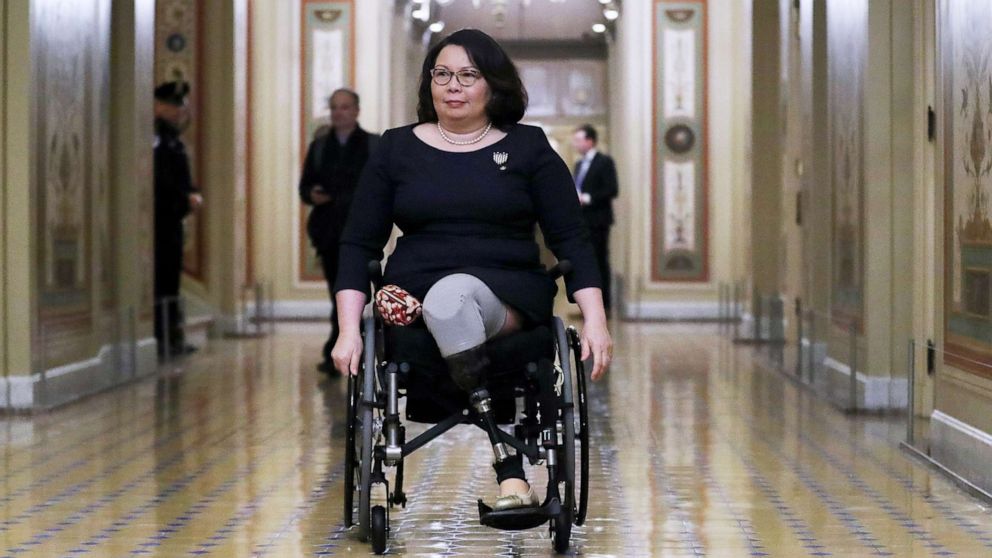
He looked across the chamber toward Senator Tammy Duckworth, the Illinois Democrat who had lost both legs while serving in Iraq.
Duckworth remained seated as the Louisiana Republican addressed his colleagues.
For several seconds, Kennedy said nothing.
Then he delivered a question that changed the direction of the debate.
“She lost her legs defending this country—and we’re sitting here arguing over the cost of keeping her alive?”
The chamber grew quiet.
Kennedy’s question was not a claim that Duckworth currently faced a denial of lifesaving medical care.
It was a challenge about the obligations the United States accepts when it sends service members into combat.
Duckworth’s injuries were not hypothetical.
On November 12, 2004, a rocket-propelled grenade struck the Black Hawk helicopter she was helping pilot over Iraq.
The explosion cost her both legs and severely injured her right arm.
Her survival required emergency treatment, evacuation, and an extended period of rehabilitation.
Now, more than two decades later, Kennedy was asking lawmakers to consider the human consequences of their budget decisions.
And the next document would move the discussion from emotional appeals toward the actual financial commitments involved.
The Budget Debate That Triggered the Confrontation
The dispute began as senators considered how much money the federal government should provide for veterans’ medical services.
The Department of Veterans Affairs operates one of the country’s largest integrated healthcare systems.
Its responsibilities include hospital treatment, outpatient care, rehabilitation, mental health services, and support for veterans with service-connected disabilities.
The department also funds medical services delivered through authorized community providers.
Those responsibilities require substantial federal spending.
The administration’s fiscal year 2027 budget request proposed approximately $488.2 billion in total resources for the department.
The request included funding for healthcare, disability benefits, education, housing-related programs, and other responsibilities.
But the total budget figure did not represent medical spending alone.
Kennedy emphasized that distinction.
He argued that lawmakers needed to understand which accounts supported patient care and which financed administrative or other benefits.
Some senators favored tighter oversight of government expenditures.
Others warned that reductions affecting medical facilities, staffing, or access could undermine services veterans depended upon.
The disagreement was not simply about whether veterans deserved care.
Lawmakers across the political spectrum had expressed support for meeting the government’s obligations to former service members.
The dispute concerned how those obligations should be funded and administered.
Kennedy acknowledged that taxpayers deserved responsible financial management.
But he challenged the assumption that budget efficiency could be measured solely by reducing expenditures.
He pointed toward the medical services accounts.
A delayed appointment might appear as an administrative problem in a federal report.
For a veteran suffering from chronic pain, however, the delay could mean weeks of additional suffering.
A shortage of rehabilitation specialists could create difficulties that would never appear in a simple budget summary.
And insufficient support for prosthetic services could affect a disabled veteran’s independence for years.
Kennedy argued that those outcomes needed to be considered alongside financial savings.
Duckworth then entered the discussion.
Her response brought the chamber back to the day her military career changed forever.
Tammy Duckworth’s Story Changes the Debate
Duckworth was serving with the Illinois Army National Guard when her helicopter came under attack in Iraq.
The November 2004 explosion caused catastrophic injuries.
She lost both legs and sustained severe damage to her right arm.
The attack also placed her life in immediate danger.
Fellow service members helped rescue her.
Military medical personnel provided emergency treatment before she began a long recovery.
Duckworth subsequently spent months undergoing rehabilitation at Walter Reed.
Her recovery included learning to use prosthetic legs and adapting to the lasting effects of her injuries.
But her military experience did not end her commitment to public service.
She eventually became director of the Illinois Department of Veterans’ Affairs.
In 2009, she joined the federal Department of Veterans Affairs as an assistant secretary.
She later served in the House of Representatives before winning election to the Senate in 2016.
Her career gave her direct experience with veterans’ healthcare from multiple perspectives.
She had received treatment as a wounded service member.

She had worked inside the institutions responsible for supporting veterans.
And she had participated in congressional debates about the funding and administration of those services.
In the imagined confrontation, Duckworth reminded lawmakers that military injuries could require medical support throughout a person’s life.
The initial emergency treatment represented only one stage.
Long-term rehabilitation, prosthetic maintenance, specialized equipment, and additional medical services could remain necessary for decades.
Kennedy listened before returning to the budget proposal.
He argued that those commitments could not reasonably be evaluated as though they were temporary expenses.
Duckworth challenged the Senate to distinguish administrative inefficiency from essential medical care.
Reducing unnecessary paperwork could improve services.
But eliminating resources without understanding their practical purpose could create serious problems.
That distinction became the central issue.
How could Congress control federal spending without undermining the medical support promised to wounded veterans?
Kennedy Opens the Veterans’ Healthcare Files
Kennedy placed a financial summary on the table.
The document compared different sources of Department of Veterans Affairs funding.
It distinguished discretionary medical appropriations from mandatory spending supporting certain benefits and healthcare obligations.
Kennedy emphasized that these categories served different purposes.
A reduction in one account did not automatically produce an equivalent reduction in patient care.
Likewise, an increase in the department’s overall budget did not guarantee that every medical facility had sufficient personnel.
The senator highlighted the importance of examining individual services.
He asked whether lawmakers possessed reliable information about appointment delays, staffing shortages, and prosthetic equipment requirements.
Duckworth supported that approach.
She argued that veterans deserved accessible treatment rather than repeated assurances that their needs were being addressed.
Kennedy then introduced the administration’s proposed changes to medical care funding.
The proposal involved restructuring accounts and modifying how certain resources were categorized.
Supporters argued that reforms could improve management and make spending more efficient.
Critics questioned whether the changes would protect services during implementation.
Kennedy challenged his colleagues to evaluate the proposal against actual patient needs.
He pointed toward rehabilitation services.
A veteran recovering from a serious injury might require multiple specialists.
Those could include physical therapists, occupational therapists, prosthetics experts, and physicians treating long-term complications.
A budget could appear balanced while individual facilities still struggled to provide timely appointments.
Duckworth added that women’s healthcare needs also deserved specific attention.
Female veterans could require prosthetic equipment and rehabilitation services designed for their bodies and medical circumstances.
Equipment originally developed around male patients might not meet every requirement.
Kennedy agreed that funding decisions should reflect those differences.
The conversation had now moved beyond an argument about budget totals.
It concerned whether federal resources were reaching the services veterans actually used.
But the next document introduced another difficult issue.
Could shifting treatment outside the VA improve access, or would it weaken the system responsible for coordinating veterans’ care?
The Disagreement Over Private and VA Healthcare
The Department of Veterans Affairs provides treatment through its own medical facilities and through approved community healthcare providers.
Community care can help veterans receive services when VA facilities cannot provide timely or geographically accessible treatment.
Supporters of expanded community care argue that veterans should not face unnecessary travel or waiting periods.
They also emphasize the importance of giving patients appropriate choices.
Duckworth has repeatedly expressed concerns about policies that could weaken the VA’s ability to provide specialized care.
She argues that the department possesses expertise in treating conditions associated with military service.
Those conditions can include traumatic injuries, post-traumatic stress, toxic exposure, and complex rehabilitation needs.
Kennedy acknowledged that specialized expertise was important.
But he also questioned whether veterans should be required to endure long waits when qualified outside providers were available.
The disagreement concerned how to balance those priorities.
Duckworth argued that community care should complement rather than replace a strong VA medical system.
Kennedy emphasized that patient access needed to remain central to decisions about where treatment was delivered.
Both recognized that the quality of care mattered more than the political identity of the institution providing it.
The financial implications were complicated.
Paying for outside treatment could improve access in some circumstances.
But it could also create administrative expenses or difficulties coordinating medical records.
Similarly, maintaining specialized VA facilities required sustained investment.
Those facilities could provide services that were difficult to replicate through ordinary civilian healthcare networks.
Kennedy returned to his original question.
What standard should Congress use when judging a proposed reduction in spending?
Duckworth suggested examining whether veterans experienced improved access, effective treatment, and better long-term outcomes.
Kennedy agreed that those measures were important.
But he also argued that taxpayers needed evidence that funds were being managed responsibly.
The conversation revealed a practical challenge.
Government efficiency and veterans’ healthcare were not necessarily opposing goals.
The difficult task was distinguishing genuine efficiencies from reductions that simply transferred costs or hardship onto patients.
The Warning About Disability Benefits
The next stage of the discussion concerned regulations affecting disability compensation.
Duckworth had publicly criticized a 2026 Department of Veterans Affairs rule involving how certain treatment decisions could affect disability evaluations.
She argued that the policy risked discouraging veterans from seeking medical treatment.
Her concern centered on the possibility that improvements associated with treatment could influence decisions about disability compensation.
Veterans’ organizations also raised questions about the policy’s consequences.
The administration defended its broader efforts to administer benefits according to applicable laws and medical standards.
The dispute required careful examination of the rule’s language and implementation.
Kennedy asked whether the department had adequately consulted veterans and their representatives.
Duckworth emphasized that major benefit changes should involve those directly affected.
She argued that veterans needed confidence that seeking recommended treatment would not create unintended financial consequences.
Kennedy agreed that the government should communicate benefit rules clearly.
But he cautioned against assuming every regulatory change was designed to reduce legitimate claims.
The relevant question concerned what the rule actually required and how officials applied it.
The discussion returned to the relationship between healthcare and financial security.
For veterans with serious service-connected disabilities, medical treatment and compensation can address different needs.
Healthcare provides treatment and rehabilitation.
Disability compensation addresses certain consequences of injuries or illnesses connected to military service.
Neither benefit should be confused with the other.
A change affecting compensation calculations might influence a veteran’s financial circumstances without directly altering access to medical appointments.
Similarly, healthcare funding could affect treatment availability without changing a disability rating.
Kennedy emphasized that lawmakers needed to distinguish those consequences.
Duckworth argued that policy changes should be evaluated according to their real effects on veterans.
The exchange created another point of agreement.
Congress needed clear evidence before claiming that a particular reform improved efficiency or harmed patients.
That evidence should include medical outcomes, financial consequences, and implementation details.
The final question would test whether lawmakers were prepared to apply those standards.
The Final Question That Brought the Debate Back to Iraq
Kennedy closed his budget folder and turned toward Duckworth.
He acknowledged the extraordinary injuries she had sustained during her military service.
But he also emphasized that her experience represented only one part of a much larger national obligation.
Thousands of American veterans live with serious injuries or chronic conditions connected to military service.
Some require prosthetics.
Others need long-term treatment for traumatic brain injuries, mental health conditions, or illnesses associated with hazardous exposures.
Their needs differ.
But the government’s responsibility to administer earned benefits fairly applies across those circumstances.
Kennedy returned to his earlier question about the cost of keeping wounded veterans alive.
He clarified that the moral obligation required more than emotional speeches.
It required reliable appropriations, functioning medical facilities, and systems capable of delivering necessary treatment.
Duckworth agreed.
She argued that honoring military service meant ensuring support remained available long after public attention had moved elsewhere.
The senator also emphasized that veterans should not have to demonstrate political loyalty to receive earned benefits.
Kennedy supported the principle that eligibility should be determined through law and service-related requirements.
The exchange challenged the idea that veterans’ healthcare should become a partisan bargaining tool.
But it did not eliminate legitimate disagreements over funding methods or administrative reforms.
Lawmakers still had to decide how resources should be distributed.
They also needed to determine which programs could be improved without compromising essential services.
Kennedy raised a final question.
Would senators support independent reviews capable of identifying unnecessary expenditures while protecting medical treatment and disability-related services?
Duckworth supported meaningful oversight.
She emphasized that those reviews should include consultation with veterans and healthcare professionals.
Kennedy agreed that people receiving treatment could provide evidence unavailable through financial statements alone.
The confrontation had reached a more concrete conclusion.
Budget discipline needed to account for patient outcomes.
Veterans’ advocacy needed to recognize the importance of effective administration.
And neither principle could replace the other.
The Promise Congress Must Decide How to Keep
The imagined Senate confrontation ended without a verified exchange in which Kennedy personally silenced the chamber through a remark about Duckworth.
There is no authenticated record establishing that he delivered the quoted statement during a particular Senate debate.
But the underlying issue is real.
Duckworth lost both legs while serving in Iraq on November 12, 2004.
She later devoted substantial portions of her public career to improving services for veterans.
The Department of Veterans Affairs continues facing difficult questions about spending, staffing, medical access, and the administration of disability benefits.
Those questions have major consequences for former service members.
Budget figures can identify financial commitments.
But they do not automatically reveal whether a veteran receives timely treatment.
A proposal can reduce administrative spending.
But lawmakers still need to determine whether that reduction affects patient care.
An increase in total department funding can support expanded services.
But it does not guarantee that every medical facility has the professionals and equipment it needs.
Those distinctions explain why veterans’ healthcare cannot be evaluated through a single headline number.
Kennedy’s imagined challenge emphasized the moral responsibility created by military service.
Duckworth’s response emphasized the practical obligations necessary to fulfill that responsibility.
Their positions were not identical.
But both raised questions about the relationship between fiscal policy and the government’s commitments to veterans.
For lawmakers, the challenge involves deciding how much to appropriate and how to ensure resources are used effectively.
For administrators, it involves translating federal budgets into appointments, treatments, rehabilitation services, and accessible facilities.
For veterans, the consequences are more personal.
They involve whether medical care is available when needed.
They involve whether benefits are administered fairly.
And they involve whether the government recognizes that some injuries require support throughout a lifetime.
Duckworth’s military history provides a powerful reminder of those responsibilities.
Her helicopter was attacked while she was serving her country.
Her injuries permanently changed her life.
But they did not end her career in public service.
She later worked within the veterans’ healthcare system and brought that experience into Congress.
Kennedy’s fictional remarks placed that experience at the center of a broader budget debate.
Yet the ultimate question concerned every veteran who depends on the system.
Can Congress reduce waste and improve efficiency without weakening the medical care and benefits earned through military service?
That question requires evidence, oversight, and sustained financial planning.
It cannot be answered through an emotional speech alone.
But the moral principle behind the speech remains important.
When the United States sends people into combat, it assumes responsibilities extending beyond the end of their deployment.
Those responsibilities include addressing service-connected injuries through legally established benefits and medical care.
Congress must determine how to meet them responsibly.
The Department of Veterans Affairs must administer them effectively.
And public officials must explain the consequences of proposed reforms.
The final measure is not whether one senator delivers a memorable line.
It is whether veterans actually receive the care and support their service has earned.
The lasting question is not how much America can save by changing veterans’ healthcare.
It is how America can spend responsibly while keeping the promises made to those who served.
