
“POPULIST VICTORY? THEN EXPLAIN WALL STREET!” Sheldon Whitehou.s.e Confronts Tom Cott.o.n in Explosive Showdown Over Tru.m.p’s Housing Order
The argument over President Donald Tru.m.p’s housing policy was supposed to be about affordability, working families, and the American dream. Instead, it exposed a deeper disagreement over Wall Street’s influence.
Senator Tom Cott.o.n defended the administration’s executive order as an effort to put ordinary Americans ahead of institutional investors, while Senator Sheldon Whitehou.s.e’s longstanding concerns about corporate influence raised difficult questions about whether the policy would deliver what it promised.
“It’s a populist victory,” Cott.o.n’s position could be summarized. “For years, ordinary Americans have struggled to compete with massive investment firms buying properties that families desperately need.”
But Whitehou.s.e’s broader challenge was harder to dismiss.
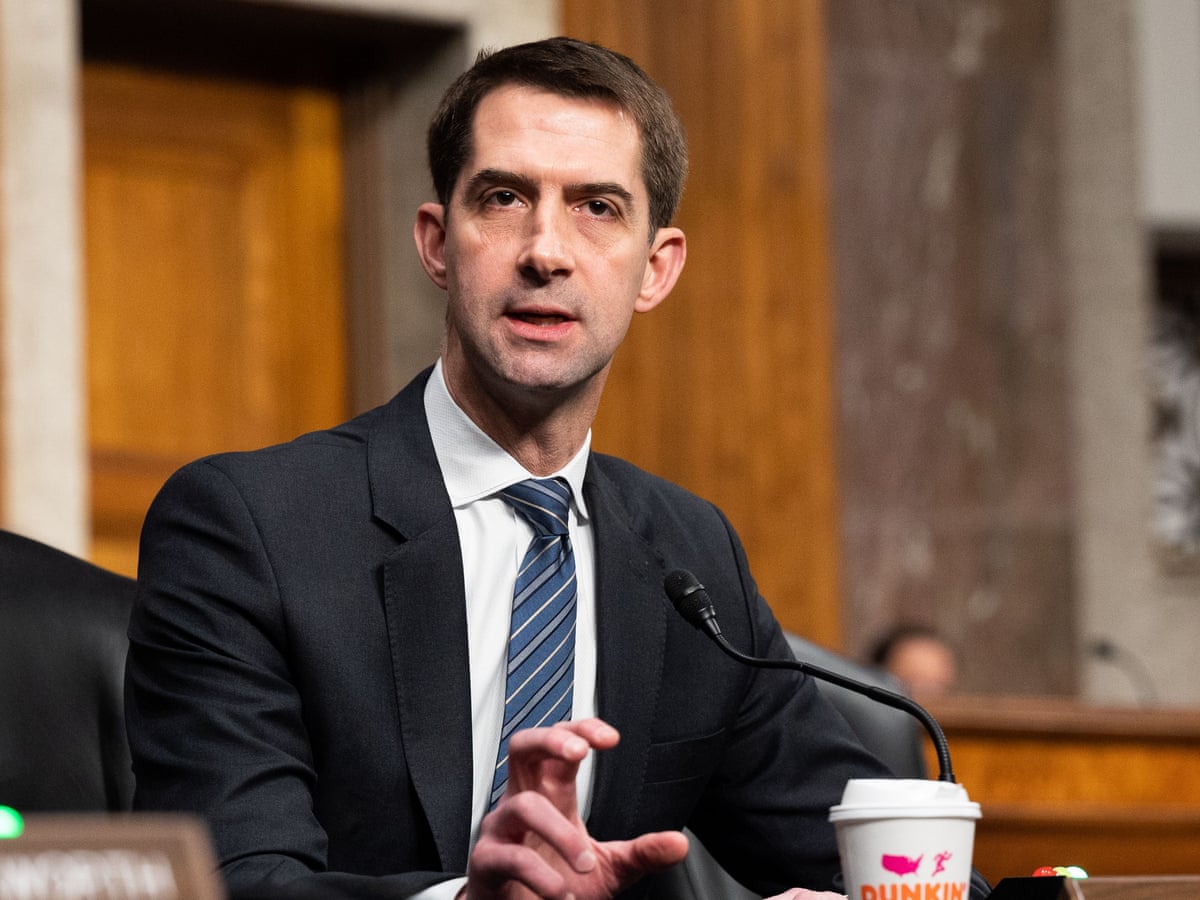
Was restricting institutional investors enough to make housing affordable, or could powerful financial interests continue benefiting through complicated ownership structures, investment arrangements, and exceptions?
That was the question at the heart of the dispute.
And it was precisely where the two senators’ competing arguments became most interesting.
The Tru.m.p administration had signed Executive Order 14376 on January 20, 2026, directing federal agencies to restrict certain government-backed transactions involving large institutional investors purchasing single-family homes.
The order also instructed the Treasury Department to review relevant rules, while directing the Justice Department and Federal Trade Commission to examine potentially anticompetitive acquisitions and rental-market practices.
It included exceptions, particularly for qualifying build-to-rent developments.
The policy therefore presented a genuine political and economic question: could Washington restrict Wall Street’s influence without unintentionally discouraging investment in new housing?
THE FIRST CLASH: COTTON DEFENDS THE PRESIDENT’S HOUSING PROMISE
Cott.o.n’s argument rested on a message that resonated with frustrated homebuyers: ordinary families should not have to compete against investment companies possessing enormous financial resources.
For many Americans, purchasing a first home had become increasingly difficult as prices, mortgage costs, and limited housing supply placed pressure on household budgets.
The executive order attempted to address one part of that problem by restricting certain acquisitions by large institutional investors.
In a dramatized reconstruction of the policy disagreement, Cott.o.n’s argument would be direct.
“Senator Whitehou.s.e, Americans want to own homes. They don’t want to spend their entire lives competing against Wall Street corporations with billions of dollars at their disposal.”
Whitehou.s.e would have an immediate response.
“Tom, nobody disputes that families deserve a fair opportunity to purchase homes. The question is whether this policy actually addresses the financial structures that make housing unaffordable.”
Cott.o.n could push back.
“Are you suggesting that preventing large institutional investors from purchasing certain homes isn’t worthwhile?”
Whitehou.s.e would respond:
“I’m suggesting that announcing a restriction and actually changing the economics of the housing market are two very different things.”
That distinction matters.
The executive order was a significant policy announcement, but it did not immediately prohibit every institutional investor from owning residential property.
Its restrictions depended on agency guidance, legal authority, definitions, and exceptions.
Furthermore, the administration needed Congress to establish a more durable legislative framework.
Whitehou.s.e’s broader criticism of corporate influence would therefore focus on implementation rather than the political announcement itself.
“Show Americans what changes,” his argument would amount to. “Don’t simply tell them that Wall Street has been defeated.”
THE SECOND CLASH: THE FINANCIAL LEDGER AND THE WALL STREET QUESTION
The most important issue in this confrontation concerns the difference between corporate ownership and the complicated financial arrangements surrounding it.
Large institutional investors can acquire properties through subsidiaries, affiliated companies, investment partnerships, and other ownership structures.
Understanding who ultimately controls a property can therefore require examining more than the name appearing on a deed.
This is where transparency becomes essential.
The administration’s January executive order specifically recognized the problem of indirect ownership and instructed HUD to develop disclosure requirements concerning owners, managers, and affiliates participating in certain federal housing assistance programs.
It also called for anti-circumvention measures.
In a dramatized exchange, Whitehou.s.e might challenge Cott.o.n:
“Senator Cott.o.n, if a corporation cannot purchase a property directly, what prevents it from using an affiliated entity or another ownership structure?”
Cott.o.n could answer:
“The administration anticipated that problem. The executive order specifically directs agencies to establish anti-circumvention provisions.”
Whitehou.s.e would immediately press him.
“Then how will Americans know whether those provisions are working?”
Cott.o.n:
“Through the implementation of the order and the enforcement mechanisms established by the responsible agencies.”
Whitehou.s.e:
“That’s the point. The public needs transparency, not another announcement.”
The disagreement would expose an important technical issue.
A restriction on direct purchases is not necessarily effective if the same economic interests can acquire properties through arrangements that escape the rules.
But the existence of subsidiaries or investment partnerships does not automatically establish illegal circumvention.
The relevant questions are whether the arrangements fall within the legal definitions and whether agencies have sufficient information to enforce the restrictions.
That is why ownership disclosure matters.
Without reliable information about beneficial ownership, regulators can struggle to determine who ultimately controls residential properties.
And without effective enforcement, even carefully written restrictions can become difficult to administer.
THE THIRD CLASH: WHO ACTUALLY BENEFITS FROM THE HOUSING POLICY?
Whitehou.s.e’s longstanding criticism of Wall Street’s influence over public policy provides another dimension to the debate.
He has argued that concentrated corporate power can influence legislation, regulation, and the economic opportunities available to ordinary Americans.
Housing is particularly sensitive because it represents both a basic human necessity and one of the largest financial investments most families will ever make.
Cott.o.n’s defense of the administration’s policy would emphasize the benefits of giving individual buyers greater access to available homes.
But Whitehou.s.e’s counterargument would focus on whether restricting institutional acquisitions addresses the deeper causes of unaffordability.
“Tom, let’s assume the restrictions work exactly as the administration promises,” Whitehou.s.e might argue. “What happens if there still aren’t enough homes for families to purchase?”
Cott.o.n could respond:
“Then we need more construction, more opportunities for homeownership, and policies that encourage responsible investment.”
Whitehou.s.e would press further.
“Exactly. So why are we pretending that restricting certain investors automatically solves the housing crisis?”
Cott.o.n:
“Because it’s an important part of the solution.”
Whitehou.s.e:
“An important part is not the entire solution.”
That exchange captures a genuine policy disagreement.
The United States faces housing affordability challenges involving supply shortages, construction costs, interest rates, zoning restrictions, and differences between local housing markets.
Institutional investors are part of that discussion, but their ownership is not evenly distributed across the country.
Research summarized in a Congressional Research Service report indicates that large institutional investors own a relatively small share of single-family rental properties nationally, although their presence can be considerably more concentrated in particular communities.
That distinction is crucial.
A national policy can have very different consequences depending on the local market in which it is implemented.
For a community where institutional investors own a substantial concentration of properties, restrictions could have a meaningful effect.
For another community where institutional ownership is limited, the main affordability problems might involve construction costs, limited supply, or mortgage rates.
Whitehou.s.e’s argument would therefore demand a more complete explanation of how the policy addresses these different circumstances.
THE FOURTH CLASH: THE EXCEPTIONS THAT COULD CHANGE EVERYTHING
Another important feature of the executive order was its treatment of build-to-rent developments.
These are residential communities designed and constructed specifically for rental purposes rather than individual homeownership.
The administration included narrowly tailored exceptions for qualifying developments, recognizing that restricting existing-home acquisitions should not necessarily eliminate investment in new housing construction.
That provision creates a difficult balancing act.
On one side, policymakers want to prevent large investors from competing against individual families for existing homes.
On the other, they may want to preserve investment that increases the overall supply of rental housing.
In a dramatized exchange, Whitehou.s.e might point toward that distinction.
“Senator Cott.o.n, you say the policy protects families. But what happens when the exceptions become large enough to change the practical effect of the restrictions?”
Cott.o.n could answer:
“The exceptions are designed to preserve legitimate construction and investment. We should not discourage companies from building new homes.”
Whitehou.s.e:
“Then who determines whether a development genuinely qualifies?”
Cott.o.n:
“The responsible federal agencies, according to the rules.”
Whitehou.s.e:
“And who checks whether those rules are being applied consistently?”
Cott.o.n:
“Congress has oversight responsibilities, and the agencies must follow the law.”
Whitehou.s.e could then return to the central issue.
“Good. Then we should examine the implementation, not simply celebrate the announcement.”
The disagreement would reveal an important tension in housing policy.
If exceptions are too restrictive, they could discourage investment in new rental communities.
If exceptions are too broad, they could undermine the purpose of restrictions on institutional acquisitions.
Finding the appropriate balance requires detailed rules and meaningful oversight.
It cannot be achieved through political slogans alone.

THE FIFTH CLASH: THE REAL COST OF HOUSING UNAFFORDABILITY
The argument becomes even more consequential when the discussion moves away from Wall Street and toward ordinary households.
For a young couple trying to purchase a first home, the distinction between a government announcement and an actual reduction in housing costs can be enormous.
A policy might attract national attention while leaving the family’s mortgage payment unchanged.
That is why Whitehou.s.e’s broader questions about implementation, construction, and corporate influence deserve attention.
“Tom, families aren’t measuring housing policy by how many speeches we deliver,” Whitehou.s.e might argue. “They’re measuring it by whether they can afford a house.”
Cott.o.n could respond:
“And that’s exactly why the administration is taking action against institutional investors.”
Whitehou.s.e:
“Then show the results. Show the additional homes available to families. Show whether prices are changing. Show whether the restrictions are actually reaching the companies they were designed to address.”
Cott.o.n:
“Those results require implementation. You cannot expect every housing problem to disappear immediately.”
Whitehou.s.e:
“I’m not asking for immediate miracles. I’m asking for measurable accountability.”
That is where the disagreement reaches its most important point.
A housing policy should ultimately be evaluated through evidence about its effects.
Are more families purchasing homes?
Are first-time buyers receiving greater access?
Are rental markets becoming more competitive?
Are new residential developments increasing?
And are large institutional investors complying with the restrictions?
Those questions require data over time.
Neither political declarations nor isolated examples can establish the overall effect of a nationwide housing policy.
THE FINAL CONFRONTATION: A PROMISE IS NOT THE SAME AS A RESULT
As the debate approaches its conclusion, the two senators’ competing positions become increasingly clear.
Cott.o.n’s argument emphasizes the administration’s decision to confront institutional investors and give individual homebuyers greater priority.
Whitehou.s.e’s broader criticism demands evidence that corporate influence, complicated ownership arrangements, and regulatory exceptions will not undermine the promised protections.
Neither argument can be resolved simply by examining the executive order’s title.
Its practical consequences depend on the regulations, enforcement decisions, market conditions, and subsequent legislative developments.
The administration has already moved beyond the original announcement.
On October 22, 2026, the Treasury Department issued proposed regulations implementing provisions of the 21st Century ROAD to Housing Act.
Those proposals included standards for qualifying build-to-rent and renovate-to-rent arrangements, ownership definitions, and enforcement-related requirements.
The development illustrates why implementation matters so much.
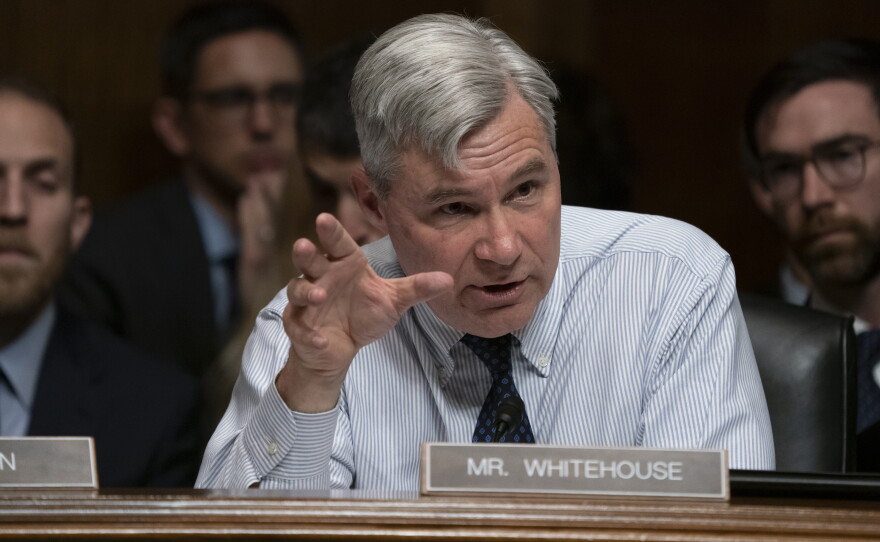
The debate has moved from a presidential announcement toward the complicated process of defining precisely which investors are restricted, which transactions are exempt, and how violations will be identified.
For Whitehou.s.e, those details are exactly where oversight becomes essential.
For Cott.o.n, they represent the practical work required to turn a political commitment into enforceable housing policy.
And for American families, they represent something much more personal.
The possibility of finally purchasing a home without being overwhelmed by competition, costs, or an increasingly complicated housing market.
THE QUESTION WASHINGTON CANNOT AVOID
The confrontation leaves a difficult question hanging over the Senate.
If the administration succeeds in restricting large institutional investors, will ordinary Americans actually find it easier to purchase homes?
Or will the housing market continue struggling with the deeper problems of limited supply, expensive construction, and financing costs?
Whitehou.s.e’s broader concerns about corporate influence will not disappear simply because an executive order has been signed.
Cott.o.n’s defense of the policy will ultimately depend on whether its promised protections translate into measurable improvements.
And the financial structures surrounding institutional ownership will remain an important subject of regulatory scrutiny.
The next stage of the debate will not be decided by who delivers the most memorable speech.
It will be decided by the regulations, the ownership records, the enforcement actions, and the actual experience of families attempting to buy their first homes.
Because there is one question neither senator can afford to ignore: if Wall Street is finally being pushed away from America’s front doors, who will make sure ordinary families can actually afford to walk through them?
And that may be the most important chapter of this housing battle still waiting to unfold.
