
“YOU CALL THAT SACRIFICE? YOU STILL GET EVERY DIME!” Amy Klobuch.a.r Challenges John Kenned.y’s Shutdown Pay Plan in Explosive Senate Showdown!
The Senate had barely finished celebrating a proposal designed to make lawmakers share the financial consequences of government shutdowns when an uncomfortable question threatened to turn the political victory into another Washington controversy.
Senator John Kenned.y had spent months promoting his proposal as a matter of fairness.
His message was simple.
If federal employees could be forced to work without receiving immediate pay during a government shutdown, why should senators continue collecting their regular salaries?
The Louisiana Republican argued that lawmakers should experience at least some of the financial consequences of the decisions they make.
His proposal eventually gained overwhelming bipartisan support.
On May 14, 2026, the Senate unanimously adopted a resolution requiring senators’ salaries to be withheld during future federal government shutdowns.
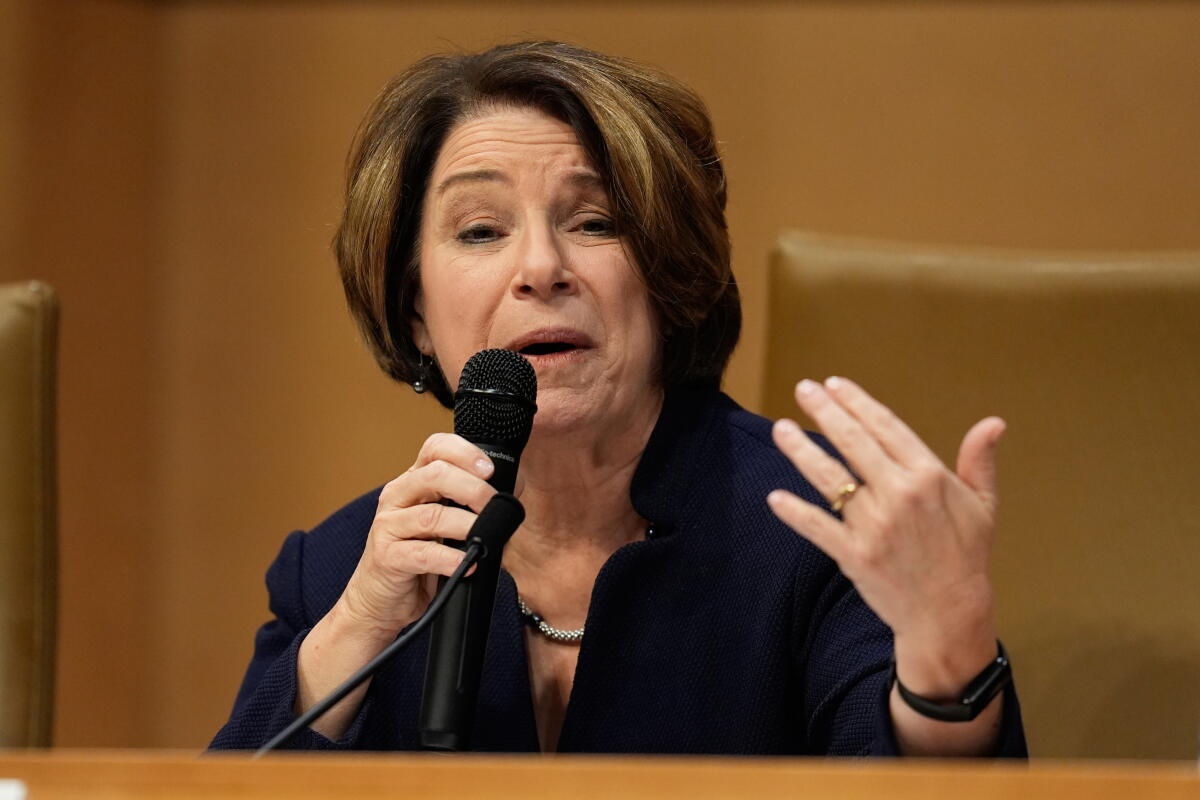
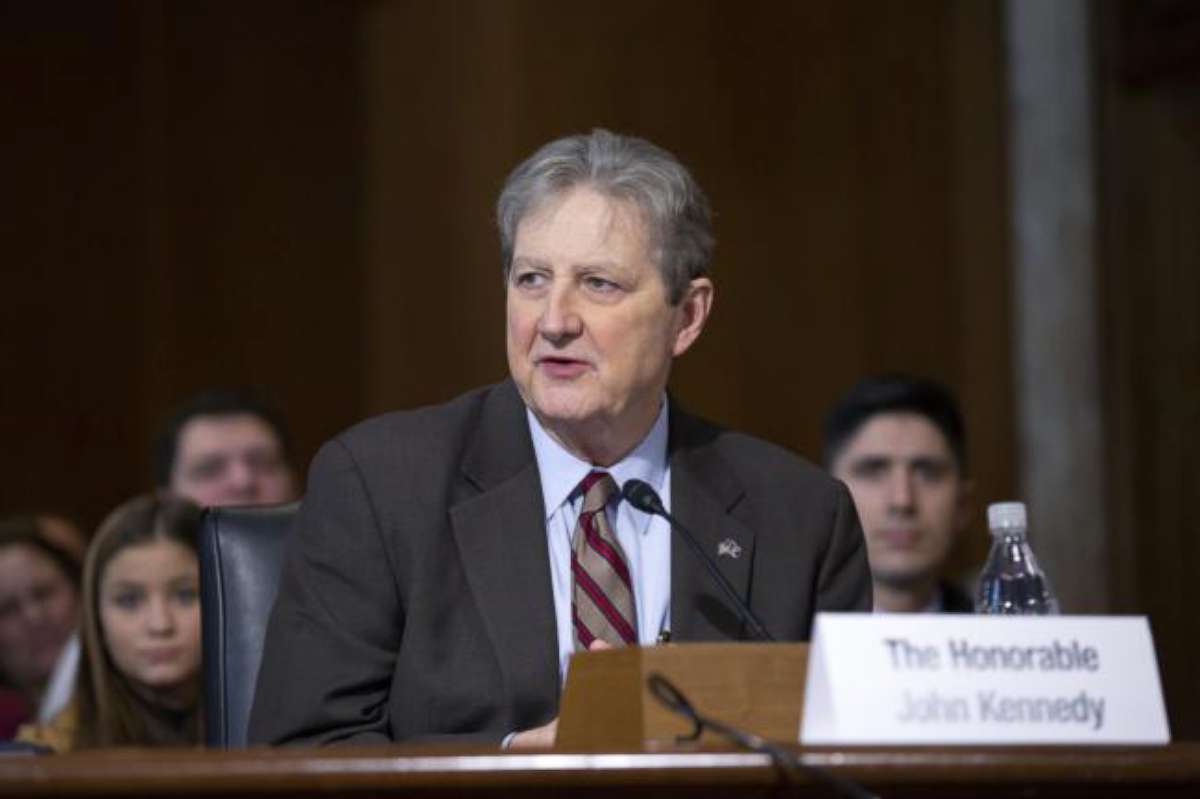
The chamber’s action was celebrated as a symbolic victory for accountability.
But the details were considerably more complicated than the headline suggested.
The salaries would not disappear.
They would simply be held until the shutdown ended.
And that distinction created an uncomfortable question about what sacrifice actually meant in Washington.
Senator Amy Klobuch.a.r, a Democrat from Minnesota, had every reason to examine the proposal’s consequences for ordinary federal employees.
For a TSA officer struggling to pay rent, a delayed paycheck can mean an immediate financial emergency.
For a senator earning $174,000 annually, a temporarily withheld paycheck may be a very different experience.
The contrast became the central issue in a dramatic political reconstruction of the debate.
And the most uncomfortable question was no longer whether senators should experience a pay freeze.
It was whether the proposal genuinely placed lawmakers in the same financial position as the workers they claimed to represent.
“SHARED SACRIFICE? THEN LET’S READ THE FINE PRINT!”
Kenned.y’s proposal had an appealing political message.
He argued that senators should not continue receiving their regular paychecks while federal workers were experiencing financial hardship because Congress had failed to agree on government funding.
During his March 23, 2026, effort to advance the resolution, Kenned.y described the proposed arrangement as placing senators’ checks inside a vault until the government reopened.
His argument was deliberately straightforward.
If federal employees were waiting for their money, senators should be willing to wait as well.
The proposal gained support from lawmakers who believed Congress needed a stronger incentive to avoid government shutdowns.
But Klobuch.a.r’s strongest potential criticism would focus on a different question.
What exactly happens to the withheld money?
The answer is crucial.
Under the resolution, senators would receive their accumulated compensation after the shutdown ended.
The money would not be permanently forfeited.
It would not automatically be transferred to federal employees.
It would not become a financial contribution toward unpaid government operations.
It would simply be delayed.
That distinction does not make the proposal meaningless.
A delayed paycheck can still create inconvenience and financial pressure.
But it does mean that the senator’s ultimate entitlement to the money remains protected.
A federal employee waiting for compensation and a senator waiting for compensation may therefore face very different financial realities.
That is where the political argument becomes particularly uncomfortable.
THE $174,000 QUESTION
The basic salary for most senators is $174,000 annually.
That figure has remained unchanged since January 2009.
It is a substantial income by ordinary household standards, although individual senators have different financial circumstances, assets, debts, and family obligations.
The salary itself does not reveal whether a particular senator is wealthy.
But it provides an important starting point for understanding the controversy.
Consider a hypothetical senator whose salary is withheld during a shutdown lasting several weeks.
That senator knows the accumulated compensation will eventually be released.
The money remains part of the senator’s expected income.
Now consider a federal transportation security officer who is required to continue working during a shutdown.
That employee may have rent due, childcare expenses, transportation costs, credit-card payments, and grocery bills.
Even if retroactive compensation is eventually guaranteed, the immediate financial consequences can be severe.
A landlord does not necessarily postpone rent because Congress cannot pass an appropriations agreement.
A utility company does not automatically suspend its bills.
And a family cannot always wait several weeks for its next paycheck.
The difference is not simply the amount of money involved.
It is the degree of financial security available while waiting.
Klobuch.a.r’s strongest argument would therefore focus on the unequal consequences of delayed compensation.
A senator may experience a temporary interruption in cash flow.
A lower-paid employee may face the possibility of missed payments, accumulated debt, and serious household instability.
That is the uncomfortable reality behind the phrase shared sacrifice.
THE 27TH AMENDMENT: THE CONSTITUTIONAL PROBLEM KENNEDY COULD NOT IGNORE
There was another major issue behind the proposal.
The Constitution creates special protections surrounding congressional compensation.
The Twenty-Seventh Amendment states that a law changing the compensation of senators and representatives cannot take effect until after an intervening election of representatives has occurred.
This constitutional restriction complicates attempts to reduce or suspend congressional compensation immediately.
It is one reason Kenned.y’s resolution was structured around withholding payments rather than permanently eliminating salaries.
The resolution also delays its effective date until after the November 3, 2026, midterm elections.
This timing is important.
The Senate cannot simply disregard constitutional restrictions because lawmakers believe a different compensation arrangement would be politically popular.
Klobuch.a.r could therefore challenge Kenned.y on the practical consequences of the measure without claiming that the proposal was unconstitutional.
The more interesting question is whether the arrangement achieves its stated objective.
Does withholding a paycheck actually discourage government shutdowns?
Does it encourage lawmakers to negotiate?
Or does it simply create a symbolic penalty that disappears once Congress restores government funding?
Kenned.y’s supporters would argue that even a temporary interruption sends a powerful message.
Critics could respond that lawmakers ultimately recover the same money while federal employees endure much more serious uncertainty.
The disagreement is about the effectiveness of the policy, not simply its legality.
“THE WORKERS DON’T GET A VAULT FULL OF GUARANTEED MONEY!”
The most dramatic part of the reconstructed confrontation would begin when the discussion turns away from senators and toward federal employees.
Imagine Klobuch.a.r asking Kenned.y to explain how a TSA officer should interpret the promise of shared sacrifice.
The officer still has to report to work.
The officer still has to perform security duties.
The officer still has to pay rent.
But the officer may have to wait for compensation.
Klobuch.a.r’s challenge would be that a delayed salary for a senator is not necessarily equivalent to the financial hardship experienced by a working family.
Kenned.y could respond that the proposal represents a meaningful improvement over the existing arrangement.
Before the resolution, senators continued receiving their regular compensation during shutdowns.
The new policy would at least prevent immediate salary payments from continuing as though nothing had happened.
That is a legitimate distinction.
However, Klobuch.a.r could point out that the resolution does not guarantee that senators will permanently lose money.
Their compensation is postponed rather than forfeited.
The two positions expose the central contradiction.
Kenned.y wants to demonstrate that senators should share the consequences of shutdowns.
Klobuch.a.r’s potential criticism is that the proposal still leaves senators with a financial safety net that many federal employees do not experience during the crisis.
Neither argument should be dismissed without examining the actual policy.
But the difference between temporary withholding and permanent forfeiture is impossible to ignore.
THE LOOPHOLE THAT TURNED A POLITICAL VICTORY INTO A DEBATE
The most important detail is that the resolution does not permanently eliminate senators’ compensation.
It directs the Senate Secretary to withhold salary payments during qualifying government shutdowns.
Once the shutdown ends, the withheld money is released.
This means that the arrangement does not create a direct fund for federal employees.
It does not pay their rent.
It does not cover their missed utility payments.
And it does not compensate them for the financial stress of working without immediate wages.
The resolution also applies only to senators.
Members of the House of Representatives are not covered by the Senate measure.
That limitation raises another obvious question.
If Congress is supposed to share responsibility for shutdowns, why does the policy cover only one chamber?
Kenned.y’s response has been that the Senate can establish rules governing its own members.
The House must make its own decisions.
But critics can reasonably argue that a genuine congressional accountability policy would be stronger if both chambers adopted comparable measures.
There is also an important legal distinction involving federal employees.
Under the Government Employee Fair Treatment Act of 2019, federal employees generally receive retroactive pay following a shutdown, including employees who were furloughed.
That means federal workers are not necessarily losing the salary they were scheduled to receive.
But they can still experience a serious interruption in income.
And that interruption is precisely what makes the comparison politically sensitive.
The senator’s delayed compensation and the worker’s delayed compensation may eventually be paid.
Their financial circumstances while waiting can be dramatically different.
KENNEDY’S DEFENSE: “AT LEAST WE’RE FINALLY DOING SOMETHING!”
Kenned.y’s supporters would argue that the senator deserves credit for attempting to change a system that previously allowed lawmakers to receive their salaries during shutdowns.
They would point to the unanimous adoption of the resolution.
They would emphasize that the proposal received bipartisan support.
And they would argue that it creates a financial incentive for senators to think more carefully before allowing funding negotiations to collapse.
Kenned.y also acknowledged that the resolution did not go as far as he would have preferred.
That admission is significant.
It demonstrates that the measure was intended as a first step rather than a complete solution to the unequal consequences of shutdowns.
His argument would be that political accountability begins somewhere.
If senators know their paychecks will be withheld, perhaps they will take negotiations more seriously.
But Klobuch.a.r’s strongest response would challenge whether the arrangement creates enough pressure to change congressional behavior.
A senator who knows the money will eventually arrive may not experience the same urgency as an employee whose household budget is already stretched to its limits.
The question becomes whether symbolic financial consequences can meaningfully change political incentives.
And that is something the policy will ultimately have to demonstrate.
THE WORKING FAMILIES LEFT BETWEEN TWO POLITICAL ARGUMENTS
Behind the political dispute are the federal employees whose livelihoods depend on government funding decisions.
Transportation Security Administration officers are particularly important because many continue performing essential duties during shutdowns.
Airport security does not simply disappear because Congress cannot agree on an appropriations package.
Officers must continue screening passengers.
Federal law enforcement personnel must continue their responsibilities.
Border security operations must continue.
And many other public servants must report to work even when their regular pay schedules are disrupted.
Some employees have savings.
Others live paycheck to paycheck.
Some can rely on another household income.
Others have no financial backup.
The same shutdown can therefore create very different consequences for different families.
For a federal employee with limited savings, even a relatively short delay can create financial pressure.
A delayed mortgage payment can lead to additional fees.
A credit-card balance can become more expensive.
Childcare arrangements can become harder to maintain.
And families may be forced to borrow money simply to cover basic necessities.
These are the realities that make the Senate’s shared-sacrifice argument so politically powerful.
But they also make the details of Kenned.y’s resolution especially important.
If lawmakers want the public to believe that they are experiencing the same consequences as ordinary workers, they must be prepared to explain exactly what is being withheld, when it will be returned, and whether the policy genuinely changes their financial incentives.
THE SENATE’S UNANIMOUS VOTE DID NOT END THE ARGUMENT
On May 14, 2026, the Senate adopted Kenned.y’s resolution by voice vote.
That action followed a 99-0 vote advancing the measure earlier in the week.
The overwhelming support represented a major political victory for Kenned.y.
It also demonstrated that the idea of withholding senators’ salaries during shutdowns had considerable bipartisan appeal.
But unanimous approval does not mean every question has been answered.
The resolution is limited to the Senate.
It does not permanently eliminate compensation.
It does not directly transfer money to federal employees.
And its delayed effective date means the new arrangement does not immediately change the way senators are paid during the current political moment.
Those details matter because political headlines often simplify complicated legislative decisions.
A headline announcing that senators will no longer receive paychecks during shutdowns sounds dramatic.
But the actual policy is more precise.
Their salaries are withheld temporarily and released after the government reopens.
That is still a meaningful change.
However, it is not the same as forfeiting compensation.
And it is certainly not the same as giving federal employees additional financial protection.
THE FINAL QUESTION THAT KENNEDY AND KLOBUCHAR CANNOT ESCAPE
Kenned.y deserves recognition for pushing a proposal that received unanimous Senate approval.
His argument that lawmakers should experience some financial consequences when government funding collapses has obvious political appeal.
But Klobuch.a.r’s potential challenge raises a more difficult issue.
What does shared sacrifice actually mean?
If senators eventually receive every dollar they were owed, while federal employees struggle to manage household expenses during a shutdown, has Congress truly created equal consequences?
If the measure applies only to the Senate, what responsibility does the House have?
And if the money is merely postponed, will the policy actually persuade lawmakers to reach agreements before another shutdown begins?
These are legitimate questions that deserve answers beyond political applause.
The Constitution protects congressional compensation in ways that complicate attempts to impose permanent salary forfeitures.
The Senate resolution attempts to work within those restrictions.
But constitutional compliance does not automatically establish that the policy is economically meaningful or politically effective.
For Kenned.y, the challenge is proving that the new rule represents more than a symbolic gesture.
For Klobuch.a.r, the challenge is demonstrating how lawmakers can create a genuinely fairer system without ignoring constitutional protections.
And for federal employees, the most important issue remains painfully simple.
They need their paychecks when the bills are due.
So when the next government shutdown arrives, will Kenned.y’s shared-sacrifice rule finally force senators to negotiate faster—or will lawmakers once again collect every dollar after the crisis ends while federal workers are left wondering how they are supposed to survive until payday?
