
Senator John Ke.n.n.e.d.y was halfway down the Senate aisle when he suddenly turned around and walked toward the presiding officer’s desk.
Washington was preparing for the holiday recess.
Several senators had already gathered their papers, exchanged farewell greetings, and begun discussing their plans to leave the capital.
The final legislative business appeared routine.
Party leaders expected a predictable conclusion to another exhausting congressional session.
But Ke.n.n.e.d.y was carrying something that had not appeared on the day’s agreed schedule.
A thick folder filled with federal spending reports.
Across the cover, someone had written three enormous numbers.
$276,000,000,000.
Ke.n.n.e.d.y approached the desk and placed the folder firmly on its polished wooden surface.
The sound interrupted several conversations.
A few senators turned around.
Others remained seated, apparently expecting another routine procedural announcement.
Ke.n.n.e.d.y slowly removed his glasses.
Then he looked toward the Republican leadership benches.
“Mr. President, before everybody heads home for Christmas, I’ve got something I’d like us to discuss.”
The chamber grew quieter.

Ke.n.n.e.d.y opened the folder.
Its first page contained a summary of federal improper payments, the long-standing problem involving payments made incorrectly or without adequate supporting documentation.
The number highlighted on his cover was approximately $276 billion.
Ke.n.n.e.d.y pointed toward it.
“That’s an extraordinary amount of taxpayer money.”
He paused.
“And I’d like to know why we’re so eager to leave Washington without doing something about it.”
A senior senator reminded him that Congress had already negotiated the remaining legislative schedule.
Ke.n.n.e.d.y nodded.
“That’s exactly what concerns me.”
He lifted the folder.
“We’ve negotiated when we’re going home.”
Then he looked toward his colleagues.
“But have we negotiated how we’re going to stop wasting the people’s money?”
The fictional Senate chamber became silent.
Ke.n.n.e.d.y placed the first document beneath a camera positioned near the desk.
It concerned a fiscal-year governmentwide improper-payment estimate.
Federal improper-payment figures could include payments made in incorrect amounts, payments lacking required documentation, and other errors defined under federal reporting rules.
They did not automatically represent money stolen through criminal fraud.
Ke.n.n.e.d.y acknowledged that distinction immediately.
“I’m not saying every dollar on this page was stolen.”
He tapped the report.
“I’m saying the government has identified a problem big enough that we ought to explain what we’re doing about it.”
A senator from his own party questioned whether the figure represented confirmed recoverable losses.
Ke.n.n.e.d.y turned toward him.
“No, sir. And I’m glad you asked.”
He opened the second page.
The document distinguished improper payments from confirmed fraud.
Some improper payments involved administrative errors.
Others resulted from insufficient documentation.
Some reflected overpayments or payments made to ineligible recipients.
And certain cases could involve deliberate fraudulent activity.
Ke.n.n.e.d.y pointed toward the definitions.
“Those categories matter.”
He paused.
“But confusing the categories doesn’t make the underlying problem disappear.”
The presiding officer asked whether Ke.n.n.e.d.y intended to introduce legislation.
Ke.n.n.e.d.y answered that he wanted an immediate recorded vote on a concrete anti-improper-payment proposal.
He acknowledged that Senate procedures would require the appropriate recognition, consent, or procedural steps before any vote could occur.
The senior Republican leader raised an objection.
He argued that substantial legislation required committee examination, budget analysis, and agreement on the final statutory language.
Ke.n.n.e.d.y nodded again.
“Then we should have started this work earlier.”
He looked toward the nearly empty visitors’ gallery.
“Because taxpayers don’t get to suspend their bills while Congress decides when it’s convenient to act.”
Another senator suggested scheduling hearings after the holiday recess.
Ke.n.n.e.d.y reached into the folder.
He removed a document labeled PAYMENT INTEGRITY REVIEW.
“This isn’t a problem we discovered this afternoon.”
He turned the page.
“Federal inspectors general, agencies, and the Government Accountability Office have examined improper payments for years.”
Ke.n.n.e.d.y placed several historical summaries beside the original estimate.
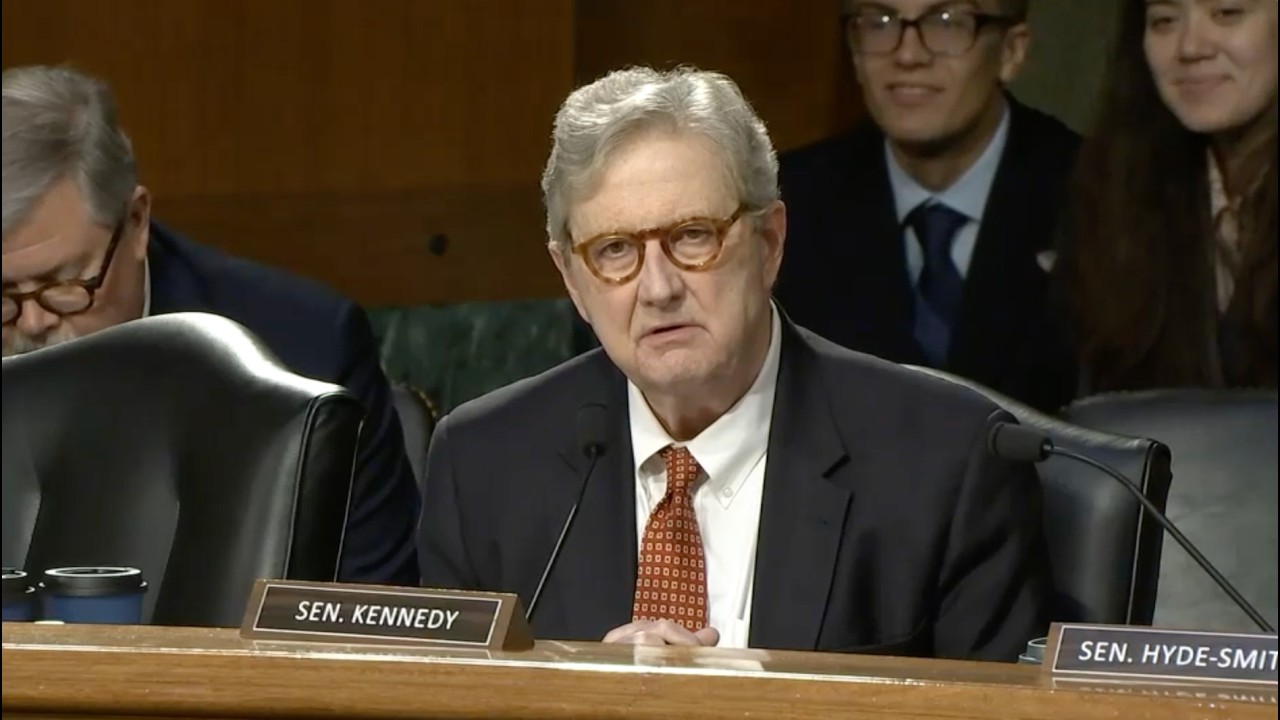
The reports described weaknesses in eligibility verification, documentation, data sharing, and payment oversight across federal programs.
Some problems involved difficult administrative conditions.
Others concerned outdated information systems and inconsistent controls.
Ke.n.n.e.d.y asked why repeated findings had not produced greater confidence in payment accuracy.
The chamber’s fictional budget adviser was invited to explain.
The adviser described the enormous scale of federal payment systems.
Different agencies administered programs with distinct eligibility requirements and legal obligations.
Determining whether a payment was improper could require extensive verification.
And reducing errors sometimes involved balancing payment accuracy with timely delivery of benefits.
Ke.n.n.e.d.y listened carefully.
Then he asked a practical question.
“Can the government identify where the largest preventable mistakes occur?”
The adviser answered that federal agencies already measured many categories of improper payments.
However, estimates varied by program, reporting period, methodology, and available data.
Ke.n.n.e.d.y pointed toward the reports.
“Then Congress has a starting point.”
He asked whether better verification systems could prevent certain payments from being made incorrectly.
The adviser explained that improved data matching, internal controls, and documentation could reduce some errors.
But no single reform could eliminate all improper payments.
Ke.n.n.e.d.y acknowledged the limitation.
“Then let’s stop looking for one magic solution.”
He paused.
“Let’s vote on a serious plan to reduce the problem.”
The Republican leader asked Ke.n.n.e.d.y to explain precisely what his proposal would require.
Ke.n.n.e.d.y opened the third section of the folder.
Its cover read FEDERAL PAYMENT ACCOUNTABILITY PLAN.
The proposal contained four principal mechanisms.
First, agencies would identify programs with persistent payment-integrity weaknesses and publish measurable corrective-action plans.
Second, agencies would improve lawful verification procedures before disbursing funds, where appropriate.
Third, inspectors general would receive clearer reporting on significant unresolved control failures.
Fourth, Congress would receive regular public progress reports measuring error reductions and documented savings.
Ke.n.n.e.d.y emphasized that the proposal would not automatically cut $276 billion from federal spending.
The number represented the scale of the estimated improper-payment problem in a referenced reporting period.
The actual savings would depend on which errors could be prevented, corrected, or recovered.
A senator asked whether the proposal would delay benefits for eligible recipients.
Ke.n.n.e.d.y responded that payment integrity should not become an excuse to deny lawful assistance.
The adviser explained that excessive verification requirements could create administrative burdens.
They could also delay legitimate payments to people who depended on federal programs.
Ke.n.n.e.d.y acknowledged the risk.
“Then we write safeguards into the legislation.”
He pointed toward the draft.
“Accuracy matters, and so does making sure eligible people receive what the law promises.”
The Republican leader looked toward the proposal.
He questioned whether the language was sufficiently developed for an immediate vote.
Ke.n.n.e.d.y responded that lawmakers could begin by voting on a narrower procedural measure.
That measure would establish a timetable for committee review and require a public report on proposed corrective actions.
The senior leader suggested that even a procedural vote could disrupt the negotiated schedule.
Ke.n.n.e.d.y leaned toward his microphone.
“Sir, the schedule is important.”
He paused.
“But so is the money Americans send us every April.”
The exchange had become unexpectedly personal within the Republican leadership.
Ke.n.n.e.d.y was no longer challenging only federal agencies.
He was challenging his own party’s willingness to prioritize oversight before leaving Washington.
A Democratic senator asked whether the proposed timetable had received bipartisan consultation.
Ke.n.n.e.d.y acknowledged that broader cooperation would improve the measure’s prospects.
He argued that payment accuracy should not depend on party affiliation.
The Democrat responded that any reform needed to distinguish criminal fraud from lawful benefits issued with administrative errors.
Ke.n.n.e.d.y agreed.
He asked the adviser to explain why that distinction mattered when calculating potential savings.
The adviser described how federal improper-payment estimates were produced.
Some amounts reflected statistically estimated error rates.
Others involved known payment problems identified through reviews.
Not every reported improper payment represented a permanently lost dollar.
Some could later be validated through additional documentation.
Others might be recovered or corrected.
And certain improper payments could reflect underpayments rather than excess spending.
Ke.n.n.e.d.y nodded.
“That’s important.”
He turned toward the Senate cameras.
“If we tell Americans every improper payment is criminal fraud, we’re not giving them the whole truth.”
Then he looked back toward the leadership benches.
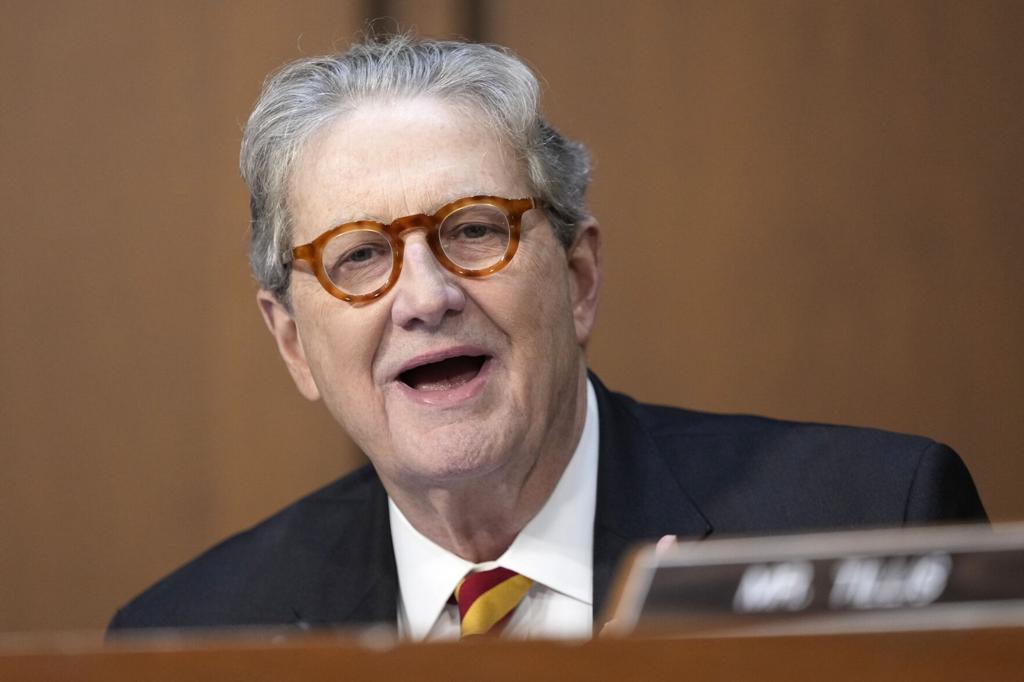
“But if we use that distinction as an excuse to avoid fixing known weaknesses, we’re not doing our job either.”
The chamber grew quiet again.
Ke.n.n.e.d.y opened another report.
It contained examples of control failures involving eligibility checks, duplicate payments, and incomplete administrative records.
The senator asked how agencies identified repeated problems across reporting periods.
The adviser explained that recurring weaknesses could be evaluated through audit findings and corrective-action tracking.
However, measuring improvements required consistent definitions and reliable information.
Ke.n.n.e.d.y pointed toward the document.
“Then the first thing Congress should demand is a measurable plan.”
He proposed that each affected agency identify the source of significant improper payments.
The agency would then explain which corrective steps it intended to take.
It would also provide a timetable for implementation.
And future reports would describe whether those steps produced measurable improvements.
The Republican leader acknowledged that the objectives were reasonable.
But he questioned whether Ke.n.n.e.d.y could secure agreement on the proposal before the recess.
Ke.n.n.e.d.y looked toward him.
“That’s why I want the vote.”
The leader responded that an immediate vote required resolving procedural and legislative obstacles.
Ke.n.n.e.d.y acknowledged those obstacles.
But he maintained that scheduling difficulties should not prevent senators from publicly addressing the proposal.
The presiding officer asked whether Ke.n.n.e.d.y was formally requesting unanimous consent.
The Louisiana senator consulted the proposed procedural language.
Then he announced a request to consider a limited oversight measure under an expedited process.
The measure would establish a deadline for reviewing major payment-integrity weaknesses.
It would also direct the relevant committee to report recommendations for improving financial controls.
Ke.n.n.e.d.y clarified that the measure did not itself recover $276 billion.
Nor would it guarantee immediate savings equal to the reported improper-payment estimate.
Its purpose was to begin a defined legislative response.
The Republican leader objected to proceeding without further negotiation.
The chamber became quiet.
Ke.n.n.e.d.y looked directly toward his colleague.
“Then I want the objection on the record.”
The leader responded that the objection concerned procedure, not opposition to stronger financial controls.
Ke.n.n.e.d.y acknowledged the distinction.
But he questioned whether lawmakers could establish a firm review deadline before leaving Washington.
The leader offered to discuss the matter during the next session.
Ke.n.n.e.d.y examined the calendar.
Then he reached into the thick folder again.
The next document concerned the history of improper-payment reporting.
The problem had continued across multiple administrations and congressional majorities.
Ke.n.n.e.d.y emphasized that responsibility for financial oversight could not be assigned exclusively to one party.
He also acknowledged that reported totals changed across years.
Those changes could reflect actual improvements, worsening problems, or differences in measurement.
The adviser confirmed that comparisons required attention to reporting methods and program coverage.
Ke.n.n.e.d.y returned to the highlighted number.
The figure was large enough to dominate the room.
But he wanted lawmakers to understand what it represented.
It was not a pile of cash waiting to be recovered through a single vote.
It was an estimate reflecting serious weaknesses in government payment systems.
Those weaknesses required different corrective measures.
Some could involve stronger fraud prevention.
Others required improved administrative procedures.
Still others demanded better records and more accurate eligibility determinations.
Ke.n.n.e.d.y placed the explanation beside the proposed oversight measure.
“Then let’s make the public conversation more accurate.”
He paused.
“And let’s make the government’s response more accountable.”
A senator from the Democratic side asked whether the measure would include protections against wrongful benefit denials.
Ke.n.n.e.d.y answered that the committee should examine those safeguards.
He acknowledged that improperly withholding money from eligible recipients was also a payment-integrity problem.
The adviser agreed.
Reducing errors required addressing both excessive payments and payments withheld or calculated incorrectly.
Ke.n.n.e.d.y nodded.
“Then we’ve got another reason to do the work carefully.”
The discussion began moving away from the original holiday confrontation.
Several senators suggested that the committee could examine the proposal promptly after the recess.
But Ke.n.n.e.d.y remained dissatisfied with a purely informal commitment.
He asked whether the leadership could publicly support a specific timetable.
The Republican leader offered to consider scheduling an oversight review.
Ke.n.n.e.d.y pressed for a written commitment rather than a general expression of interest.
The leader declined to promise a date before consulting committee members.
Ke.n.n.e.d.y looked down at the folder.
For several moments, he said nothing.
Then he placed the original $276 billion figure beside the procedural objection.
The two documents represented the conflict at the center of the hearing.
One showed the scale of the reported payment-integrity problem.
The other demonstrated how difficult it could be to move even a limited oversight proposal through Congress.
Ke.n.n.e.d.y asked the presiding officer whether the objection would appear in the official proceedings.
The presiding officer confirmed that the procedural exchange would be recorded.
Ke.n.n.e.d.y nodded.
“Good.”
He returned to the Republican leadership benches.
“Because I don’t want anybody pretending we never discussed this.”
The leader responded that the party supported efforts to reduce wasteful spending and strengthen accountability.
Ke.n.n.e.d.y acknowledged the statement.
But he asked whether that support would translate into a scheduled legislative process.
The leader maintained that further negotiations were necessary.
The tension in the room shifted.
The disagreement was no longer about the definition of improper payments.
Nor was it about whether federal agencies should improve financial controls.
It concerned whether Senate leaders would commit to a specific action before the holiday adjournment.
Ke.n.n.e.d.y closed the first folder.
Then he opened the final section.
Its label read THE VOTE.
The document contained a revised request for a recorded procedural vote on advancing payment-integrity legislation.
Ke.n.n.e.d.y acknowledged that the request remained subject to Senate rules.
He did not claim the chamber could bypass those requirements.
But he argued that senators should eventually take a public position on whether to advance the proposed review.
A colleague suggested that forcing an immediate vote could produce little practical progress.
Ke.n.n.e.d.y responded that transparency itself could have value.
Voters could examine which lawmakers supported a particular measure.
They could also evaluate the reasons given by those who opposed its timing or language.
The adviser emphasized that meaningful fiscal savings would require implementation, not merely a recorded vote.
Ke.n.n.e.d.y agreed.
“Passing a motion won’t fix a broken payment system.”
He paused.
“But refusing to begin the work won’t fix it either.”
The Republican leader again emphasized the importance of proper legislative review.
Ke.n.n.e.d.y acknowledged that rushed legislation could create unintended consequences.
But he questioned whether Congress could set a clear deadline for completing that review.
The leader offered no immediate commitment to Ke.n.n.e.d.y’s proposed timetable.
The senator looked toward the chamber clock.
The holiday recess was approaching.
Staff members stood near the exits with folders and travel bags.
Ke.n.n.e.d.y gathered the documents and arranged them in a single stack.
Then he spoke again.
“Folks, I’m not asking anybody to miss Christmas just because I enjoy hearing myself talk.”
A few senators smiled.
Ke.n.n.e.d.y continued.
“I’m asking whether this institution can make a serious commitment before everybody walks out the door.”
He pointed toward the federal report.
“These numbers deserve explanations.”
Then he pointed toward the proposed measure.
“And the explanations ought to lead to something measurable.”
The chamber remained quiet.
Ke.n.n.e.d.y slowly removed his glasses once more.
He placed them on the desk.
Then he addressed the Republican leader directly.
“Sir, you’ve told us there’s not enough time to resolve the details tonight.”
He paused.
“Maybe you’re right.”
The leader watched him carefully.
Ke.n.n.e.d.y continued.
“But the taxpayers who fund this government deserve more than another promise that somebody will eventually look into it.”
He lifted the final page.
It contained the revised procedural request.
The senator’s voice remained steady.
“Let the committee examine the details.”
He paused.
“Let the experts challenge the numbers.”
Then he looked across the chamber.
“And let every senator explain where they stand.”
The presiding officer asked Ke.n.n.e.d.y to conclude.
He nodded.
Then he delivered the final demand that brought the fictional confrontation to its decisive moment.
“Before this Senate goes home for the holidays, give the American people a recorded vote on a plan to confront $276 billion in estimated improper payments—and let every senator explain their answer.”
The chamber fell silent.
The Republican leader responded that the Senate would need to follow established procedures before any such vote.
Ke.n.n.e.d.y acknowledged that requirement.
But he insisted that the proposal and the request for a public vote remain part of the record.
The presiding officer confirmed that the proceedings would reflect the exchange.
No immediate $276 billion spending reduction occurred.
The estimate did not represent a confirmed total of criminal fraud.
And the fictional debate did not establish that the government could recover every dollar through one piece of legislation.
But Ke.n.n.e.d.y’s proposal had placed a specific question before Senate leaders.
Would Congress establish measurable deadlines and public accountability for addressing persistent federal payment errors?
The argument had begun with an approaching holiday recess.
It ended with a demand for a defined legislative response.
The difference mattered.
General promises about reducing waste were easy to make.
Detailed reforms required identifying payment weaknesses, protecting eligible recipients, improving oversight, and measuring actual results.
Those reforms also required confronting the limits of the available data.
An estimated improper-payment total could identify the scale of a problem.
It could not automatically establish criminal intent.
Nor could it determine how much money could realistically be recovered.
Ke.n.n.e.d.y gathered the folders from the desk.
The enormous $276 billion figure remained visible on the cover.
Several senators continued discussing the proposed review as the chamber prepared to adjourn.
The Louisiana senator closed his battered briefcase.
He had not secured an immediate enacted reform.
But he had forced a discussion about deadlines, public records, and the responsibilities of congressional leadership.
The fictional confrontation illustrated a familiar challenge in government oversight.
Identifying a large financial problem was only the beginning.
The harder work involved developing reliable solutions and demonstrating whether those solutions succeeded.
That required more than political outrage.
It required accurate statistics, lawful safeguards, administrative improvements, and continuing scrutiny.
And it required lawmakers to accept responsibility for the choices they made.
Because the real test of fiscal responsibility is not how loudly Congress condemns waste, but whether it can demonstrate measurable progress toward preventing it.
