
MAXIN.E WATERS CHALLENGED JOHN KENNED.Y IN A FIERY BANKING SHOWDOWN — THEN ONE UNEXPECTED QUESTION CHANGED EVERYTHING
The tension inside the hearing room became unmistakable when Representative Maxine Water.s leaned toward her microphone and directly challenged Senator John Kenned.y over the handling of a contentious banking issue.
Several lawmakers stopped reviewing their documents, sensing that the discussion was moving beyond the usual disagreements over financial regulations and congressional oversight.
Water.s appeared determined to establish control over the discussion, questioning Kenned.y’s approach and suggesting that his criticism overlooked the complicated responsibilities facing financial regulators.
“Senator Kenned.y, I think we need to be very clear about what we’re discussing here,” she began, her voice firm and deliberate.
“This committee cannot simply operate according to whichever interpretation happens to suit someone’s political argument.”
Kenned.y remained seated, looking down at the documents in front of him.
He did not immediately interrupt.
Instead, he adjusted his papers, lifted his head, and waited until Water.s finished speaking.
“Congresswoman, I appreciate the explanation,” he replied. “But I have a question, and I hope you’ll allow me to finish it before we get too far into the weeds.”
Water.s looked directly at him.
“Go ahead, Senator.”
Kenned.y opened his folder.
“My concern is fairly straightforward. When financial institutions make decisions that affect ordinary Americans, who ultimately takes responsibility when the regulations fail to protect those people?”
Water.s responded by emphasizing the importance of congressional oversight and the need for regulators to follow established procedures.
“Senator, nobody is suggesting that financial institutions should operate without accountability,” she said. “But we have a responsibility to understand how these systems actually function.”
Kenned.y nodded.
“Absolutely. And that’s precisely why I want to discuss how they function.”
He placed a document on the table.
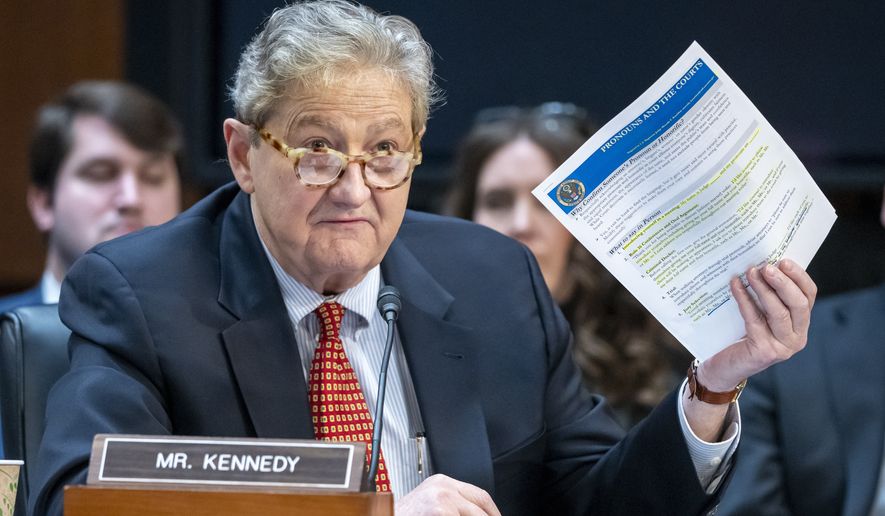
“Let’s talk about regulatory loopholes.”
The phrase immediately shifted the direction of the discussion.
Kenned.y began asking whether existing safeguards were sufficient to prevent financial institutions from exploiting differences between regulatory requirements.
He questioned how agencies monitored compliance, how enforcement decisions were communicated, and whether ordinary customers received adequate protection when financial institutions encountered serious problems.
Water.s interrupted.
“Senator, you’re presenting this as though regulators simply ignore everything happening inside these institutions.”
Kenned.y turned toward her.
“Congresswoman, I didn’t say that.”
“Well, that’s certainly the impression you’re creating.”
“Then let me make myself clearer.”
His response was measured, but the disagreement was becoming increasingly direct.
“I’m not questioning whether regulations exist. I’m asking whether those regulations actually accomplish what Congress intended them to accomplish.”
Water.s leaned toward her microphone.
“And I’m telling you that we cannot discuss financial oversight without understanding the responsibilities of the agencies involved.”
Kenned.y nodded again.
“That’s fine. But Americans don’t pay their bills with explanations about agency responsibilities.”
A few lawmakers exchanged glances.
Kenned.y continued.
“They want to know whether their deposits are protected, whether their financial institutions are being supervised properly, and whether someone is accountable when something goes wrong.”
Water.s appeared ready to respond.
“Senator, nobody disagrees with protecting consumers.”
“Then we should have no difficulty discussing the specific protections.”
He turned another page.
The conversation moved toward the complicated relationship between financial institutions, federal regulators, and congressional oversight.
Kenned.y questioned whether certain regulatory exemptions created opportunities for institutions to operate under different standards.
Water.s challenged his framing, arguing that financial regulations could not be reduced to a collection of isolated examples.
“You’re taking complicated regulatory decisions and turning them into political sound bites,” she said.
Kenned.y looked up.
“Congresswoman, with respect, a complicated regulation doesn’t become effective simply because it’s complicated.”
The room grew quieter.
He continued.
“If a rule is supposed to protect consumers, we should be able to explain what protection it provides.”
Water.s responded that regulators needed flexibility to address different financial circumstances.
Kenned.y agreed that flexibility could sometimes be necessary.
But he immediately returned to the question of accountability.
“Flexibility is one thing. A loophole that nobody wants to explain is something else.”
That distinction became the central point of their disagreement.
For several minutes, both lawmakers argued over the responsibilities of regulators and the consequences of inconsistent enforcement.
Water.s maintained that effective oversight required cooperation, technical knowledge, and careful consideration of the wider financial system.
Kenned.y insisted that those considerations should never prevent lawmakers from asking direct questions about whether existing protections were working.
Then came an unexpected moment.
Kenned.y stopped turning pages.
He placed both hands on the table and looked directly toward Water.s.
“Congresswoman, let me ask you something that I think every American watching deserves to hear.”
Water.s straightened in her chair.
“What’s your question?”
“Suppose an ordinary customer walks into a bank tomorrow, deposits their savings, and assumes the government has established rules to protect them.”
Kenned.y paused.
“Suppose that customer later discovers that a financial institution was operating under an exemption they never knew existed.”
He leaned slightly forward.
“Who explains that to the customer?”
Water.s began responding, but Kenned.y continued.
“And more importantly, who takes responsibility for making sure that customer understands the risks before something goes wrong?”
Water.s shook her head slightly.
“Senator, you’re creating a hypothetical situation that doesn’t necessarily reflect how these protections operate.”
Kenned.y immediately replied.
“That’s fair. Then let’s discuss the actual protections.”
He lifted another document.
“Which agency is responsible? What authority does it have? And what happens when the institution fails to comply?”
Water.s began outlining the regulatory framework, emphasizing that financial supervision involved multiple agencies and different layers of enforcement.
Kenned.y listened carefully.
When she finished, he returned to one particular issue.
“All right. So we agree that several agencies have responsibilities here.”
“Yes,” Water.s replied.
“And we agree that Congress has a responsibility to examine whether those responsibilities are being fulfilled.”
“Of course.”
“Then why are we spending so much time debating whether asking the question is appropriate?”
Water.s responded sharply.
“Because asking questions is one thing, Senator. Suggesting that the entire regulatory system is broken without demonstrating that conclusion is another.”
Kenned.y paused.
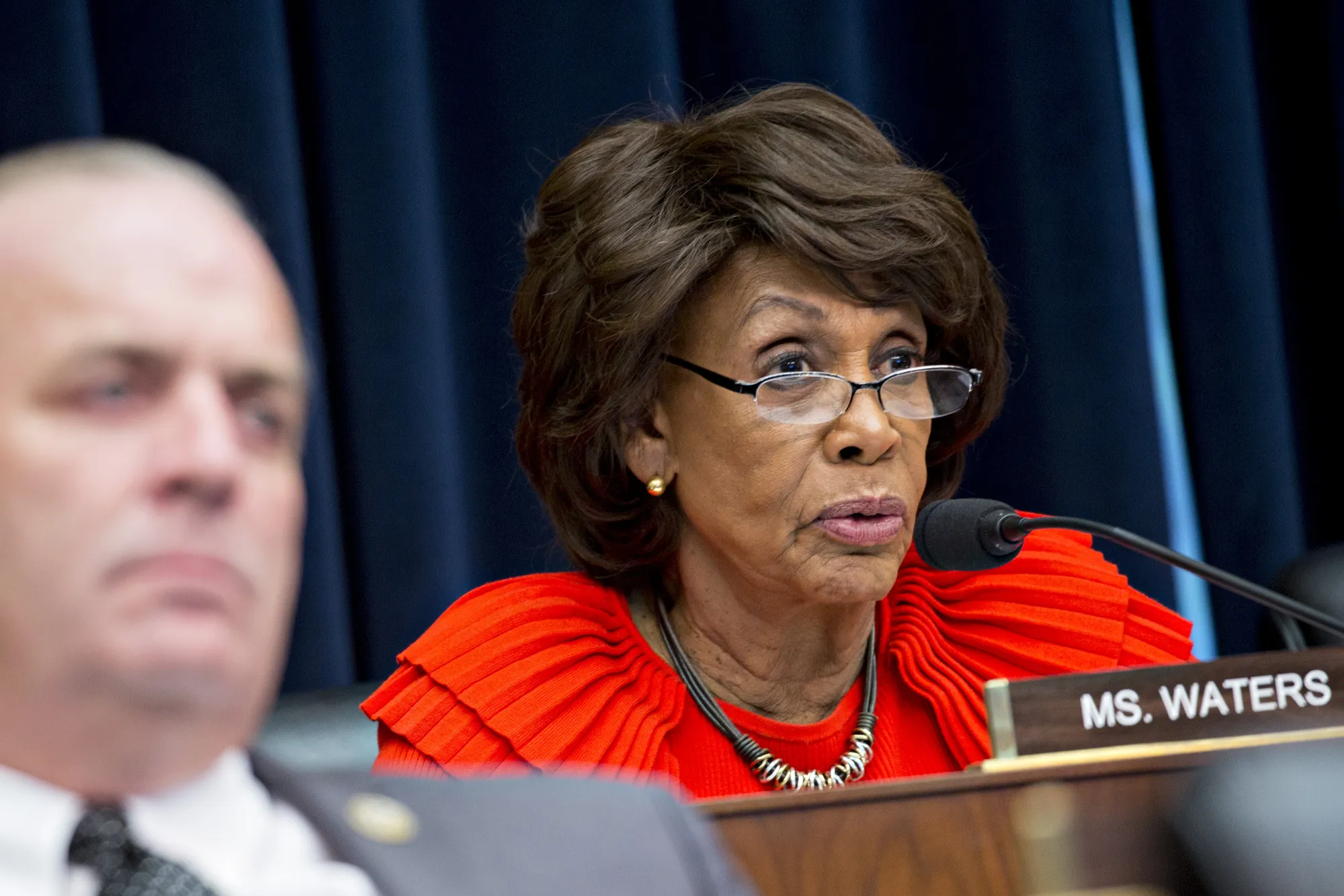
For the first time during the exchange, he appeared to be considering his next words particularly carefully.
“Congresswoman, I haven’t said the entire system is broken.”
He closed the folder halfway.
“I’ve said that if there are weaknesses, we ought to identify them before ordinary Americans pay the price.”
The statement brought the discussion back to the central issue.
Neither lawmaker backed away.
Water.s continued defending the need for responsible oversight and accurate descriptions of regulatory authority.
Kenned.y maintained that accountability required lawmakers to examine the practical consequences of financial regulations rather than simply accept assurances that safeguards existed.
The disagreement was not resolved.
Instead, it exposed two different approaches to the same question: how should Congress balance the complexity of financial regulation with the public’s demand for understandable answers?
As the discussion approached its conclusion, Water.s returned to the importance of committee procedures.
Kenned.y responded that procedures should support meaningful oversight rather than become a substitute for it.
“Nobody here is suggesting that we abandon the rules,” he said.
“But the rules exist for a reason. And that reason is to protect the people who depend on this system.”
Water.s looked toward the chairman.
“Then we should make sure we’re discussing the facts accurately.”
Kenned.y nodded.
“On that point, Congresswoman, I agree completely.”
The exchange gradually moved toward its scheduled conclusion, but the underlying disagreement remained unresolved.
Several lawmakers continued reviewing their notes, while others prepared to leave the hearing room.
Kenned.y gathered his documents and placed them back into his folder.
Water.s remained at the table, speaking briefly with colleagues about the regulatory questions raised during the discussion.
There had been no established finding of criminal misconduct, no confirmed dramatic revelation, and no documented regulatory scandal conclusively exposed by the exchange.
Yet the disagreement had raised an important question about the relationship between congressional oversight and public confidence in financial institutions.
As Kenned.y prepared to leave, he reportedly returned to the subject of regulatory accountability in a final exchange within this fictional reconstruction.
“There’s something else we need to examine,” he said.
Water.s turned toward him.
“What exactly are you referring to?”
Kenned.y looked down at the documents he had collected.
“Whether the protections people believe they have are actually the protections the law guarantees.”
For a moment, the discussion appeared unfinished.
And as the lawmakers prepared to move on, one question remained hanging over the entire debate:
If Congress cannot clearly explain who protects ordinary Americans when financial safeguards fail, how can the public know whether those safeguards are working at all?
