
The allegation sounded like the opening scene of a political scandal capable of shaking Washington.
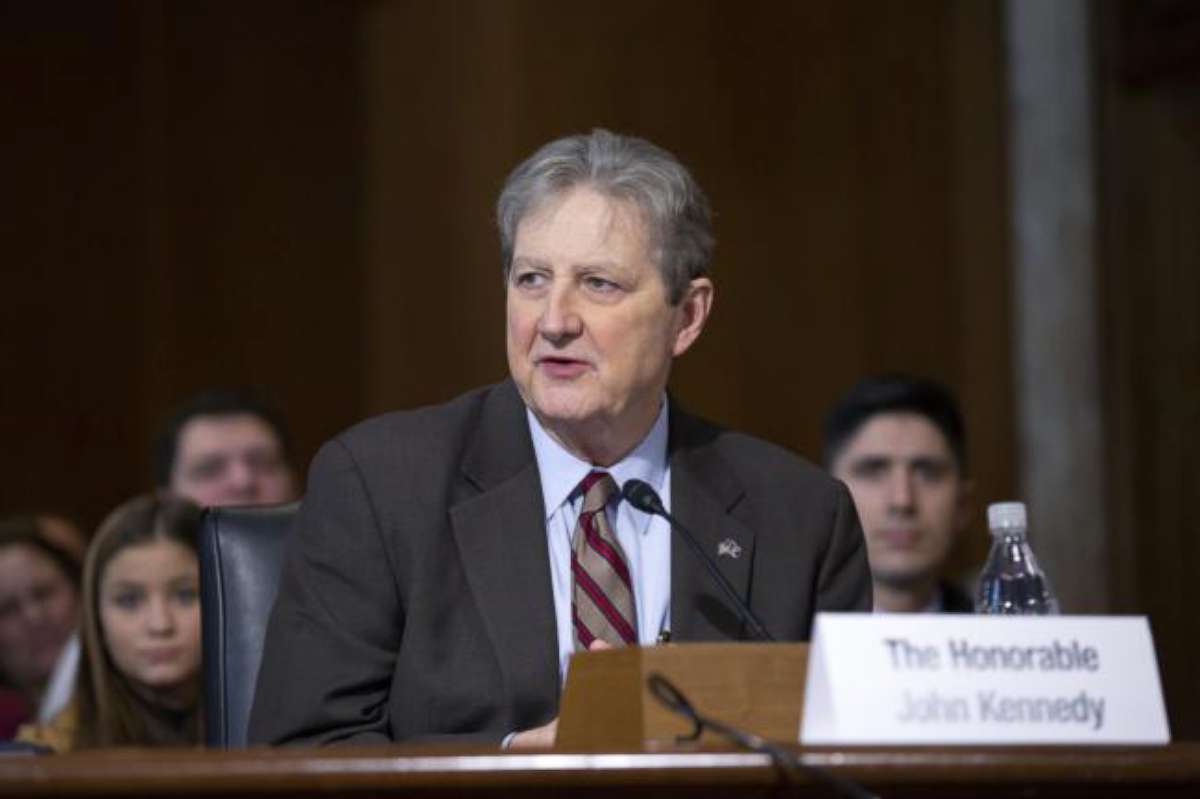
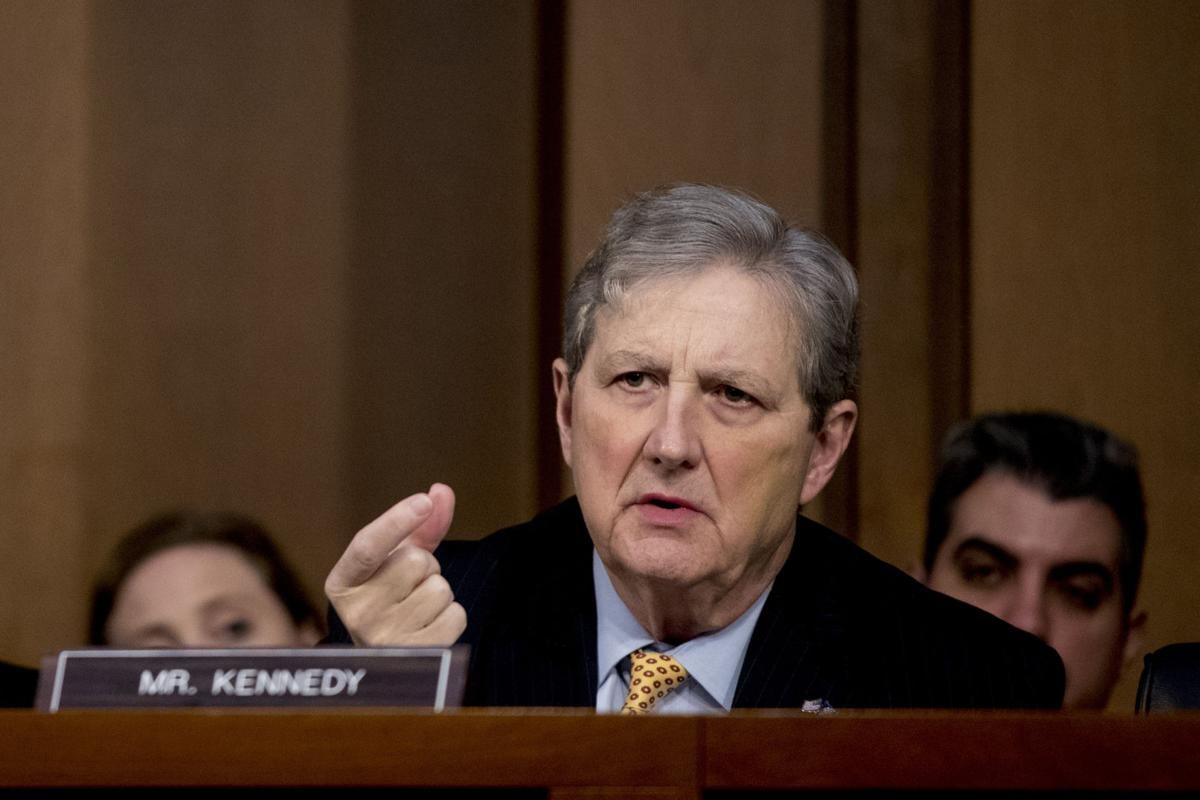
Senator J0hn Neely K.e.n.n.e.d.y supposedly possessed a heavily redacted marriage certificate that could expose a criminal cover-up involving Representative Ilhan Om@r.
The story featured an abandoned prosecution, a former security guard who had left the country, and federal investigators pursuing allegations about Omar’s immigration history.
But the most revealing evidence did not come from a documented Kennedy confrontation.
Federal prosecutors had charged a man who briefly served as Omar’s security guard with making false statements during an immigration interview.

His lawyer alleged that investigators repeatedly pressured him to provide incriminating information about the congresswoman.
Then something remarkable happened.
After the man testified before a federal grand jury in September, prosecutors moved to dismiss his criminal case.
He subsequently left the United States and was living in Kenya when journalists contacted him.
The case raised serious questions about the Justice Department’s investigative methods.
Yet the viral narrative transformed those developments into a very different accusation.
It suggested that prosecutors had deliberately protected Omar while sending away a witness who possessed damaging evidence.
The available reporting did not establish that conclusion.
And the actual identity connected to Omar’s 2009 marriage record revealed why the allegations required far more careful examination.
The Former Bodyguard at the Center of the Controversy
The central figure in the documented bodyguard case was Abdullahi Mohamud Mohamed.
He had briefly served as part of Omar’s security detail during a 2022 visit to Somalia.
His relationship with the congresswoman was limited, according to his attorney, Bruce Rivers.
That detail became important when federal investigators began asking Mohamed about Omar’s personal history.
Mohamed was seeking permanent residency in the United States after marrying an American citizen.
During an immigration interview, he answered questions about his background and connections to government officials.
Prosecutors subsequently alleged that he had made false statements during that process.
A federal indictment followed in April 2026.
The charge exposed Mohamed to the possibility of a substantial prison sentence.
But the criminal case soon became entangled with another investigation.
According to Rivers, prosecutors wanted information about Omar’s immigration history, marital relationships, and possible financial dealings.
The lawyer said investigators repeatedly attempted to persuade his client to cooperate against the congresswoman.
He also alleged that officials suggested they could help Mohamed avoid deportation in exchange for useful information.
Those allegations came from the defense attorney and were not established judicial findings.
The Justice Department later disputed the asserted connection between Mohamed’s prosecution and other ongoing investigations.
The disagreement created a consequential question.
Was Mohamed being prosecuted primarily for an alleged false statement, or was his case being used to obtain information about Omar?
The reporting did not conclusively resolve that question.
But it established a sequence of events that made the issue worthy of scrutiny.
The investigation involved an immigration applicant with limited documented contact with Omar.
Prosecutors pursued a felony charge.
They also questioned him about the congresswoman.
Then the prosecution ended under circumstances that generated further controversy.
The Grand Jury Testimony That Came Before the Dismissal
The decisive events occurred in September 2026.
According to reporting based on court records and interviews with Rivers, Mohamed appeared before a federal grand jury investigating matters connected to Omar.
The questioning concerned her family history and financial relationships.
Mohamed reportedly provided little substantive information.
His attorney maintained that the former security guard lacked detailed knowledge of the congresswoman’s private affairs.
That limitation was significant.
A person who briefly worked on a security detail would not necessarily possess reliable information about events occurring years earlier.
Omar’s disputed marriage history extended back to 2009.
Mohamed’s documented security assignment occurred in 2022.
Those dates placed thirteen years between the marriage and the security assignment.
Investigators could ask whether Mohamed had independently acquired relevant information.
But his employment history alone could not establish that he knew the circumstances surrounding the marriage.
On September 3, Mohamed testified before the grand jury, according to his attorney.
The following day, prosecutors moved to dismiss the criminal case against him.
Their stated reason concerned his anticipated removal from the United States.
The government’s filing explained that continued prosecution no longer served a federal interest given the expected immigration outcome.
That was a specific prosecutorial explanation.
It did not establish that charges were dropped to protect Omar.
Nor did it establish that Mohamed had supplied damaging information that investigators wanted to suppress.
The defense attorney offered a different interpretation.
Rivers believed prosecutors had attempted to obtain information about Omar and abandoned the case when that effort failed.
The Justice Department maintained that Mohamed’s prosecution was unrelated to the other current investigations.
Both positions require accurate attribution.
The dismissal itself is documented.
The alleged motivation behind it remains contested.
Mohamed subsequently left the United States.
By November, journalists had reached him in Nairobi, Kenya.
His departure was not documented as a secret escape arranged to conceal evidence.
Reporting described it in the context of immigration proceedings and the dismissal of his criminal charge.
The distinction matters because the viral account uses the phrase “fleeing plane” to suggest a covert operation.
The known chronology supports a considerably narrower conclusion.
A criminal case ended.
The former defendant left the country.
And his lawyer continued publicly questioning how federal authorities had handled the prosecution.
The next part of the controversy concerned the woman investigators were examining.
The Federal Investigation Into Omar’s Immigration History
The investigation into Ilhan Om@r became public in October 2026.
Federal agents searched her Washington residence as part of an inquiry into immigration-related allegations.
Reuters reported that investigators were examining whether Omar or relatives had provided false information during immigration or naturalization processes.
The reported questions concerned records extending back decades.
Investigators also examined matters involving her family history.
Omar rejected allegations of wrongdoing and characterized the investigation as politically motivated.
Government authorities maintained that they were investigating potential violations of federal law.
Those competing positions reflected a serious dispute about the investigation’s factual basis and political context.
The search did not establish criminal guilt.
A judicially authorized search permits investigators to seek evidence under applicable legal standards.
It does not mean a court has concluded that the subject committed the suspected offenses.
The distinction became especially important because the investigation involved a sitting member of Congress.
Federal agents needed to account for constitutional protections involving legislative materials.
Reporting indicated that a magistrate judge imposed restrictions on how investigators could access certain records.
Those protections concerned the separation of powers and the constitutional status of congressional work.
Another development complicated the public narrative.
Reporting in October indicated that earlier federal reviews had examined similar concerns about Omar’s immigration background.
According to former officials, those reviews had not produced a basis for pursuing the same allegations at that time.
The existence of earlier reviews did not automatically determine the outcome of the new investigation.
But it established that some accusations were not newly discovered.
That fact mattered when the viral account described Kennedy uncovering a secret document capable of resolving everything.
The underlying marriage allegations had circulated publicly for years.
Investigators and journalists had previously examined portions of Omar’s marriage history.
And the central allegation remained disputed.
The most important question was what the actual documents established.
That brought the controversy back to 2009.
The 2009 Marriage Certificate and the Name Behind the Allegation
The record at the center of the marriage controversy concerned Ahmed Nur Said Elmi.
Public reporting identified a legal marriage between Omar and Elmi in Minnesota in February 2009.
Omar subsequently obtained a legal divorce from Elmi in 2017.
She later legally married Ahmed Hirsi, the father of her children, in January 2018.
These events have been examined through public marriage records, divorce filings, and investigative reporting.
Star Tribune+1
The controversial allegation concerned Elmi’s relationship to Omar.
Some critics alleged that he was her biological brother and that the marriage had been arranged for immigration purposes.
Omar repeatedly denied the allegation.
Investigations by journalists and fact-checkers did not establish the claimed sibling relationship through conclusive public evidence.
The Minneapolis Star Tribune examined marriage records, social media material, and statements from people familiar with the controversy.
Its investigation could neither conclusively confirm nor rebut the allegation.
PolitiFact similarly explained the limitations of the available evidence.
Africa Check+1
That is an important distinction.
A marriage certificate establishes that a marriage was legally recorded.
It does not independently establish a person’s biological relationship to their spouse.
Nor does it prove that the marriage was entered into for fraudulent immigration purposes.
Determining those allegations would require additional reliable evidence.
The alleged purpose of the marriage would also matter.
Immigration fraud involves more than an unusual relationship history or disputed personal circumstances.
Investigators must establish conduct meeting the elements of a particular federal offense.
The available public marriage records do not independently satisfy that requirement.
The viral narrative suggests that a censored name on a certificate provides the final revelation.
But Elmi’s identity was already part of the public record.
A partially redacted reproduction would not transform that known name into new evidence of criminal misconduct.
The significance of the document therefore depends on what it can actually establish.
It confirms a historical marriage.
It does not prove the much more serious allegations surrounding that marriage.
And no authenticated evidence reviewed here establishes that Kennedy publicly revealed the document during the confrontation described in the caption.
The Double Standard Allegation Faces a Different Legal Test
The viral narrative presents another explosive accusation.
It suggests that ordinary people face imprisonment for immigration fraud while politically connected individuals receive special protection.
That argument raises legitimate questions about equal treatment under federal law.
But the comparison requires examining the actual cases.
Mohamed was charged with allegedly making false statements during an immigration interview.
Omar was the subject of a separate investigation involving allegations about historical immigration documents.
Those matters concerned different people, evidence, and potential offenses.
Mohamed’s prosecution was dismissed.
The government cited his anticipated removal from the United States.
The decision did not mean that Omar had received a comparable dismissal of charges.
A criminal investigation without filed charges is legally distinct from a prosecution that has been formally dismissed.
Similarly, a prosecutor’s decision not to continue one case does not establish that another person received improper protection.
The available record also creates a complication for the viral account’s proposed explanation.
Mohamed’s lawyer alleged that federal officials pressured his client to provide information against Omar.
If that account were substantiated, it would raise concerns about investigative methods rather than demonstrate that prosecutors were protecting the congresswoman.
The Justice Department disputed the connection.
A careful assessment must therefore distinguish documented events from competing explanations.
The indictment occurred.
The grand jury testimony was reported.
The dismissal was documented.
The former security guard departed the United States.
But the specific allegation that prosecutors secretly arranged his departure to shield Omar has not been established.
Nor has the claim that Kennedy revealed a suppressed marriage record during an authenticated congressional confrontation.
Those missing elements are essential to the original story.
Without them, the claimed cover-up remains unsupported.
The more substantial question concerns whether investigators acted consistently with applicable legal standards.
That question applies to the prosecution of Mohamed and the separate investigation involving Omar.
Both deserve evaluation according to their own records.
The Final Revelation Changes the Meaning of the Entire Controversy
The most significant development did not concern a redacted certificate.
It concerned the unusual sequence surrounding Mohamed’s prosecution.
He faced a federal felony charge.
Investigators questioned him about a prominent member of Congress.
He later appeared before a grand jury.
His case was dismissed the following day.
And he subsequently left the United States.
Those events created a factual basis for examining the government’s decisions.
But they did not establish the secret political arrangement described in the viral narrative.
The distinction becomes especially important when the timelines are compared.
Omar’s marriage to Elmi occurred in 2009.
Mohamed’s brief security assignment occurred in 2022.
His indictment came in April 2026.
His grand jury testimony and the dismissal followed in September.
The investigation into Omar became publicly prominent after the October search.
And the detailed reporting on Mohamed appeared in November.
The chronology reveals separate events connected by investigative questions.
It does not establish that a single hidden document resolved every allegation.
Nor does it demonstrate that Kennedy personally possessed evidence sufficient to prove immigration fraud.
The case instead presents two substantial unresolved issues.
The first concerns whether investigators can substantiate allegations involving Omar’s historical immigration records.
The second concerns why prosecutors pursued Mohamed’s case and whether their efforts to obtain information about Omar were appropriate.
The allegations must not be treated as findings.
The government’s procedural decisions should not be exempt from scrutiny.
And a person’s departure from the United States should not automatically be described as proof of a concealed criminal conspiracy.
The New York Times reporting gave the public an important new understanding of Mohamed’s case.
It identified the former security guard.
It described the prosecution’s timeline.
It reported his attorney’s allegations about investigative pressure.
And it documented the government’s stated reason for dismissing the case.
Those findings made the story more consequential than an unsupported account of a dramatic Senate confrontation.
They also revealed why the original narrative’s conclusion was unreliable.
The existence of a real investigation did not authenticate the alleged Kennedy exchange.
A public marriage certificate did not establish marriage fraud.
A dismissed prosecution did not demonstrate that federal officials were protecting Omar.
And a disputed explanation of prosecutorial motives could not responsibly be presented as a confirmed cover-up.
The final consequence was a clearer understanding of what remained to be established.
Federal investigators would need reliable evidence supporting any criminal allegation.
Questions about Mohamed’s prosecution would require examination of official decisions and the circumstances described by his attorney.
Any future charges would need to be evaluated separately from rumors and political commentary.
The same standards would apply regardless of the politician under investigation.
The controversy began with a supposed senator revealing a censored name.
That name was already publicly known.
The genuinely new information concerned the former security guard’s prosecution, grand jury appearance, dismissal, and departure.
Those events raised serious questions without proving the sensational allegations built around them.
And the central question was no longer whose name appeared on an old marriage certificate.
It was why a federal prosecution ended immediately after a witness testified in an investigation involving a member of Congress.
The government’s explanation was documented.
The defense attorney disputed the broader circumstances.
The evidence reviewed did not conclusively settle that disagreement.
That unresolved issue, rather than an unauthenticated Kennedy confrontation, is what makes the case significant.
The most consequential document was not the 2009 marriage certificate. It was the September 2026 dismissal explaining why prosecutors had decided to abandon the case.
