
The room had been filled with political tension long before Marj0rie Tayl0r Greene directed her most explosive warning toward California Governor Gavin News0m.
But nobody anticipated how quickly their confrontation would transform a contentious public forum into a defining battle over credibility, authority, and political hypocrisy.
“Say one more dumb word, old boy, and I’ll embarrass you on national TV,” Greene declared, leaning toward her microphone with unmistakable confidence.
A sudden silence spread across the auditorium as audience members aturned toward News0m, waiting to see whether the governor would respond with equal hostility.

News0m remained seated for several seconds, studying Greene’s expression while the moderator struggled to restore order.
Then he slowly stood, adjusted his microphone, and delivered a response that immediately changed the atmosphere.
“You want embarrassment? Try surviving this.”
The audience stirred as News0m reached beneath his notes and placed a thick folder on the podium.
Greene’s expression tightened, although she continued smiling as cameras moved closer to capture the developing confrontation.
What followed would expose a contradiction neither politician could easily ignore, forcing the discussion away from personal insults and toward the standards they demanded from public officials.
And by the end of the evening, the person who had threatened public humiliation would face the most uncomfortable examination of her own argument.
The confrontation had begun during a nationally televised political forum examining government accountability, public spending, and the widening distrust separating American voters from elected leaders.
Greene had been invited to represent a confrontational conservative perspective, while News0m appeared as one of the Democratic Party’s most recognizable national voices.
Their political differences were substantial, but the organizers believed those disagreements could produce a meaningful discussion about the country’s future.
Instead, the opening segment quickly descended into competing accusations about hypocrisy, elite privilege, and the ability of government officials to serve ordinary Americans.
Greene accused Democratic leaders of demanding sacrifices from working families while protecting the interests of wealthy political donors.
News0m challenged Republicans who promised smaller government but supported policies he argued would create new economic burdens for vulnerable households.
The moderator repeatedly attempted to redirect the conversation toward specific legislation.
But Greene appeared determined to turn the evening into a direct referendum on News0m’s credibility.
She pointed toward California’s housing costs, homelessness crisis, and business regulations as evidence that the governor’s political promises had failed.
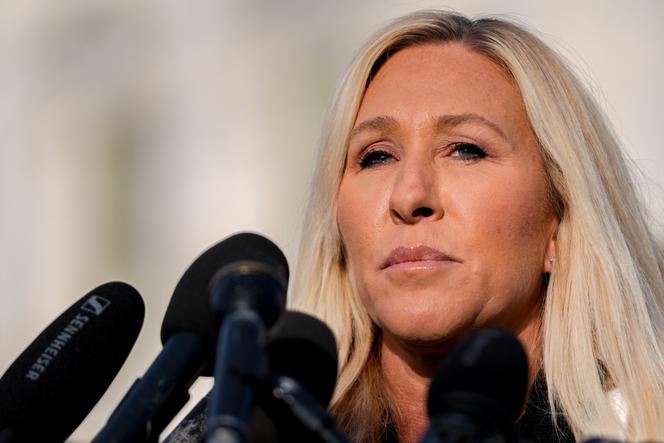
News0m acknowledged that California faced serious problems, but rejected the suggestion that those challenges invalidated every policy argument he made.
The disagreement might have remained a conventional political exchange if Greene had not interrupted his answer with an increasingly personal attack.
She accused him of presenting himself as a national problem-solver while struggling to address difficulties within his own state.
News0m began responding with figures concerning housing construction, employment, and state policy.
Before he completed his explanation, Greene leaned forward again.
“Americans don’t need another polished politician telling them everything is fine while their bills keep getting higher.”
Several audience members applauded.
News0m waited until the reaction faded before answering.
“Then we should discuss actual results, actual costs, and the decisions politicians make when nobody is watching their television appearances.”
Greene laughed sharply.
The governor’s response appeared to irritate her more than the economic figures he had been preparing to discuss.
She interrupted again, accusing him of hiding behind carefully rehearsed language.
That was when the atmosphere shifted from heated debate toward personal confrontation.
Greene delivered her warning about embarrassing News0m on national television, evidently expecting the moderator to intervene before the governor could answer.
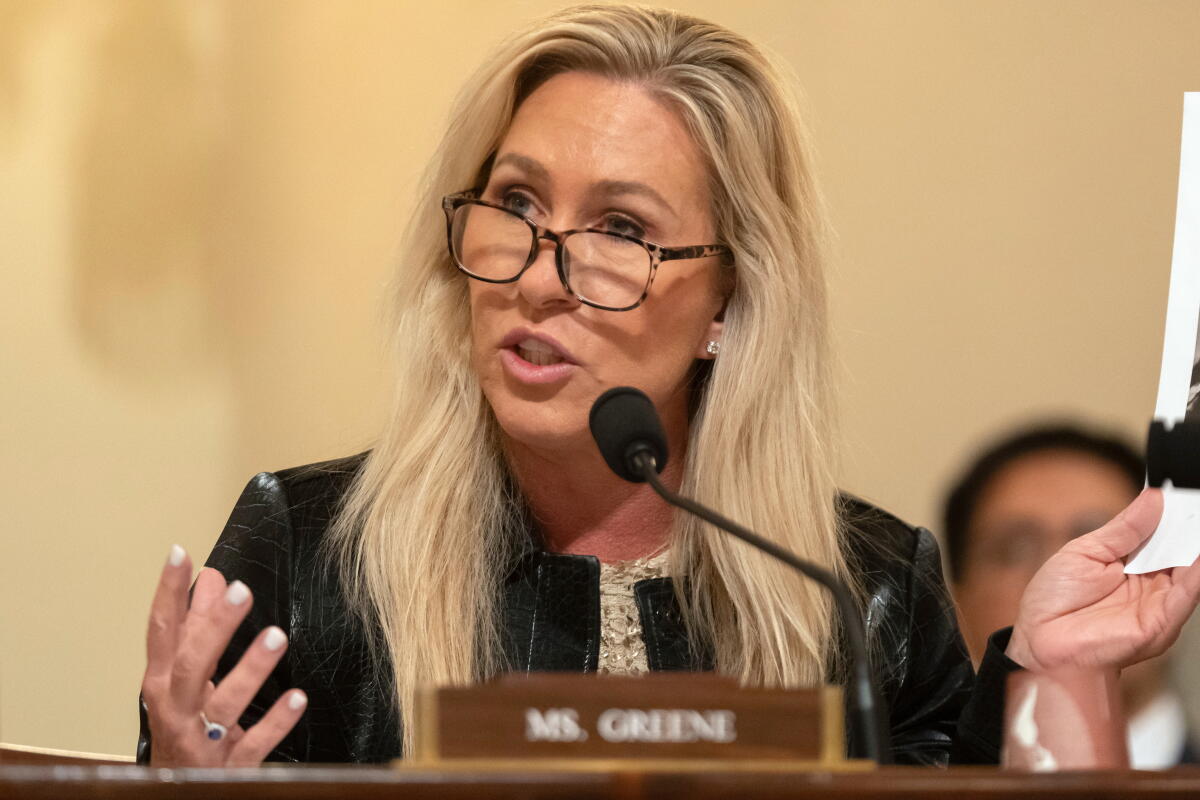

Instead, News0m stood.
His movement was deliberate rather than theatrical, and the unexpected calm appeared to catch the room off guard.
He looked directly toward Greene before addressing the audience.
“You keep talking about accountability as though it’s a punishment reserved for people you dislike.”
A brief murmur followed.
News0m continued.
“But accountability isn’t something you get to turn on and off depending on whose name appears on the ballot.”
Greene opened her mouth to respond.
The governor raised one finger, signaling that he had not finished.
Then he delivered the line that would become the central moment of the evening.
“You cannot demand accountability from everyone else while refusing to apply it to yourself.”
The sentence landed without shouting.
Some audience members applauded, while others remained silent, waiting for the governor to explain why he had chosen those particular words.
Greene shook her head and dismissed the remark as another example of what she called Democratic political theater.
News0m did not argue with the characterization.
Instead, he opened the folder.
On its first page was a simple heading: One standard for everyone.
The governor explained that he had prepared a series of questions designed to test whether both participants were willing to apply their stated principles consistently.
No secret recordings were involved.
No anonymous allegations had been introduced.
The questions concerned public positions, legislative responsibilities, and the standards each politician believed government officials should meet.
News0m told the moderator that Greene had repeatedly raised the subject of political accountability.
He proposed beginning there.
“Should elected officials be judged by whether their policies deliver what they promise?” he asked.
Greene responded that they absolutely should.
News0m nodded.
“Should that standard apply even when the politician belongs to your own party?”
She answered that political affiliation should not provide anyone with special protection.
The governor turned slightly toward the audience.
“Good. Then we finally agree on something important.”
A few people laughed, but Greene did not.
She appeared increasingly suspicious of the direction the questions were taking.
News0m continued by asking whether political leaders should acknowledge mistakes instead of automatically blaming opponents.
Greene said responsibility mattered, although she added that officials should not apologize for positions they believed were correct.
The governor accepted the distinction.
He then asked whether political figures should correct inaccurate statements when reliable evidence demonstrated that those statements were wrong.
Greene hesitated before agreeing that the truth should matter.
News0m closed the folder.
“Then those are the rules,” he said.
The moderator leaned forward, evidently relieved that the conversation had returned to recognizable questions of public accountability.
But the exchange had produced a significant change.
Greene had entered the confrontation attempting to portray News0m as a politician incapable of surviving direct criticism.
Now she had committed herself to principles that would govern the remainder of the discussion.
And News0m was about to apply those principles to himself first.
He turned toward the audience and acknowledged the seriousness of California’s housing affordability problem.
Families struggling with rent, he said, deserved more than political assurances that government officials understood their concerns.
He admitted that ambitious housing proposals could fall short of expectations and that leadership required explaining those gaps.
Greene appeared surprised.
She had expected the governor to defend every aspect of his record.
Instead, he openly acknowledged a weakness that she had been preparing to use against him.
News0m continued by explaining that accountability meant recognizing the difference between intentions and measurable results.
A policy announcement could sound impressive while failing to deliver meaningful improvements for the people it was intended to help.
The same principle, he argued, should apply to both Republican and Democratic administrations.
He then turned back toward Greene.
“I’ve just acknowledged that my government can fall short. Can you do the same about politicians on your side?”
Greene responded that Republicans had made mistakes but insisted Democrats remained responsible for many of the country’s most serious problems.
News0m accepted that she was entitled to criticize Democratic policies.
But he pressed her to address the narrower question.
Was loyalty to a political movement sufficient reason to defend a public official who had failed to meet the standards that movement demanded?
Greene accused him of attempting to manipulate the discussion.
The governor calmly disagreed.
He reminded her that she had just endorsed a uniform standard for political accountability.
The moderator intervened, asking both speakers to address specific examples rather than turning the conversation into a personal contest.
News0m agreed immediately.
Greene demanded that the same rule apply to him.
“Absolutely,” he replied.
That answer changed the forum again.
For the first time, neither participant could easily claim that the other was refusing scrutiny without inviting equivalent scrutiny in return.
The moderator introduced a new question concerning the growing public perception that Washington operates under different rules from ordinary Americans.
Greene argued that voters had legitimate reasons to distrust politicians who accumulated influence while remaining insulated from the consequences of their decisions.
News0m agreed that concentrated political power deserved scrutiny.
But he challenged the suggestion that the problem belonged exclusively to one party.
He argued that politicians across the ideological spectrum often presented themselves as outsiders while benefiting from the same institutional advantages they publicly condemned.
Greene accused him of attacking conservatives collectively.
News0m shook his head.
“I’m attacking hypocrisy. It doesn’t come with a party registration.”
The audience responded with a mixture of applause and scattered objections.
The moderator allowed the reaction to settle before asking whether either participant believed political rhetoric had become unnecessarily personal.
Greene said strong language was sometimes necessary when confronting powerful officials.
News0m agreed that criticism should be direct.
But he distinguished between forceful arguments and attempts to intimidate opponents into silence.
He pointed toward the threat Greene had delivered earlier in the evening.
“A warning that you’ll embarrass someone isn’t an argument about policy,” he said.
Greene interrupted, insisting that politicians should be prepared for harsh exchanges.
News0m answered that he was prepared for criticism and had already acknowledged serious weaknesses in his own governing record.
“What I’m questioning is whether humiliation has become your substitute for persuasion.”
The auditorium went quiet.
Greene responded that News0m had no right to lecture anyone about political communication.
She accused him of using polished rhetoric to conceal substantive failures.
News0m did not deny that presentation could influence public perception.
Instead, he argued that political communication should ultimately be evaluated by whether its claims were supported.
A memorable insult could attract attention, he said, without helping voters understand a single policy decision.
And an effective rebuttal should clarify the issue rather than merely embarrass the person who raised it.
The moderator asked both participants to identify one area where their political opponents had made a legitimate argument.
Greene initially resisted the premise.
She said Democrats frequently used public spending as an answer to problems that government programs had helped create.
News0m replied that skepticism about government efficiency could be justified.
He acknowledged that public programs should face regular evaluation and that spending increases did not automatically guarantee better outcomes.
The concession surprised several audience members.
But it also forced Greene to confront the moderator’s question directly.
After a brief pause, she acknowledged that some Democratic lawmakers had raised legitimate concerns about the economic pressure facing working families.
The audience applauded.
For a moment, the confrontation appeared to have produced an unexpected opening for genuine discussion.
Then Greene returned to News0m’s handling of California’s challenges.
She demanded to know why voters should trust a governor who continued promoting ambitious national ideas while his state confronted visible economic difficulties.
News0m answered that voters should evaluate his record critically.
He rejected the assumption that governing a large and complicated state required pretending every policy had succeeded.
Leadership, he said, meant defending decisions supported by evidence while correcting approaches that failed.
Greene challenged whether he would accept responsibility for disappointing outcomes.
News0m answered yes.
Then he asked her to apply that same expectation to the political leaders she supported.
The exchange had reached the point News0m had been building toward throughout the evening.
He had not attempted to establish that Greene was personally responsible for every failure associated with her party.
Instead, he had secured agreement on a principle and demonstrated that the principle could be applied to his own record.
Now Greene had to decide whether to maintain the standard when the discussion moved toward her political allies.
The moderator placed the original accountability questions on the large screen behind the speakers.
Each answer was displayed in clear language.
Public officials should be judged by outcomes.
Mistakes should be acknowledged.
Inaccurate claims should be corrected.
Standards should apply regardless of political affiliation.
The audience could see that both speakers had accepted most of these propositions.
News0m pointed toward the screen.
“This is what accountability looks like when you remove the slogans.”
Greene said she agreed with the principles but objected to his implication that Republicans routinely violated them.
The governor replied that the same criticism could apply to Democrats.
He again emphasized that party labels should not determine whether voters demanded evidence.
Greene tried to redirect the discussion toward the governor’s political ambitions.
She accused him of using the forum to present himself as a national leader.
News0m smiled briefly.
“You invited a confrontation over credibility,” he answered. “I’m giving you a discussion about credibility.”
The audience laughed.
Greene’s expression hardened.
She said the governor was avoiding her original challenge.
News0m responded by returning to the first question of the night.
Greene had threatened to embarrass him in front of a national audience.
But he had answered her criticisms, acknowledged weaknesses in his record, and invited additional scrutiny.
He asked what specific unanswered question she believed demonstrated that he was incapable of defending himself.
Greene began listing California’s persistent problems.
News0m accepted those subjects as legitimate grounds for criticism.
He then explained that criticism became more useful when it identified a specific decision, examined its effects, and proposed an alternative.
Merely repeating that a problem existed, he argued, did not establish that a political opponent lacked credibility.
The moderator asked Greene whether she wanted to offer a concrete alternative to one of News0m’s policies.
She proposed reducing regulatory barriers and limiting government interference in housing development.
News0m acknowledged that unnecessary regulatory delays could increase construction costs.
He argued, however, that removing barriers alone would not address every aspect of affordability.
For several minutes, the speakers exchanged competing proposals rather than personal accusations.
The audience remained attentive.
The confrontation had become more substantive precisely because News0m had declined to respond to Greene’s threat with another threat.
But Greene soon returned to the subject of political hypocrisy.
She accused Democratic leaders of demanding accountability from ordinary Americans while refusing to acknowledge their own failures.
News0m answered that he agreed with the underlying criticism.
Then he delivered his final challenge.
“If that’s the principle you believe in, defend it when your allies are the ones being questioned.”
Greene replied that she would.
News0m nodded.
“Then we’ve reached the most important agreement of the night.”
The moderator glanced toward the studio clock.
Only a few minutes remained.
But the room had changed considerably since Greene’s opening threat.
The governor no longer appeared to be defending himself against an impending personal attack.
Instead, both politicians were being evaluated against a shared set of expectations that they had publicly accepted.
The moderator invited closing statements.
Greene spoke first.
She defended the importance of confrontational politics, arguing that voters wanted representatives willing to challenge powerful institutions without hesitation.
She insisted that respectful language should never become an excuse for avoiding difficult questions.
But she also acknowledged that political arguments should ultimately address measurable results rather than rely exclusively on personal attacks.
The concession was brief.
Nevertheless, it marked a departure from the combative tone that had dominated the opening exchange.
News0m listened without interrupting.
When his turn arrived, he did not return to the harshest insult of the evening.
He thanked Greene for participating in the debate and acknowledged that some of her concerns about government effectiveness deserved serious examination.
Then he addressed the audience directly.
“Every politician wants accountability when it’s pointed at the other side.”
He paused.
“The test comes when the same standard is pointed back at us.”
The auditorium remained silent for several seconds.
News0m continued by explaining that political credibility depended less on winning verbal confrontations than on accepting responsibility for decisions.
He said voters were entitled to challenge his record and compare his arguments against the available evidence.
He also insisted that the same scrutiny should apply to officials who presented themselves as opponents of political privilege.
The governor’s closing words were delivered without anger.
“You don’t prove strength by humiliating someone. You prove it by surviving the truth when it challenges you.”
The audience responded with sustained applause.
Greene remained seated, her expression serious as the moderator thanked both participants.
The cameras captured their final exchange.
News0m extended his hand.
After a brief hesitation, Greene accepted it.
The handshake did not erase their disagreements.
It did, however, bring an end to the personal confrontation that had threatened to overwhelm the forum.
When the broadcast concluded, journalists immediately began examining the exchange.
The opening threat attracted attention because of its aggressive language.
News0m’s response attracted attention because he had transformed that threat into a discussion about standards of political responsibility.
Commentators disagreed about who had delivered the strongest policy arguments.
Some conservative viewers believed Greene had successfully highlighted California’s persistent challenges.
Some Democratic viewers praised News0m for acknowledging difficult questions while refusing to adopt his opponent’s confrontational approach.
Others criticized both politicians for spending too much time discussing rhetoric instead of presenting detailed proposals.
But the central development was difficult to dispute within the story.
Greene had threatened to embarrass News0m.
News0m had challenged her to apply her own principles consistently.
And by the end of the event, Greene had accepted that political arguments should be judged by evidence and outcomes rather than personal humiliation alone.
The debate organizers subsequently released a complete transcript of the fictional forum.
Their editorial summary highlighted the agreement on accountability standards and the substantive discussion that emerged after the initial confrontation.
In the days that followed, the event became a widely discussed example of how a personal attack could be redirected toward a more demanding political argument.
The most memorable moment was not an accusation of secret wrongdoing or a dramatic revelation from an undisclosed source.
It was the point at which News0m turned a threat of humiliation into a commitment that both speakers had to defend publicly.
Greene continued promoting her conservative positions, and News0m continued advocating his political agenda.
Neither politician abandoned their broader beliefs because of the exchange.
But Greene no longer framed the evening as a successful attempt to embarrass the governor.
And News0m emerged with a clearer public message about the difference between aggressive political performance and accountable leadership.
The confrontation had produced a definite outcome.
Greene’s attempt to dominate the discussion through intimidation failed to control the event.
News0m successfully shifted the terms of the argument toward a standard that applied to himself as well as his opponent.
The audience witnessed both politicians acknowledge that government decisions should be judged by results and that public officials should not receive automatic protection from criticism.
That agreement did not solve the country’s political divisions.
But it deprived the opening threat of its intended power.
By the time the lights dimmed and the auditorium emptied, News0m had demonstrated that composure could be more effective than responding to hostility with an even louder insult.
Greene had entered the evening promising to embarrass her opponent.
Instead, she had been required to defend the very principles of accountability she demanded from him.
The threat failed, the confrontation ended, and News0m left the stage having turned an attempted public humiliation into a decisive victory over the politics of intimidation.
