
“YOU CANNOT HIDE BEHIND THE PRESIDENT!” Sheldon Whitehou.s.e Corners Todd Blanc.h.e in a Fiery Senate Showdown That Raises Explosive Questions
The atmosphere inside the Senate hearing room changed dramatically when Senator Sheldon Whitehou.s.e turned toward Acting Attorney General Todd Blanc.h.e, preparing for an exchange neither man could easily escape.
Blanc.h.e had come prepared to defend the Justice Department, but Whitehou.s.e appeared determined to challenge every explanation, every contradiction, and every unanswered question surrounding its controversial decisions.
“Mr. Blanc.h.e, you keep telling Americans that the Justice Department operates independently. So let me ask you something: independent of whom, exactly?” Whitehou.s.e demanded.
Blanc.h.e leaned forward, maintaining his composure as he prepared to respond.
“Senator, the Department of Justice operates under the Constitution. My responsibility is to enforce the law, not to satisfy political expectations from either party.”
Whitehou.s.e did not immediately move on.
“That’s an interesting answer,” he replied. “But I’m not asking what your responsibilities are supposed to be. I’m asking what your department has actually done.”
The senator then turned toward the documents arranged before him.
One by one, he began identifying the controversies he believed demanded an explanation.
Blanc.h.e now faced something considerably more difficult than a routine political disagreement.
He faced a senator determined to connect the department’s decisions with its public promises.
“Let’s talk about the records,” Whitehou.s.e continued. “Let’s talk about the court proceedings. And let’s talk about why Congress keeps asking questions that your department refuses to answer.”
Blanc.h.e interrupted.
“Senator, I reject the suggestion that the Department has refused to fulfill its responsibilities.”
“Then explain the unanswered requests,” Whitehou.s.e fired back.
The exchange exposed the central disagreement between the two men.
Whitehou.s.e believed the department’s conduct demanded serious accountability.
Blanc.h.e maintained that its decisions needed to be understood within their legal and institutional context.
But neither appeared willing to surrender the argument.
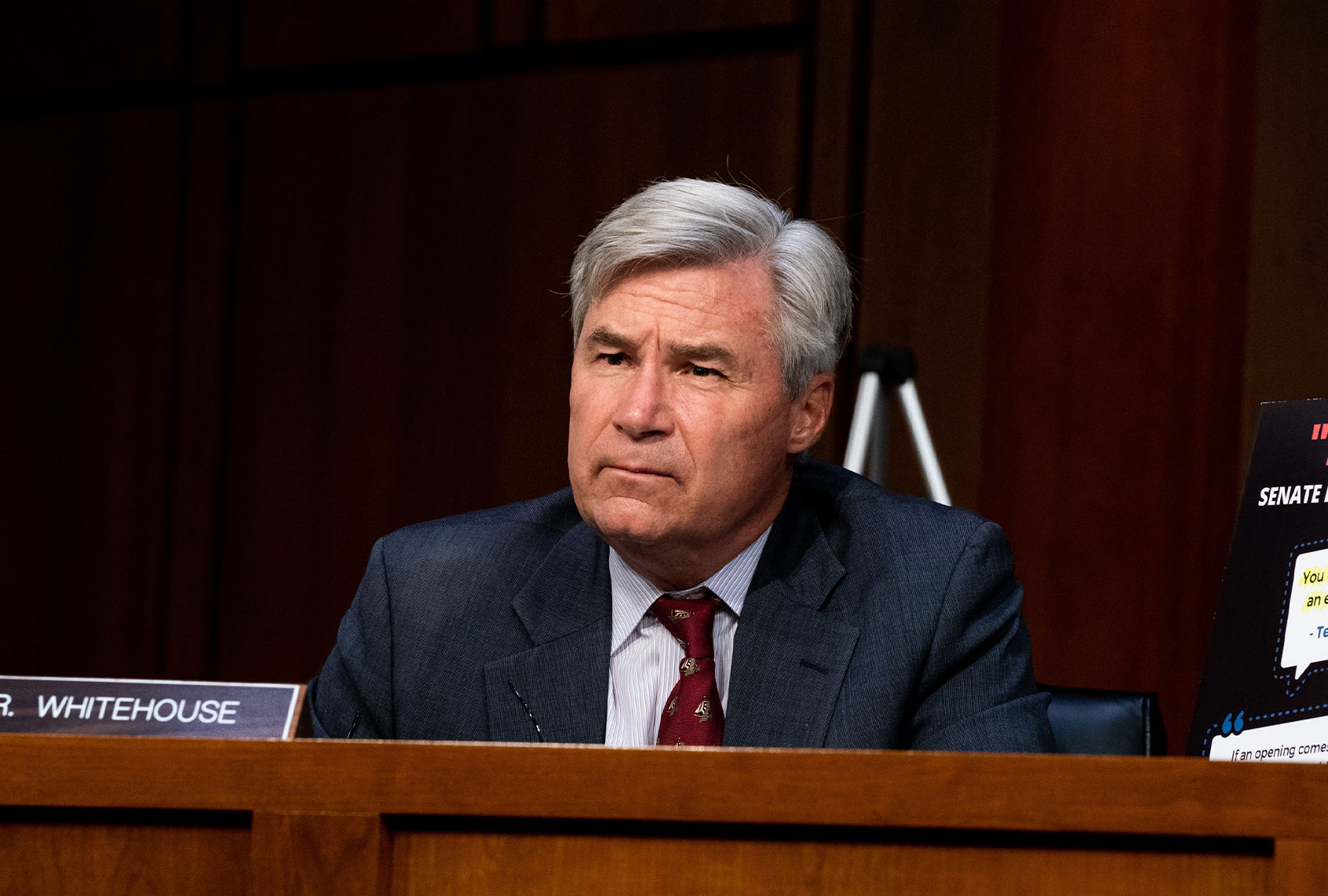
THE FIRST CLASH: WHITEHOUSE DEMANDS ANSWERS
Whitehou.s.e shifted toward the controversial settlement involving President Donald Trump’s lawsuit against the Internal Revenue Service.
The arrangement had attracted intense scrutiny because the president’s personal financial interests were implicated.
For the senator, the circumstances raised serious questions about the department’s responsibility to protect the government’s interests.
“Mr. Blanc.h.e, are you asking this committee to believe that there was nothing unusual about the Justice Department’s handling of this matter?”
Blanc.h.e responded carefully.
“Senator, I would caution against characterizing complicated legal proceedings through political descriptions.”
Whitehou.s.e immediately challenged him.
“Political descriptions? I’m talking about court records, Mr. Blanc.h.e. I’m talking about what happened before a federal judge.”
Blanc.h.e attempted to explain the department’s position.
“Those proceedings involve legal questions that deserve to be examined based on the facts and applicable law.”
Whitehou.s.e shook his head.
“That’s precisely the problem. Every time we ask for an explanation, we receive another general statement about legal complexity.”
He paused before continuing.
“Americans are not asking for a lecture about complicated procedures. They’re asking whether the Justice Department protected the public interest.”
Blanc.h.e answered that he disagreed with the senator’s characterization.
“I believe the Department has acted within its legal responsibilities.”
“Then demonstrate it,” Whitehou.s.e replied.
The exchange became increasingly uncomfortable because the disagreement was no longer about competing political interpretations.
It was about whether Blanc.h.e could provide convincing answers to questions concerning the department’s own conduct.
Whitehou.s.e returned to the documents.
“Let’s not pretend these questions appeared out of nowhere,” he continued. “There are court filings, congressional letters, and a documented sequence of events.”
Blanc.h.e looked toward the senator.
“And I am prepared to address those matters within the appropriate legal framework.”
Whitehou.s.e immediately pressed him again.
“Then address them. Don’t simply tell us that everything is appropriate.”
THE SECOND CLASH: WHO DOES THE JUSTICE DEPARTMENT REALLY SERVE?
The senator then moved toward a question that struck closer to Blanc.h.e’s personal history.
Before becoming Acting Attorney General, Blanc.h.e had represented Trump as his personal criminal defense attorney.
That background had become a central issue in the debate over his independence.
Whitehou.s.e wanted to know how Blanc.h.e intended to separate his previous professional relationship with Trump from his new responsibilities overseeing the Justice Department.
“Mr. Blanc.h.e, you previously represented Donald Trump personally. Now you’re asking this committee to trust you with an institution that must sometimes make decisions involving the president himself.”
Blanc.h.e responded firmly.
“My previous professional responsibilities do not change my obligation to follow the Constitution and the law.”
Whitehou.s.e immediately followed up.
“That’s what you say. But the American people need more than a promise.”
Blanc.h.e looked directly at him.
“Senator, I understand the concern, but I reject the suggestion that my professional history prevents me from performing this job independently.”
Whitehou.s.e was not finished.
“Then answer a straightforward question. If the president asks you to take an action that violates the law, will you refuse?”
Blanc.h.e replied that he would not follow an unlawful instruction.
Whitehou.s.e pressed further.
“And if that instruction benefits the president politically?”
Blanc.h.e maintained that the law would govern his decision.
The senator paused.
“Good. Then we agree that the attorney general works for the Constitution, not for the personal interests of the president.”
Blanc.h.e responded that the Justice Department’s responsibilities were indeed grounded in the Constitution and federal law.
But Whitehou.s.e wanted the principle applied beyond the hypothetical.
“Because that’s where this gets difficult, Mr. Blanc.h.e. It’s easy to promise independence when nobody is asking you to demonstrate it.”
The exchange captured the central political tension surrounding Blanc.h.e’s leadership.
Could he demonstrate that his decisions would remain independent when the president’s own interests were involved?
THE THIRD CLASH: THE DOCUMENTS AND THE UNANSWERED QUESTIONS
Whitehou.s.e then returned to congressional oversight.
He argued that lawmakers had repeatedly sought information from the Justice Department without receiving satisfactory responses.
Among the disputed subjects were questions involving Jeffrey Epstein-related records, Ghislaine Maxwell, and other sensitive investigative matters.
“Mr. Blanc.h.e, Congress has legitimate oversight responsibilities. Why should senators have to fight so hard to obtain basic information?”
Blanc.h.e responded that the department had legal obligations concerning confidentiality, investigations, and sensitive information.
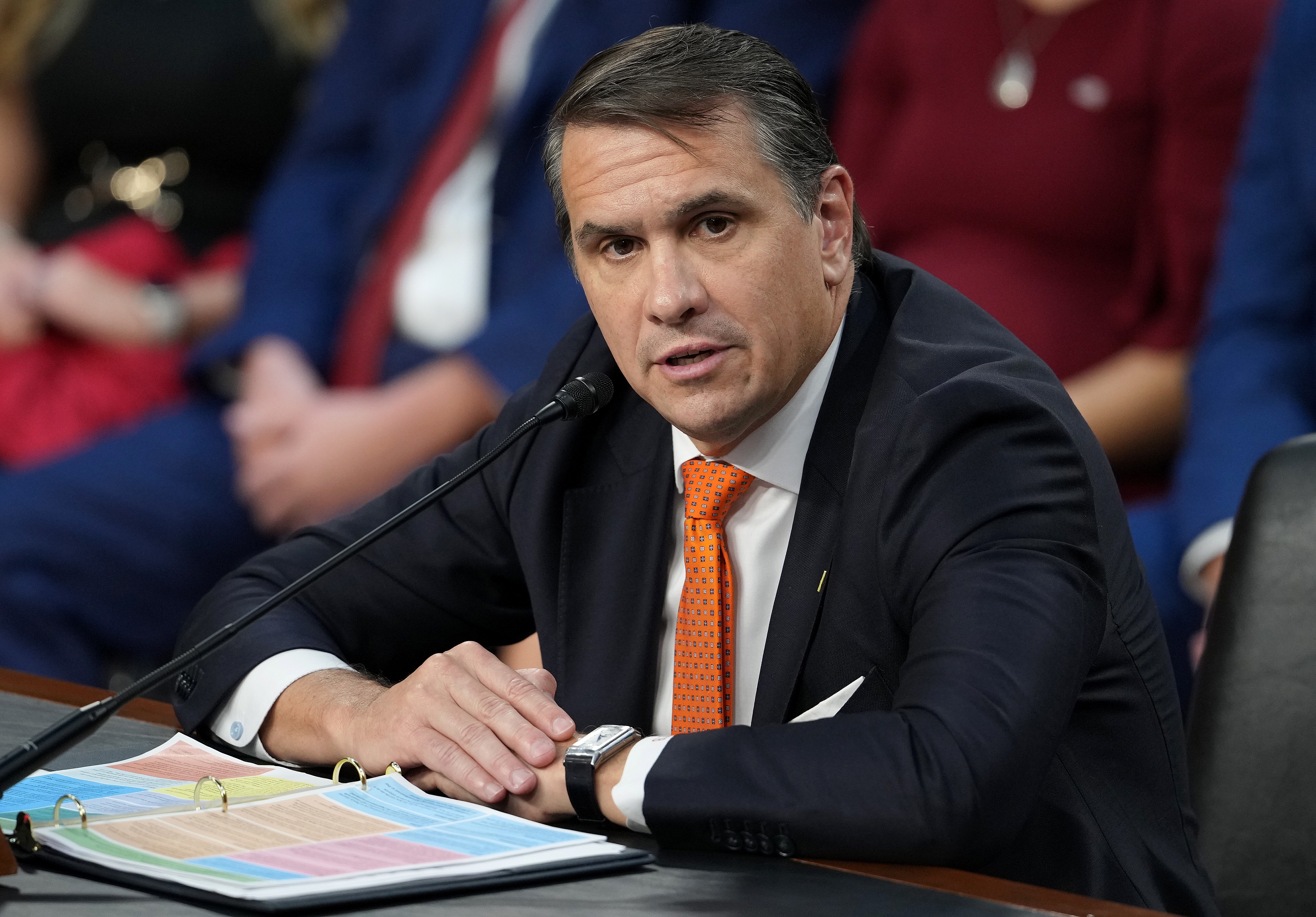
“Senator, there are circumstances where information cannot simply be released without considering the applicable legal restrictions.”
Whitehou.s.e immediately countered.
“Nobody is asking you to violate the law. We’re asking you to explain why legitimate requests remain unanswered.”
Blanc.h.e maintained that the department had to evaluate requests carefully.
Whitehou.s.e returned to his paperwork.
“Then let’s examine what has actually happened. Because these requests are not imaginary, and the correspondence is not imaginary.”
He continued.
“When Congress asks questions, the department cannot simply pretend those questions do not exist.”
Blanc.h.e disagreed with the suggestion that the department was ignoring its responsibilities.
“Senator, I would not characterize the Department’s actions that way.”
Whitehou.s.e responded sharply.
“Then give us a reason not to.”
For a moment, the argument became a direct confrontation over institutional accountability.
Whitehou.s.e wanted specific explanations.
Blanc.h.e wanted the discussion understood within the department’s legal responsibilities.
The two men were approaching the same issue from opposite directions, and neither appeared ready to compromise.
THE MOMENT THAT CHANGED THE TONE
As the questioning continued, Whitehou.s.e returned to the distinction between Blanc.h.e’s promises and the department’s documented actions.
He argued that public confidence could not be restored through carefully prepared statements.
It required transparency, consistency, and a willingness to answer uncomfortable questions.
“Mr. Blanc.h.e, you have repeatedly told this committee that you will follow the law. I have heard you.”
Blanc.h.e nodded.
Whitehou.s.e continued.
“But the question is whether the American people will see those principles reflected in your decisions.”
Blanc.h.e responded that his record and actions would demonstrate his commitment.
Whitehou.s.e leaned toward the microphone.
“Then let your actions speak louder than your assurances.”
The senator’s argument was straightforward, but its implications were enormous.
A Justice Department cannot demand public confidence while refusing to address legitimate concerns about its conduct.
And an attorney general cannot establish independence simply by insisting that independence exists.
The responsibility must be demonstrated.
That was the challenge Whitehou.s.e wanted Blanc.h.e to confront.
The senator then returned to the broader record of correspondence and legal proceedings.
He argued that the department’s explanations needed to be measured against the evidence available to Congress and the public.
Blanc.h.e continued defending the department’s position.
But the fundamental disagreement remained unresolved.
THE FINAL QUESTION: WILL LOYALTY EVER OVERRIDE THE LAW?
As the confrontation approached its conclusion, Whitehou.s.e returned to the issue that had followed Blanc.h.e throughout the hearing.
His previous relationship with Trump.
The president’s expectations.
And the independence of the institution Blanc.h.e wanted to lead.
“Mr. Blanc.h.e, I want to make sure there is no misunderstanding about what we’re discussing.”
Blanc.h.e looked toward him.
Whitehou.s.e continued.
“This is not about whether you personally like the president. It is not about whether you agree with his policies.”
He paused.
“This is about whether the Department of Justice can tell the president no.”
Blanc.h.e responded that the department must follow the law regardless of political considerations.
Whitehou.s.e pressed him again.
“Even when saying no creates a political problem for the president?”
Blanc.h.e maintained his position.
“The law must guide the Department’s decisions.”
Whitehou.s.e then delivered the central challenge of his questioning.
“Then remember that commitment when the next difficult decision arrives. Because that is when your independence will actually be tested.”
The exchange was significant because it brought the entire confrontation back to one fundamental principle.
The attorney general is not supposed to be the president’s personal protector.
The department is not supposed to function as a political weapon.
And public trust cannot depend entirely on the assurances of the people exercising government power.
For Whitehou.s.e, those principles were not negotiable.
For Blanc.h.e, the challenge was to demonstrate that his leadership would reflect them.
WASHINGTON IS NOT FINISHED WITH THIS FIGHT
The hearing ended without resolving the larger disagreement between the two men.
Whitehou.s.e continued raising concerns about oversight, transparency, and the department’s independence.
Blanc.h.e continued defending his qualifications and the department’s decisions.
But the questions raised during the confrontation extended far beyond one confirmation hearing.
Could the Justice Department demonstrate that its decisions were independent of presidential political interests?
Would Congress receive the answers it had repeatedly demanded?
And would Blanc.h.e’s promises survive the first genuinely difficult test of his leadership?
Those questions remain at the heart of the controversy.
Because the most important battle may not be the one that took place across the hearing table.
It may be the next decision Blanc.h.e makes when the president’s interests and the department’s legal responsibilities collide.
And if that moment arrives, Washington will be watching to discover whether his promises were more than carefully chosen words.
