
A congressional hearing took an unexpected turn when former special counsel Jack Smith acknowledged that his investigators believed they had evidence to charge additional individuals in the federal election interference case against Donald Trump.
The revelation came during a January 22, 2026, House Judiciary Committee hearing, where Republican Representative Brad Knott pressed Smith over a question that had remained unresolved since the investigation ended.
Why had prosecutors identified six alleged co-conspirators in an indictment describing a sweeping effort to overturn the 2020 presidential election, yet charged only Trump?
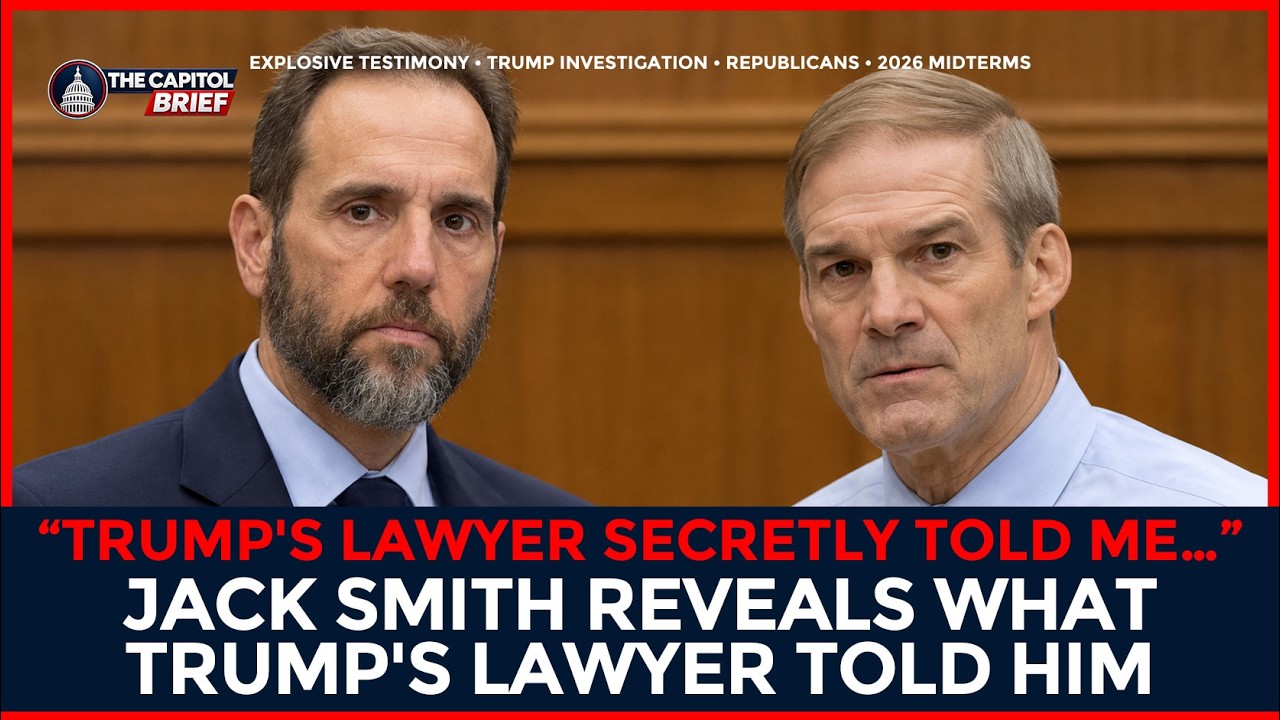
Knott, a former federal prosecutor from North Carolina, challenged the investigation’s charging decisions, questioned its political independence, and demanded an explanation for the absence of additional defendants.
Smith responded that his legal team had identified potential evidence supporting further charges, but the investigation concluded before he could make final prosecution decisions.
The testimony introduced a significant distinction between prosecutors finding evidence they believed could support charges and a special counsel formally deciding to bring those charges.
The confrontation became even more consequential when Democratic Representative Mary Gay Scanlon approached the same investigation from a different direction, focusing on Trump’s disputed allegations about Pennsylvania’s election results.
Rather than concentrating on the number of defendants, Scanlon asked Smith to explain what investigators discovered about false election claims, Republican witnesses, and the controversial alternative-elector strategy.
The contrasting exchanges exposed two central controversies surrounding Smith’s investigation: Whether the prosecution was politically motivated and whether its underlying evidence supported the charges against Trump.
The hearing also revisited the circumstances surrounding January 6, 2021, and the federal government’s unsuccessful effort to bring the former president’s alleged election-related conduct before a jury.
For Smith, the inquiry represented an opportunity to defend his prosecutorial decisions publicly after years of accusations from Trump and Republican lawmakers about the investigation’s legitimacy.
For congressional Republicans, the hearing provided an opportunity to scrutinize the government’s extraordinary decision to prosecute a former president who subsequently returned to the White House.
Knott began by questioning whether the prosecution would have existed if Trump’s supporters had remained peaceful during the January 6 rally instead of entering the Capitol.
He suggested that without the violent breach, the government might never have pursued the case or characterized Trump’s post-election conduct as an unprecedented attack on democratic institutions.
Smith refused to accept that hypothetical as an accurate description of his investigation, emphasizing that the criminal allegations extended beyond the violence at the Capitol.
The prosecution had examined alleged efforts to overturn the election through false fraud claims, disputed electoral certificates, pressure on state officials, and demands directed toward Vice President Mike Pence.
Many of those alleged activities occurred before January 6, making the investigation broader than the question of whether protesters ultimately entered the Capitol.
That distinction became the first major disagreement between Knott and Smith, establishing the competing interpretations that would dominate the remainder of their exchange.
Knott also noted that former Vice President Pence had previously expressed reservations about prosecuting Trump, despite rejecting the president’s demands to interfere with congressional certification.
Pence’s position introduced another complication because he had personally experienced the pressure campaign while also warning that criminal prosecution of a former president could deepen national divisions.
The Republican congressman then turned toward the structure of Smith’s indictment, emphasizing the extensive investigative resources available to the special counsel’s office.
Smith had commanded a team of experienced prosecutors, possessed substantial subpoena authority, reviewed enormous quantities of documents, and interviewed witnesses with direct knowledge of Trump’s post-election conduct.
Despite those resources, Knott observed, the federal election interference indictment named only one defendant, even while describing the alleged involvement of six additional co-conspirators.
He also emphasized that Smith had not charged Trump with insurrection or seditious conspiracy, despite repeatedly describing the underlying conduct as an extraordinary attack on American democracy.
Those observations established facts about the indictment, although the absence of particular charges does not determine whether the separate offenses actually alleged were supported by evidence.
Smith acknowledged that Trump was the only defendant charged, but he disputed the implication that prosecutors had deliberately abandoned viable cases against everyone else.
According to Smith, his team believed it possessed evidence sufficient to charge other individuals, and he had been considering additional decisions when the investigation came to an end.
That answer created a revealing moment because it confirmed that the investigation had advanced beyond simply identifying potential participants in the alleged conspiracy.
At the same time, Smith carefully distinguished his prosecutors’ assessment from a final decision to indict, which would have required additional consideration of the applicable evidence and legal standards.
Knott continued pressing the distinction, suggesting that prosecuting the alleged principal figure without charging others raised questions about the investigation’s priorities and broader justification.
Smith maintained that federal prosecution guidelines require consideration of individual responsibility, explaining that he regarded Trump as the person most culpable for the charged conduct.
That assessment reflected the prosecution’s theory that Trump’s alleged actions were central to the effort to reverse the election outcome and retain presidential power.
But prosecutorial conclusions do not establish criminal guilt, and Smith’s case against Trump never proceeded to a completed trial where a jury could evaluate those allegations.
The investigation’s termination followed Trump’s November 2024 election victory, which activated the Justice Department’s longstanding position against prosecuting a sitting president.
On November 25, 2024, federal prosecutors moved to dismiss the election interference case, emphasizing that their assessment of the underlying evidence had not changed.
The court granted dismissal without a trial, meaning the prosecution’s allegations remained unadjudicated and Trump was neither convicted nor acquitted in that federal case.
That outcome became central to Knott’s questioning because it prevented the legal system from resolving the allegations through the ordinary process of presenting evidence before a jury.
It also meant prosecutors never completed their contemplated decisions about whether additional individuals should face federal charges arising from the same alleged conspiracy.
The six unnamed co-conspirators had been described in the original indictment through their alleged roles, including attorneys and officials involved in challenging election results.
Those descriptions were widely associated with figures such as Rudy Giuliani, John Eastman, Sidney Powell, Kenneth Chesebro, Boris Epshteyn, and Jeffrey Clark.
However, identification in an indictment’s narrative does not constitute a criminal charge, and no one should be treated as convicted merely because prosecutors described alleged conduct.
Knott subsequently shifted from charging decisions to the question of political influence, asking whether Smith’s public statements, prosecution strategy, and proposed trial schedule were affected by partisan considerations.
Smith repeatedly denied that politics influenced his decisions, maintaining that he followed evidence, applicable law, and Justice Department policies throughout the investigation.
The disagreement reflected competing interpretations of prosecutorial independence, with Knott examining the investigation’s timing and Smith emphasizing the standards governing professional charging decisions.
As Knott’s allotted time expired, House Judiciary Committee Chairman Jim Jordan moved the hearing forward, ending the Republican congressman’s questions before every issue could be explored.
Then Scanlon, a Pennsylvania Democrat, began questioning Smith from a markedly different perspective, shifting attention toward the factual evidence supporting the federal election interference case.
She argued that the public deserved to understand what investigators had discovered about Trump’s efforts to challenge the 2020 results, rather than focusing exclusively on allegations about prosecutorial motives.
Scanlon identified Pennsylvania as particularly important because the state had been central to Trump’s attempts to dispute his election loss and influence the Electoral College outcome.
Biden carried Pennsylvania by approximately 80,555 votes in 2020, a result certified by state authorities after election officials completed the required counting and review procedures.
Trump and his allies challenged that outcome through litigation, public statements, and claims about mail-in voting, but those efforts did not produce evidence sufficient to reverse the certified result.
Scanlon asked Smith to explain what his investigators had discovered about the accuracy of particular fraud allegations and whether individuals spreading them understood their weaknesses.
Smith described one claim involving an apparent discrepancy between the number of votes counted and the number of ballots supposedly distributed to voters.
Investigators determined that the figures being compared came from different elections, with one concerning the primary and the other the general election.
That distinction undermined the allegation because figures from separate electoral contests could not legitimately establish that more ballots had been counted than were issued.
Smith testified that investigators interviewed Giuliani about the discrepancy and that the former New York mayor acknowledged the underlying comparison was mistaken.
The admission was important to the prosecution’s theory because investigators were attempting to determine not only whether claims were false, but whether individuals recognized their inaccuracies.
Smith also described information received from a Pennsylvania Republican official who had explained why the state’s vote totals changed as mail-in ballots were counted.
The state’s procedures prevented election workers from beginning certain mail-ballot processing activities before Election Day, contributing to the delayed reporting of substantial numbers of votes.
Those delays became politically controversial because ballots counted later disproportionately favored Biden, creating an appearance of changing results even though the counting process followed established procedures.
According to Smith, Republican witnesses who supported Trump had provided explanations contradicting claims that the changing vote totals demonstrated widespread fraud.
Their political affiliations mattered to the prosecution because witnesses who wanted Trump to win could potentially offer testimony less easily dismissed as motivated by partisan opposition.
That distinction did not make their statements automatically correct, but it helped explain why investigators believed their accounts could carry weight before a jury.
Scanlon then turned toward the alternative-elector strategy, one of the most consequential allegations in Smith’s investigation and a central feature of the federal indictment.
The prosecution alleged that Trump and associates sought to assemble groups of individuals who would submit electoral certificates claiming authority despite Biden’s certified victories in several states.
The strategy became controversial because presidential electors ordinarily derive their authority from the certified election outcome, rather than unilateral decisions by political parties or campaign representatives.
Smith described a Pennsylvania Republican who had originally agreed to serve as a Trump elector if the Republican president won the state.
That individual was former Congressman Thomas Marino, who had also served as a United States attorney and possessed substantial experience with federal law.
According to Smith’s account, Marino regarded the proposed alternative-elector strategy as unlawful and refused to participate in the manner being contemplated.
His objections were significant because he supported Trump politically but questioned whether the proposed actions could be reconciled with constitutional election procedures.
The Pennsylvania certificates also contained conditional language referring to the possibility that the signatories might later be recognized as lawful electors following legal proceedings.
That feature distinguished the Pennsylvania documents from certain certificates submitted elsewhere, although investigators still examined whether the broader strategy sought to influence congressional certification improperly.
Scanlon emphasized the importance of Republican witnesses who questioned the plan, arguing that their objections challenged the suggestion that every concern about its legality originated with Democrats.
Smith agreed that testimony from political allies could have strengthened the prosecution’s presentation because such witnesses had personal reasons to prefer Trump’s electoral success.
The exchange revealed why the federal investigation had continued examining alleged misconduct beyond the January 6 violence, focusing on communications and decisions made during the preceding weeks.
It also illustrated the contrast between Scanlon’s examination of alleged election-related conduct and Knott’s scrutiny of Smith’s charging decisions and prosecutorial independence.
Both approaches addressed legitimate oversight questions, although they focused on different parts of a case that never reached the stage of a completed criminal trial.
Smith’s January 2025 report had already outlined the prosecution’s assessment of Trump’s conduct, including alleged efforts to pressure state officials and use disputed electoral certificates.
The report maintained that investigators possessed evidence sufficient to support the charges brought against Trump, while acknowledging legal and procedural developments that prevented the prosecution from continuing.
Trump denied wrongdoing throughout the federal proceedings and characterized Smith’s investigation as politically motivated, arguing that his election challenges were legitimate exercises of constitutional rights.
Those positions remained sharply contested, but the criminal justice system never delivered a jury verdict resolving the federal election interference allegations.
The Supreme Court’s July 2024 presidential immunity decision also complicated the prosecution by establishing protections for official presidential acts and requiring further examination of the charged conduct.
Prosecutors subsequently revised the indictment to address the ruling, but the case was dismissed after Trump’s reelection before those issues could be fully litigated.
The January 2026 hearing therefore became an important opportunity for lawmakers to question the former special counsel about evidence and decisions previously examined primarily through court filings.
The controversy continued into September 29, 2026, when Smith appeared before the Senate Judiciary Committee for another hearing examining the conduct of his investigations.
Republican senators questioned investigative methods, financial records, and the treatment of political figures, while Democrats defended the importance of examining potential interference with electoral certification.
Those later proceedings demonstrated that congressional disagreements over Smith’s investigation remained active despite the termination of the underlying federal prosecution.
Yet congressional testimony cannot substitute for a criminal trial, and lawmakers’ competing interpretations do not establish guilt or innocence in the absence of judicial findings.
That distinction remains especially relevant to the six co-conspirators discussed during Knott’s questioning, since Smith’s acknowledgment concerned contemplated charges rather than completed prosecutions.
His testimony also left unresolved whether every potential defendant would ultimately have been charged, what specific offenses prosecutors would have alleged, and whether the evidence could have secured convictions.
The Pennsylvania testimony offered a different kind of insight, revealing how investigators evaluated disputed claims by comparing records and questioning people who had supported Trump.
For Scanlon, those details provided grounds for examining why Trump continued challenging the election outcome after allies and officials disputed specific allegations of fraud.
For Knott, the same investigation remained open to scrutiny over its political implications, the selection of defendants, and the extraordinary decision to pursue charges against a former president.
The hearing did not resolve those disagreements, but it created a clearer public record of Smith’s explanation for why his investigation ended without additional indictments.
Ultimately, the central revelation was neither a confession of political misconduct nor proof that six unnamed individuals had committed crimes beyond reasonable doubt.
It was Smith’s acknowledgment that prosecutors believed additional charges might be supported, while his final decisions remained unfinished when the federal case came to an end.
And the competing questions from Knott and Scanlon left Americans confronting two unresolved issues: whether the prosecution exercised its discretion appropriately, and what a completed trial might have established about the 2020 election interference allegations.
The documents, testimony, and certified election results remain available for examination, but the absence of a final criminal verdict continues to shape the political argument.
What remains most consequential is the distinction between allegations, prosecutorial assessments, and proven criminal conduct—a distinction that carries particular importance when the subject is a president and the integrity of a national election.
